artifacts related to my EDD experience.
June 12, 2009
The Dumbest Generation: How the Digital Age Stupefies Young Americans and Jeopardizes Our Future
Thank you Tom Brokaw for making it so easy to typify any generation..
'Dumbest Generation'? Professor blames technology - USATODAY.com
Teens and young adults are more likely in their free time to check their Facebook page than read a book.
And they are dumber for it.
May 27, 2009
Empirical evidence that supports videogames..
PTA Parent, Wednesday, May 27, 2009
C. Shawn Green and Daphne Bavelier at the University of Rochester have shown that action video game playing increases the capacity of the visual attention system to stay focused, despite distractions. According to the researchers, "at difficulty levels where non-video game players have long depleted their attentional resources, video game players possess sufficient resources to perform the target task..."
December 4, 2008
This is your brain on Google
Top News - Scientists: Is technology rewiring our brains?
What does a teenage brain on Google look like? Do all those hours spent online rewire the circuitry? Could these kids even relate better to emoticons than to real people? These sound like concerns from worried parents. But they're coming from certain brain scientists.
November 25, 2008
Everything is changing... 4 tech trends that will change the way we learn and think
Top News - Four trends that could change everything
With this broad, unprecedented perspective, we at last have the opportunity to affect our planet and ourselves in ways never before possible. With luck and intelligence, we'll use this opportunity to do more good than harm.
November 21, 2008
XO Laptops are actually helping African children
So these guys at Laptop magazine decided to get hands-on with the One Laptop Per Child XO laptop and found that there is actually a lot of potential for the program.LAPTOP Magazine Tests "One Laptop Per Child" Program In Africa
The Mali program, however, is not all rainbows and butterflies, according to Stern. "Computer charging compatibility and electricity problems have led to the frequent crashing of notebooks. Additionally, in a society where students await direction from teachers and are reluctant to explore independently the learning process does not progress as quickly as anticipated." Due to the limited ability to train teachers in all computer functions the XOs potential has not yet been fully realized.
November 20, 2008
Copyright issues in political ads: Jackson Browne vs. John McCain
Good article on fair use vs. copyright infringement by the Republican Party in their use of "Runnin' on Empty".
John McCain to Jackson Browne: You're Welcome | Listening Post from Wired.com
John McCain has two words for Jackson Browne: You're welcome.That's the gist of a response to Browne's lawsuit that the McCain campaign's sampling of his classic (or, as they put it, "long-ago published") "Running on Empty" implied that the famously lefty singer-songwriter was endorsing the maverick but nevertheless Republican presidential candidate.
November 19, 2008
Teacher tenure: Good for kids?
Michelle Rhee, chancellor of Washington public schools wants to do away with it, and with teachers who are not performing well.A School Chief Takes On Tenure, Stirring a Fight - NYTimes.com
If we can put veteran teachers who have tenure in a position where they don’t have it, that would help us to radically increase our teacher quality. And maybe other districts would try it, too.
November 10, 2008
More on free wifi from eSchool News.
Technologies - Dell to offer 'white space' connectivity in laptops
White spaces continue a "revolution" in unlicensed wireless access that started when the FCC unlicensed the 2.4GHz spectrum in 1995, leading to the development of Wi-Fi networking and wireless devices such as cordless phones...
Why I use a cybertext and not a textbook for my course..
First, the cybertext, Television Production by Dr. Ron Whittaker, is a great resource. But, more important to me, I appreciate his concept that knowledge isn't owned but shared. Finally, I really respect the way he wishes to be repaid:
A Final Word - Free CyberCollege Interactive TV Course
You may recall that this free cyberbook has one string attached.
If you use this material in developing your talent to produce effective television programming, you need to "pay" for the material by at least once producing something to improve conditions in our world.
If you need some ideas -- consider this.
If you don't go into the field professionally, here is your "price." A textbook of this type would cost at least $60 (actually, much more, with all the color illustrations). Consider your time worth $20 an hour and devote at least three hours in doing something positive and totally selfless for some person or agency.
That's it.
If you do either of these, you've paid for the material and your conscience will be clear.
Here's wishing you great success in your chosen field.
November 9, 2008
Higher Ed budget cuts impact IT decisions.
More reason to consider open-source options for campus IT resources. But you still need people to integrate/patch or otherwise operate an open-source system.
Campus IT Budgets Down, Open Source Looking Up
Open source software is looking more appealing to campuses, with about a fourth reporting a "high likelihood" that they will migrate to an open source LMS within the next five years.
Creativity and Play on TEDTalks
TED | TEDBlog: The powerful link between creativity and play: Tim Brown on TED.com
I really like this guy's presentation, especially since he has great examples, but also this insight about why kids play more with boxes than the toys that come in them.
Boxes offer an infinite number of choices.
Why do kids/college students/adults sometimes hate learning? My guess is somewhere along the way they stopped following their own interested in learning and felt forced to focus on just a few things (like standardized test material maybe?) It's sad, because learning can be the most fun human endeavor.
I really love TEDTalks and like to indulge myself on Fridays by listening to one or more while I work. This one was a special Sunday treat though.
October 6, 2008
High School Moses - How to fairly use videos online!
Great clip about how to fairly use videos from online with great examples..
Wired Campus: American U. Researchers Publish Guidelines for Fair Use in Web Videos - Chronicle.com
As more students and professors experiment with making short videos to post to YouTube or other video-sharing Web sites, many run up against concerns against potential copyright violations--especially if they want to use a clip from a Hollywood movie or other copyrighted work.New guidelines released this week by researchers at American University's Center for Social Media hope to help nonlawyers navigate the confusing world of U.S. copyright law and its "fair use" provision. They're part of a guide called the "Code of Best Practices in Fair Use for Online Video."
Update: More info from the study here.
The study points to a wide variety of practices--satire, parody, negative and positive commentary, discussion-triggers, illustration, diaries, archiving and of course, pastiche or collage (remixes and mashups)--all of which could be legal in some circumstances.
October 2, 2008
NCLB creates a new statistical paradigm: The Bell Line
This article shared by a Facebook friend reinforces an idea I've had that No Child Left Behind testing has created a delusional view of what's going on in schools today. Thus I give you to use or ignore: The Bell Line--all kids are now above average.Education Week: NCLB Testing Said to Give 'Illusions of Progress'
rampantly inflated standardized test scores are giving the misbegotten impression that, as in the fictional town made famous by radio personality Garrison Keillor, all children are above average.
October 1, 2008
Curriculum Change: Making students not hate class so much.
 Well, I've said before and I'll say it again, The School of Rock changed how I teach forever. It's a very dumb reason to have for such a change, but that film made me realize that everything a student does should have real-world, embedded application. But what about liberal arts and theory? Well, if you can't include those in the real-world application of the concepts you're teaching what good are they? And who's going to listen?
Dr. Ron Whittaker whose online text I use in Production classes has some interesting ideas in helping to rething curriculum that I really like.
Rethinking Higher Education Curriculum
Consider the full impact of these 17 elements of an essential curriculum.
1. It would be based on the premise that the primary purpose of education is not to pass on knowledge and information.
2. It would teach students how to think rather than what to think.
3. It would be centered on concepts and not subjects.
4. It would provide tools and skills for finding and understanding needed information and data, and teach the ability to synthesize and objectively evaluate both.
5. It would emphasize and reward critical thinking and problem solving while encouraging creativity and independent thinking.
6. It would encourage students to critically reexamine all values and attitudes before they accept them and not to automatically accept yesterday's answers to today's problems.
7. It would advocate and support personal honesty in attitudes, words, and deeds.
8. It would not be designed to support or justify the economic or political goals or status quo of any one country.
9. It would deal openly and honestly with love and sexuality in all their dimensions while at the same time attempting to understand prevailing societal views.
10. It would not be based on competition or "survival of the fittest," but place an equal value on individuals, regardless of race, sex, economic status, or personal predisposition.
11. It would teach total personal responsibility for one's actions, attitudes, and future rather than shifting responsibility to some outside person or agency.
12. It would emphasize tolerance and a nonjudgmental attitude toward people and societies that are "different" or with whom one disagrees.
13. It would emphasize the importance self-discipline and the understanding that personal freedoms must cease or be reevaluated whenever they interfere with the needs and freedoms of others.
14. It would stress adjudication and conflict resolution and not violence as the solution to personal or social problems.
15. It would emphasize the importance and preservation of the environment.
16. It would present the standard subjects (including the three R's, rhetoric, geography, history, humanities and science) within the context of real-life situations that the students can clearly identify with; and, in the process, make use of computer games, and TV and Internet resources.
17. Finally, it would consistently emphasize universal, uniting spiritual concepts, as opposed divisive religious, racial, cultural, or nationalistic concepts.
July 29, 2008
GTD Lite - Toodledo
 Good overview/refresher of GTD methods and a pretty good online app for implementation. Just wishing they had an app for iPod Touch, but I guess since the iPhone is always online nobody cares..
WARNING: Productivity can take serious amount of time if you let it. Pick a system and commit to it!
Toodledo :: Getting Things Done (GTD)
Getting Things Done (GTD) is a method for organizing tasks so that you can focus your entire energy and creativity on completing those tasks in a stress free manner.
July 28, 2008
Great guy, great speech
Carnegie Mellon Professor Randy Pausch (Oct. 23, 1960 - July 25, 2008) gave his last lecture at the university Sept. 18, 2007, before a packed McConomy Auditorium. In his moving presentation, "Really Achieving Your Childhood Dreams," Pausch talked about his lessons learned and gave advice to students on how to achieve their own career and personal goals.
I will say I've had a deathbed conversion... I just bought a Macintosh.
I really liked his emphasis on enabling the dreams of others. What a great way to go out.
July 19, 2008
UTC should start doing these things
Daily Home - ACCESS lets students take courses not offered at their schools
Additionally, students are taking Advanced Placement courses for college credit through ACCESS from teachers certified to teach AP courses.
In other TN Higher Ed news:
WREG-TV Memphis - Tenn. tech schools shorten schedules to save gas
Some Tennessee community colleges and tech schools are moving to a 4-day school week to help commuting students facing a financial roadblock in rising gasoline prices.Four Tennessee Technology Centers and three community colleges are adopting the new class schedules after hearing from students that high gas prices could force them to drop out.
That sounds pretty good to me..
The Chronicle talks about this case causing a tipping point for Distance Learning to finally take off:
"It's getting to the point of either gas or class," says Robbie K. Melton, associate vice chancellor for the Tennessee Board of Regents, where this summer the number of students taking online courses spiked 29 percent, in part because of the high cost of buying gas to drive to campus.
July 12, 2008
Bio
Here is a brief bio that I put together for the new UTC Communication Department website.
Chris Willis loves going to school. Having graduated from UTC with bachelor's degrees in Environmental Science and Sociology, he returned for a Master's in Writing, and is now pursuing a Doctorate of Education in Leadership and Learning at UTC. "I'm hoping this last degree will help to pull everything together," Chris says. Having taught as an adjunct professor for the Communication department for nine years, Chris believes that students learn best when given the opportunities and facilities to explore themselves creatively. "I love television and film and I'm focusing more now on teaching students how to tell stories visually--from the initial ideas to a final product that they can share with an audience."
Having worked in a computer lab for The Tennessee Valley Authority as a training specialist, Chris came to UTC full-time as a technology specialist for Continuing Edcucation, focused primarily on distance learning through videoconferencing. Due to a growing interest in developing a campus television studio, Mr. Willis was involved in the grant-writing, design, and implementation of a brand-new facility at UTC, which has been used by the entire campus for video production and editing. Some of the work of the UTC Television Studio can be viewed online, as well as being broadcast on Comcast Cable Channel 3.
Asychronous learning found to be better for retention
Dividing achievement outcomes into synchronous and asynchronous forms of DE produced a somewhat different impression. In general, mean achievement effect sizes for synchronous applications favored classroom instruction, while effect sizes for asynchronous applications favored DE.
Delphi Method - Potential for Dissertation
An interesting way to conduct research without travel, plus to get ideas from participants as to what is important.
Delphi method is a systematic, interactive forecasting method which relies on a panel of independent experts. The carefully selected experts answer questionnaires in two or more rounds. After each round, a facilitator provides an anonymous summary of the experts’ forecasts from the previous round as well as the reasons they provided for their judgments. Thus, participants are encouraged to revise their earlier answers in light of the replies of other members of the group. It is believed that during this process the range of the answers will decrease and the group will converge towards the "correct" answer. Finally, the process is stopped after a pre-defined stop criterion (e.g. number of rounds, achievement of consensus, stability of results) and the mean or median scores of the final rounds determine the results.
July 11, 2008
Connectivism - A New Way to Think About Learning
An interesting article from Canadian George Siemens, dealing with how technology supports "off-loading " human knowledge.
Growing Up Digital: How the Web Changes Work, Education, and the Ways People Learn. United States Distance Learning Association. Jan05_01
Technology is altering (rewiring) our brains. The tools we use define and shape our thinking.
Many of the processes previously handled by learning theories (especially in cognitive information processing) can now be off-loaded to, or supported by, technology.
Know-how and know-what is being supplemented with know-where (the understanding of where to find knowledge needed).
A central tenet of most learning theories is that learning occurs inside a person.
Additional concerns arise from the rapid increase in information. In today’s environment, action is often needed without personal learning – that is, we need to act by drawing information outside of our primary knowledge. The ability to synthesize and recognize connections and patterns is a valuable skill.
We can no longer personally experience and acquire learning that we need to act. We derive our competence from forming connections.
Butterfly Effect - “sensitive dependence on initial conditions” profoundly impacts what we learn and how we act based on our learning."Connectivism is the integration of principles explored by chaos, network, and complexity and self-organization theories. Learning is a process that occurs within nebulous environments of shifting core elements – not entirely under the control of the individual. Learning (defined as actionable knowledge) can reside outside of ourselves (within an organization or a database), is focused on connecting specialized information sets, and the connections that enable us to learn more are more important than our current state of knowing.
Connectivism is driven by the understanding that decisions are based on rapidly altering foundations. New information is continually being acquired. The ability to draw distinctions between important and unimportant information is vital. The ability to recognize when new information alters the landscape based on decisions made yesterday is also critical.
Conclusion:
The pipe is more important than the content within the pipe. Our ability to learn what we need for tomorrow is more important than what we know today.
Even better, from Siemen's blog:
Pedagogy First? Whatever. In dealing with faculty and instructional designers, a series of almost default phrases are vocalized once technology is mentioned: "We need to start with pedagogy"..."It's pedagogy first".
Or, whenever I'm in a meeting and someone says "pedagogy first", the apparently genetic instinct to nod viciously is enacted by everyone around the table. "Yes, that is right. We need to have priorities here. Let's tame technology and focus instead on what we already know and are comfortable with. Let’s ensure that technology does not get away from the tried and true method of containing innovation and new approaches.”
Let's abandon the somewhat silly notion of pedagogy first and recognize
that the choice of technology is driven by many contextual factors and
therefore context is what we are evaluating and considering when we
first start talking about possible technology to use. Then, after we
have selected technology, we can start talking about pedagogy. Pedagogy
is just not a practical starting point for deciding the technology we
should use.
July 5, 2008
Digital-Age teachers as co-learners: A new method of instruction or just a bunch of hot air?
I have to say I very much support the International Society for Technology in Education's new definition for the role of teachers.The Future of Instruction: Teacher as 'Co-Learner' : June 2008 : THE Journal
"Now and in the future, effective teachers of digital-age learners will be challenged to move away from models of teaching and learning as isolated endeavors. As they model work and learning that reflects inventive thinking and creativity, teachers must become comfortable as co-learners with their students and with colleagues around the world. Today it is less about staying ahead and more about moving ahead as members of dynamic learning communities. The Digital Age teaching professional must demonstrate a vision of technology infusion and develop the technology skills of others. These are the hallmarks of the new education leader."
But what will actual educators think?
June 30, 2008
Interesting idea from UTC professor for 3D periodic table
Chattanooga Times Free Press | Chattanooga: Professor puts spin on periodic table
University of Tennessee at Chattanooga professor Dr. Hinsdale Bernard has been working on a three-dimensional model of the periodic table of the elements since he was a chemistry teacher in Trinidad in the late 1970s. He recently received a patent for the model he has been developing. His "Periodic Table in Three-Dimensional Form" is meant to be a learning tool that would appeal to youngsters from elemetary school to college age.
Also interesting that you can't embed Chatt Times videos..
June 27, 2008
Are you watching or not?
Many professors who teach online complain that they have no way of seeing whether their far-away students are following the lectures
This new software helps analyze whether or not students are watching, understanding, and engaged in web streaming courses, which is something we are tackling at UTC with my 797 project.
June 25, 2008
Kurzweil on the cheap
Having just been on a tour of the Office for Students with Disabilities at UTC this week, I was glad to know what this guy was talking about below. This thing is pretty neat, though I wonder how it reacts when webpages are changed..
Awesome Highlighter (online resource) | Free Resources from the Net for (Special) Education
I’m a big fan of Kurzweil 3000, and one feature of the program that I especially appreciate is the way text can be highlighted and then extracted into a new file. This can be an extremely valuable study aid. Another helpful study aid in Kurzweil 3000 is the option of easily adding sticky notes to pages of text. Altogether Kurzweil 3000 contains the best set of tools I know of for helping learners deal with a wide range of challenges that can create barriers to learning.
June 16, 2008
Virtual Field Trips via videoconference
This article talks about a group of California students learning about ecology by videoconferencing with the marine biologists 100 miles away. Technology and Gas Prices Send Students Of Virtual Field Trips
When seventh graders in Stockton took a field trip this week to see elephant seals, they didn't even step outside their school. Instead, with the help of a projector and a video camera, the students teleconferenced with a state park guide on the California coast.
Cool thing is, I'm totally doing this with the Governor's School for Prospective Teachers this week when we videoconference with Mexico. The students here will ask questions in Spanish about how school works there and what subjects they enjoy, then their students will answer in English.
John Templeton Foundation - Answering Big Questions
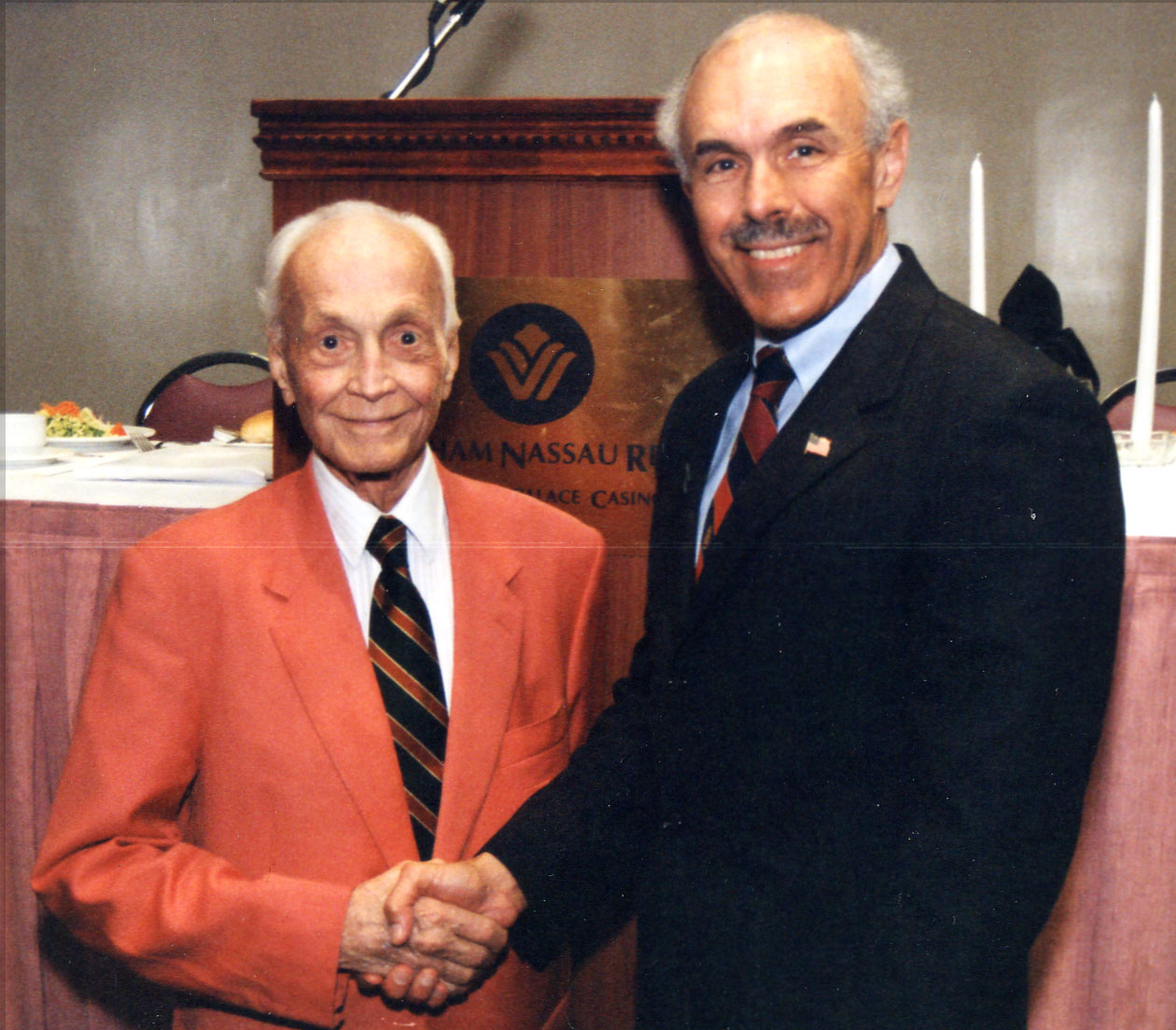 So this article links to the website of this group, which throws big money at research into life's big questions. It seems like a lot of these deal with reconciling God and Science, but I think that is just the topic for this year, since a lot of the published works deal with economics.. John Templeton Foundation
The Templeton Foundation was started in 1987 in order "to serve as a philanthropic catalyst for discovery in areas engaging life'sbiggest questions". Over the years, these questions have included investigations into the laws of nature and the universe, along with thenature of love, gratitude, forgiveness and creativity.
This is especially interesting to me since I met Templeton at a conference in the Bahamas on Free Enterprise and how it helps (allegedly) the world's social problems (I took this photo). I leaned quite a bit more left in this area before the conference, but I see where a lot of their ideas have merits, so, YAY CAPITALISM! However, does the website remind you of the Hanso Foundation at all?
June 13, 2008
EDD Conference 2008 - Learning Region
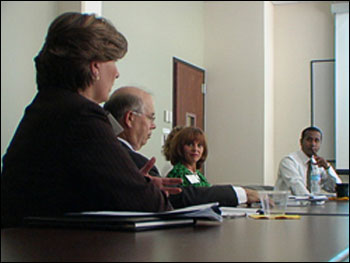
UTC News Releases » Ed.D. Learning Conference addresses partnerships
With the ultimate objective to realize a “learning region,” participants discussed ways new partnerships could be initiated and structured. They identified groups, institutions and organizations which may have an interest in partnering and how they could be constructively engaged.
Other than being the generic tech-nerd, I was able to participate in breakout sessions and to enjoy some pretty great presentations on web 2.0. Also, we wiki-ed, which was a first for me. If anyone knows where our wiki went (somewhere on pbwiki.com I imagine) please let me know.
June 7, 2008
Insert Youtube videos directly into your presentation..
..with Google Docs, but definitely not with Powerpoint. Here is a presentation I made for the Tech OVerview EDUC 199 class:
Basic Editing: Inserting videos
May 28, 2008
Slaughterhouse iMovie
Teachers & Technology: English with an Edge : May 2008 : THE Journal
In my Vonnegut class, we study contemporary satire. The final assignment is for students in groups of two or three to create a three- to five-minute satiric film. They must focus specifically on at least one aspect of modern American society and comment in such a way that it causes their audience to think deeply about the subject and make them laugh or at least chuckle. I use Mac computers and iMovie.
Chomsky dishearterns students, annoys teachers
Daily Herald | Linguist gives students lesson in free thinking
Noam Chomsky told Dundee-Crown High School students that a two-tiered educational system exists: While the elite attend schools that promote critical, independent thought, the masses attend schools that train students to pass tests and follow orders.
The system evolved after the Industrial Revolution, Chomsky said, when the ruling elite recognized the need to transform independent artisans and farmers into pliant factory workers.
May 21, 2008
Tech-enabled conferences for web 2.0 savvy participants
Unplugging Conferences (Techlearning blog)
we actually create tools that have the power to re-create us, and I believe that is the case with the read/write Web.
May 14, 2008
The next big thing..
This has been coming for a while but I think it will be huge:
WiMax could be successor to Wi-Fi | www.azstarnet.com ®
WiMax technology could be as big a change as the mobile phone revolution.
May 12, 2008
Professors shooting videos for students
Film School: To Spice Up Course Work, Professors Make Their Own Videos - Chronicle.com
May 5, 2008
Video assesses learning
Good article on using video in the classroom, particularly for assessment.
Techlearning > > Caught on Video > April 22, 2008
Constantly using video (a medium that allows for self-viewing and self-reflection) in the classroom will have a consistent, underlying message: Learning is important enough to be captured, shared, and archived. Video begs for reviewing and rewinding much more than a letter grade could ever hope for. Learning captured by video suggests a continuum in which a letter grade suggests completion.
April 30, 2008
Global Online Freedom Act?
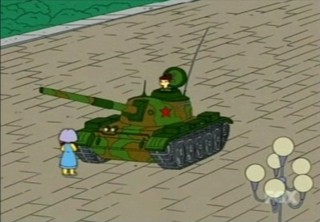 Chris Smith of New Jersey is politicking for new legislation that would make it illegal for companies like Google to censor search results in foreign countries such as China. He also calls for participation in condemning China's human rights records. I recently spoke with Chinese professor who believes that these abuses are overblown and China is making great strides in progress. What is the truth?
Ahead of Olympics, Congressman Pushes 'Global Online Freedom Act' | Threat Level from Wired.com
The gross mistake of allowing China to host the Olympics in light of its horrific human rights record will be significantly compounded if we do not speak up and call attention to the human rights heroes who languish in Chinese jails
March 22, 2008
Google Tools for Educators
# The web application found within Google for Educators allow teachers and students to: collaborate with their colleagues;
# monitor and participate in discussions;
# publish videos;
# create PowerPoint presentation and web sites;
# manage photos; and
# monitor online data.
March 5, 2008
Web 2.0 designed for education?
Great article on the impact of web 2.0 (everything is interactive) on instructional design.
Is Web 2.0 'Designed for Education?'
Higher education for centuries has worked within a closed world where educators could design physical spaces and learning sequences (the curriculum) based on predictable circumstances. An educational designer could work within a much more restricted set of variables than what we see now.
February 29, 2008
Clickers are so 2007..
Educational Technology
According to this guy iClickers are the new dusty old overhead projectors. Actually, I think he believes they make classrooms TOO interactive. Why engage them at all I say? Just mail out the degrees..
January 13, 2008
Never use an iPhone to check your email...
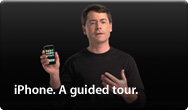 ...if you don't plan to buy an iPhone. These things are just too cool to be caught seen owning, if you know what I mean. However, GMail on this thing was wonderful.
Apple - iPhone
December 13, 2007
Copyright Alliance to help befuddled college professors.
A professor wants to show Monty Python and the Holy Grail to her class on British humor, and she wants to check with the film studio to get permission. A nonprofit group called the Copyright Alliance, whose members include associations for the motion-picture and recording industries, announced today that it would like to help broker such requests.
Facebook: The new BlackBoard?
Course-Listing Tools Hit Facebook - Chronicle.com
Courses, that lets students use Facebook to track down classmates, share notes, start discussion groups, and keep track of their coursework.
December 12, 2007
"Billy, share your research." "No, it's mine!"
Dan Cohen, director of the Center for History and New Media at George Mason University, wants scholars to stop keeping their research materials to themselves.This article highlights attempts to get research faculty to share data online while they are conducting studies and after. This seems contrary to every aspect of academic research in which it seems that we all have to wait around and just be excited about what wonderful reports they will share. Additionally, the intellectual property issue is huge with every faculty member I've spoken with. However, in the day and age we live in, are we going to start to see LESS OWNERSHIP OF INFORMATION? Even though many academics hate it, I think Wikipedia and other shared knowledge efforts might be the start of something revolutionary and new, and research seems like the next logical step in sharing info online.
December 11, 2007
Awesome new web application linked to sweatshops..
Jott, an awesome new web app lets you call an 800 number and receive your text transcribed as emails, text messages, or entries on your calendar or todo list. Very handy for me, since I still have neither a PDA or an iPhone. But, since I was initially amazed by the success, I later found out that the fancy new way of transcribing is people. JOTT.COM IS PEOPLE!!
Scheduling: Add Items to Gcal with a Phone Call using Jott to Google Calendar
I like Jott, but is anyone else slightly creeped out that they use actual people to do part of the transcription? Whenever I leave myself a message I can't help but think of the poor guy in India who sits around all day proof-reading whatever weird stuff people are Jotting.
So, they're making any money off of web-ads I suppose, since the service is free, but I wonder what those people in India make per diem? Ethical issue: Does my use of this service help or hurt these people? I lean toward help, since some entrepreneur came up with the idea and used the difference in wages to make it happen. But can't these people make a little more?
Chaz suggested I call up and list all the things I don't like about India. That's just mean.
December 10, 2007
Attention Grade-grubbing Undergrads: Don't Waste Your Time!
Excellent article about why not to stress about grades.
Twentysomething: Why I regret getting straight A’s in college » Brazen Careerist by Penelope Trunk
I was told that having a high GPA would open all kinds of doors for me. But you know what? I interviewed with lots of companies, received a total of 14 job offers after graduation, and none of the companies asked about it. They were much more impressed with stuff like serving as Chief of Staff for the student government and starting a radio station run by 200 volunteers.
Foreign Language classes via videoconference..
Even more interesting I think is what UTC is doing with The Bright School where we connect to a school and Mexico City and kids talk back and forth.
Fairbanks Daily News-Miner » Archive » French students embrace technology
The two spoke to one another over the video link just as any other student and teacher would in any other classroom in the district.The distance didn’t matter.
November 29, 2007
Raising Smart Kids
Slashdot | The Secret to Raising Smart Kids
Attributing poor performance to a lack of ability depresses motivation more than does the belief that lack of effort is to blame. One theory of what separates the two general classes of learners, helpless versus mastery-oriented, is that these different types of students not only explain their failures differently, but they also hold different "theories" of intelligence. The helpless ones believe that intelligence is a fixed trait: you have only a certain amount. Mistakes crack their self-confidence because they attribute errors to a lack of ability, which they feel powerless to change. Mastery-oriented children think intelligence is malleable and can be developed through education and hard work. Challenges are energizing rather than intimidating offering opportunities to learn.
November 27, 2007
There is no try.
Good article:
7 Habits of Highly Innovative People | Think Simple. Be Decisive.
I’m sure we can all relate to moments when we felt stuck trying to tap into our own creativity. Did you know that this block is merely your mind at work? Your mind is creating all sorts of assumptions, self-imposed constraints and self-limiting inhibitions. I have found that we can remove these assumptions just by being in the moment; start doing, and stop thinking.Luke: All right, I'll give it a try.
Yoda: No. Try not. Do... or do not. There is no try.
November 26, 2007
Everyday Copyright Infringement
Schneier on Security: Law Review Article on the Problems with Copyright
The point of the article is how, simply by acting normally, all of us are technically lawbreakers many times over every day. When laws are this far outside the social norms, it's time to change them.
November 25, 2007
My Screencasts - Video tips
Check out more at my screencast channel here: http://www.screencast-o-matic.com/channels/ci1VjPnd
October 6, 2007
Your Outboard Brain
Interesting article about "wired" thinking.
Your Outboard Brain Knows All
We're running out of memory. I don't mean computer memory. That stuff's half-price at Costco these days. No, I'm talking about human memory, stored by the gray matter inside our heads.
October 5, 2007
Google Docs *Now with Presentations
I used Google Docs to create a Powerpoint-like presentation, though, this is the most limited I've felt using Google Docs so far. I couldn't even export a jpg to share, or publish online without sending invites. Not sure how new this is, but has been long-needed in my Google arsenal.
Google Docs Help Center
October 4, 2007
Education Mashups
Great article on what we could be doing online..
EDUCAUSE REVIEW | July/August 2007, Volume 42, Number 4
the mixing of any number of digital media sources
September 12, 2007
September 10, 2007
Why use technology in learning?
Good article on basic answers for how tech influences and enhances learning. My biggest argument would be, look how the world changed after the Gutenburg Press.
Techlearning > > Eight More Reasons for Technology in Education > September 1, 2007
August 22, 2007
Tech Nerd - Online Learning
So, I'm finally doing something I've dreamt of, which sadly reveals my true nature. We're streaming courses to students all over the world (Canada) for students in UTC's online Engineering Management program. We're using a combination of Windows Media Encoder, Blackboard, Mimio, and other free and cheap apps and products to do what other schools are doing for thousands and even hundreds of thousands of $$. Basically you hear the professor and see whatever they are presenting on the computer or on the Whiteboard. However, in the class running tonight for Dr. Alp you can also see the teacher and students on a webcam. If anyone wants to see a sample let me know..
Other than that, I'm also taking a class that is entirely online from Dr. Adsit, but there isn't any fancy video streaming and probably not any need for it, though the class is a History of Instructional Technology.
August 1, 2007
Web 2.0 naysaying
It's not that I completely disagree, but naysaying technology and prophesying its doom seems kind of silly. Did anyone call the hourse and buggy boom a bust when we switched to amtumobiles? Changes are just coming faster, cycles completing themselves quicker, but that doesn't mean the ideas aren't legitimate or were flawed.Bubble 2.0 Coming Soon - Columns by PC Magazine
Every single person working in the media today who experienced the dot-com bubble in 1999 to 2000 believes that we are going through the exact same process and can expect the exact same results—a bust.
Thoughts on Web 2.0?
July 15, 2007
Publishers Beware!
Interesting article on supposed widespread copyright fraud in the publishing industry.
SSRN-Copyfraud by Jason Mazzone
July 8, 2007
IPTV communication course
Interesting article about coursework centering around braodcasting television over the Internet.
A Degree in Internet TV - TVover.net
broadcast students at Ravensbourne will have a unique opportunity to gain hands on experience with Internet TV channel development and management
June 26, 2007
Blackboard dominates online learning.. verdict still out on effectiveness of online learning
Short article on the status of online learning with criticism and praise for various platforms. Where is Moodle in all this?
E-learning: Boom or bust? | Innovation | Canadian Business Online
In the U.S. there are powerhouses like Blackboard whose revenues approach US$200 million annually
June 25, 2007
Battle Academy's Tech
So my sources tell me that Battle Academy is full of these things:
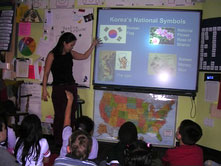
I believe Prometheon incorporates SmartBoard and iClicker technologies which is cool, plus Battle has the NASA grants--and Jackson is totally digging space right now. And, I LOVE the idea of telling people my son goes to Battle Academy, like he's training for some kind of arena fighting sport.
Thoughts on Battle Academy?
June 22, 2007
Ethics Overseas?
Was just talking today about a friend with major ethics about digital rights and downloading who moved to China and found out about massive pirating abroad. This article points to the positives of web 2.0 in such a climate and how control of online content is more manageable with a web 2.0 mindset.
Web 2.0 madness grips China | CNET News.com
"Online gaming is a huge success. If you tired to sell a PlayStation 2, all the games would be pirated. With online gaming, you control things on the server side," said Ted Dean, managing director of BDA, a consulting firm specializing in Asia. "A pop star can make more money on a ring tone that China Mobile sells for 2RMB (about 26 cents) than a top 40 single because the CD is going to be copied."
June 20, 2007
Who care about blogging?
Some interesting thoughts about blogging here:
Knowledge Management Systems @ U Texas » Blog Archive » Thoughts on Blogging
Cites this article: Why Apple Doesn’t Blog, in which the author writes: “Blog entries are like emails that cc: to the entire world.”
My thoughts: Who cares? If people want to read my blog, that's up to them. I in no way condone citing it as a source of reference for scholarly research or even conjecture, but, taken for what it's worth, it may be useful to someone. This serves a very useful purpose for me, and the occasional online collaboration thrown in is great, but it's not that important to me.
Comments? No? OK. Good.
June 18, 2007
EDD 07 Conference - How Global is Local These Days?
Well, this conference appeared to come off with nary a hitch, but I did put quite a bit of work into the overall production of the event. I think the content of the program was very stimulating and the discussions and Q&A; went well. I had quite a few compliments about the media that was included and the iClicker portions of the program seemed favorably received as well.
Also, the best compliment I got was from Becca for making all of the technology work and making it seem effortless. Thanks!
June 15, 2007
Gaming Addiction
Doctors are recommending that the AMA define and prescribe treatment for gaming addiction.
AMA chimes in on gaming/violence connection, gaming addiction
In terms of "gaming addiction," the report suggests that it is likely to be a subset of Internet addiction, as it most frequently occurs in players of MMORPGs. In both of these addictions, the current definition is currently informal—the described symptoms actually most closely resemble pathological gambling, rather than an addiction. In either case, the report notes, "there is currently insufficient research to definitively conclude that video game overuse is an addiction."
June 8, 2007
Doug Englebart
YouTube - The Invisible Computer Revolution
story of Doug Engelbart, inventor of the mouse, word processing, email and much more of the interfaces we use today. http://www.invisiblerevolution.net
June 7, 2007
Kind of funny..
Publishing exec 'steals' Google laptops in silly demonstration - Engadget
Publishing exec 'steals' Google laptops in silly demonstration
Going to try this soon... LogMeIn for Mac
Wonder how it will handle the 1920x1280 resolution of the studio display at work?
LogMeIn - Remote Access and Desktop Control Software for your PC
LogMeIn enables you to connect to your Mac computers from anywhere in the world; from any other Internet-enabled Mac, Windows PC or hand-held device.
June 6, 2007
MIT Enterprise Forum
I am facilitating the downlink of the MIT Enterprise Forum for the Riverbend Technology Institute. Tonight's broadcast is about:
A.B.L.E. Tech:
Achieving Better Life Experiences
for People With Injury, Disability, and Aging
Challenges Through
21st Century Technologies
More info here.
BTW, one of the speakers is Hugh Herr. So I'm wondering is this the climber Hugh Herr that lost his feet and lower legs due to an ice storm? Anyone? This site indicates that yes it is.
About 35 local technology and accessibility enthusiasts are here for the viewing.
UPDATE: Excellent discussion of tech helps for disabled people. Question of ethics is, Who can afford them? Not even many Americans have access to this stuff, not to mention the other 5 billion people in the world.
Also, I waited on the phone for 20 minutes to phone in a question and didn't get too. Kind of took away from the end of the conference.
Synchronous vs. Asynchronous Instruction Online
I am currently facilitating a videoconference between UTK, UTC, and UTSI where faculty and administrators are discussing which way to go with an online engineering program this Fall. It seems that several people were planning this from various locations and were all using the term "online" but people assumed common meanings for the term. For some this meant streaming video modules (asynchronous) while others assumed this was interactive videoconferencing (synchronous). My suggestion, be more specific!
It seems that the best solution is to combine the two approaches. Synchronous videoconferences can be streamed live to non-interactive users at their home (or work) PCs and also recorded for later replay. The question is, Does content created for synchronous delivery hold up when viewed later on? Does the pedagogy need to change or not? Reminds me of students who ask me if they can audiotape my lectures (to which I say sure-but I don't lecture). I could never go back and listen to all that, but I guess some people want to and can.
Teachers going nuts, but who can blame them?
Kids with video-enabled cellphones are busting teachers losing their tempers (mostly male ones in this video). But honestly, can you blame teachers for losing it with these millenials--or as I hope they are remembered, The Laziest Genreration?MyFox Kansas City | Kids Bait Teachers with Technology
technology is putting some teachers in an unflattering light.
If video killed the radio star, videogames killed books...
This article discusses the appropriate uses of videogames in learning applications.Experts: Use games to teach
it's time for video games to be demystified -- and then embraced.
This school integrated game design into their curriculum, which includes, programming and graphic design, but also writing storylines and teaching plot structure. I say let's not throw out the baby with the bathwater, but integrating games into the curriculum seems like a no-brainer given kids affinity for them. However, how do we do that and also encourage reading books?
June 1, 2007
My Screencast Channel
Final Cut Color TweakHere's another screencast showing you how to tweak color in Final Cut.
You can also check out my Video Tips channel at Screencast-O-Matic.com.
May 31, 2007
Screencast of Orb
Here is a screencast I made to test out the setup at Screencast-O-Matic.com which was also a good opportunity to demonstrate the greatness of Orb.
Screencast-O-Matic: Orb.com Walkthrough
This screencasting tool is incredibly easy to use and works with any browser on any platform, so long as you have JAVA. The only downside I see is that you cannot reposition the window during a pause, which would be incredibly useful for demos of programs with a large layout like Photoshop or Final Cut. Going to try it out on a Mac next to demo Final Cut. I did this last year using a camcorder pointed at the LCD screen.
UPDATE: Trying to embed the screencast.
Continue reading "Screencast of Orb"Golden Grillz and Satan Like Puppies, a documentary film
Kids learn a lot when they teach others, particularly when they teach through film:
The Chattanooga Pulse: - The Kids Are Alright
The kids were the only ones tasked with planning and creating the film. Every idea was theirs, every interview was scheduled by them, and every segment was conceived by them. Much of the music in the film was even made by students.
So, I'm very pleased with the Pulse's coverage of this, though a few details I wish more people knew are in order.
Liza Blair, formerly with AVA and old friend, came up with this idea, wrote the grant that was funded, and deserves some mention for having gotten this ball rolling. Not that anyone is trying to take credit, since everyone has duly noted that the kids did all the work. However, I'd hate to see AVA not share the love. So Liza, here's a shout out (or whatever the kids say now).
Additionally, and I only mention this for my Online ILLP documentation, I was called on during the formative stages of the grant-writing and also when the funds were finally in and Liza was gone, met with Mark Bradley-Shoupe from AVA to help with implementation, and I recommended Emily Bowman, my former student, to work on the project. Having that said, props to everyone for making this happen. Hopefully it will open the door to many future ventures.
But, how do you measure this type of learning? Certainly rubrics for accomplishing various production and storytelling aspects are important, but what about the material the filmmakers covered? And how well do their fellow students learn from watching this documentary? Is this a dissertation topic, or just a scholarly article?
Coursecasting
This is a good description for what I've been wanting to bring to UTC for a year or so now. Seems like an accessibility boon for students to be able to review lectures and course discussions online immediately after class.
U Washington Deploys IP-Based 'Coursecasting'
Since October 2005, students have been able to access recordings via the Internet, and the university has logged about 110,000 lecture downloads through March 2007.
Oprah's Game of the Month Club
I've got to say, let's do this. Better odds of getting kids to read if you don't discount their other passions.
The Chronicle: Wired Campus Blog: Like a Book Group, Except With Video Games
Like a Book Group, Except With Video Games
Gates and Jobs get together for a pow-wow
Good reflections on the origins of Apple and MS and the rivalry that created so many apps and innovations that we have today.
Steve Jobs and Bill Gates: Historic discussion live from D 2007 - Engadget
May 26, 2007
Collaborative Blogging
I like the idea of collaborative blogging for myself, my current and former students, and guest authors. Now that UTC is implementing user comments with MT, I think we can do some neat things in the areas of television, video, tech and learning. Be watching utc.edu/video for new content soon.
The article that inspired me:
Top 5 Reasons Why You Should Become a Co-op Blogger | Wise Bread
May 25, 2007
Hey Comcast...
...maybe dropping G4 and other channels in the middle of a fight for primacy of copper wires into our homes isn't such a good idea.
So, I know Comcast does great things for the community, people volunteer with shelters and other projects, and they do provide fairly reliable cable and internet service. However.. Cable Bill Dead, Chattanooga Invites AT&T; To Provide Video Service | WDEF News 12 | News, Weather and Sports for Chattanooga and the Tennessee Valley, let's roll out the red carpet for AT&T; to come into Chattanooga to provide cable and broadband services.
First of all, lack of competition is never good. Do I think prices will drop with cable alternatives? Not really, especially since I'm still dismayed that prices keep going up and up for cellular service and broadband in general, not to mention cable TV. But will we have more options? Certainly. As a consumer, that's always good.
How will it affect public access and other educational broadcasts? We don't know. We can imagine worst-case scenarios, but there are probably some positives that could come from this as well. Time will tell. Was quite a lobby effort against this though, and I can't help but think, if that money had been used to buy airtime for educational broadcasts, at least it wouldn't have gone down the drain.
I did my part by broadcasting MTSU's talk show on this topic which did much to inform me and hopefully this community about the issue. However, I never saw Comcast's argument that we should all be so concerned about "playing by the rules." The community-based approach to cable/internet franchising is great, but if state-wide negotiating gives us choices, let the market decide I say.
Thoughts?
iClicker - Fun tech that UTC already owns...
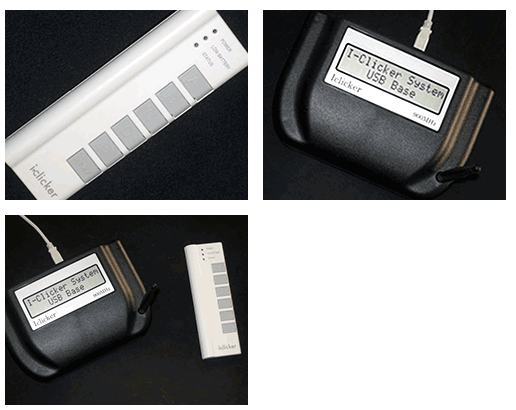 I got to play with and help demonstrate this technology last night:
iClicker, an easy-to-use radio frequency classroom response system that facilitates teaching rather than impeding it.
What I liked about this was the ease of setup. My boss just plugged this in and it instantly worked with my existing powerpoint and provided instant feedback of student's answers. I can think of a ton of awesome classroom uses where the technology would help to reinforce learning and engage students during review sessions. Then there are all the non-learning but fun uses, like, make your own Scene-It games and so on.
Pretty neat.
May 19, 2007
Star-competency defiined - Assessment
About a three years ago I got to observe (and videotape) Dr. Jan Richardson from DC doing in-service training for teachers at Battle and Brown Academy. She is an example of the very definition of a star competency, particularly assessment in how she works with kids and teachers to accurately assess learning accomplishments and gaps in reading and writing. We created a set of DVDs for teachers at these schools to teach strategies for teaching reading and writing, all of which accurately reflect the RTI model which I've been making another video about for TN DOE. As far as assessment, what I noticed most was the quick and accurate assessment of learner levels, differentaited instruction targeted at proficiencies and deficiencies, and quick prescription for DI. Also, there is no one correct learninig strategy, but a good RTI instructor must be able to read the learner and then apply the right mix of strategies. "Mix and fix" - kids put the words or letters together in the way that makes sense...
Leveled Reading Stategies
Students should use meaning and structure to predict and self -monitor at every level. Attention to visual information should increase and change over time as students develop visual analysis skills, and fluency should gradually improve as students develop automaticity with sight vocabulary and decoding skills. The following is a partial listing of common behaviors, strategies and skills for each level. It should not be used as a checklist for students but as a guide to help teachers plan appropriate word work activities. In addition to accuracy, consider independence, fluency, language proficiency, and comprehension when making acceleration decisions.
May 18, 2007
Yet again, the world is not flat.
Now we're cookin' and it's a sound idea, too | Tech news blog - CNET News.com
Two billion people around the globe still depend on open wood fires for cooking.
Hmm. That can't mean that 2 billions people are camping at any given moment, unless by camping you mean living in daily poverty.
The world is flat if you don't poke around two far from your wifi and paved roads..
May 15, 2007
Curiosity kills cats, get jobs
Some good thoughts about curiosity being a necessary and marketable attribute.
Micro Persuasion: The Most Essential Career Skill You Need to Succeed
the most important "tool" you can have today in business is insatiable curiosity. The minute you lose it, you're dead.
May 9, 2007
Search in black - save a tree.. eventually.
Blackle - Energy Saving Search
Google, which has a white background and gets about “200 million queries a day” could reduce global energy use by 750 Megawatt-hours a year by simply changing the color of its homepage to black.
Web 2.0 Digital Ethnography Guru
In an earlier post I embedded an incredibly poignant video about Web 2.0 and finally I have more information about its creator. Wesch is doing a webinar in June and I will be sure to tune in.
The Chronicle: Wired Campus Blog: An Anthropologist Explores Video Blogging
Michael L. Wesch, an assistant professor of cultural anthropology at Kansas State University, was writing a paper about social networking and other interactive tools, which are collectively referred to as Web 2.0, when he decided to make use of the technology to spread his message.
Be sure to watch this online interview with the prof. http://chronicle.com/media/video/v53/i36/youtube/
May 5, 2007
Would You Install Pirated Software at Work?
Good discussion in the comments.
Slashdot | Would You Install Pirated Software at Work?
I have been told to install multiple copies of MS Office, despite offering to install OpenOffice, and other OpenSource Office products.
Learning Disabilities Tech
This blog, while not eloquent, advocates tech helps for LD students.Cool Cat Teacher Blog: How wikis, podcasts, and laptops help students with learning disabilities
Why did the laptop improve his grades?I sat down with my son and asked him what the difference was. He basically told me it was a couple of things:
* He doesn't have to struggle with a lot of notebooks.
* His notes are no longer full of errors and mistakes and he can read his notes.
* When he is writing he can focus on what he is writing and not get mad at himself because he can't read it and it is full of mistakes.
* He can focus on studying and getting his work done because the things that "drive him crazy about himself" are under control.
Need Less Input - Laptops for Students programs dropped in NY High Schools
Seeing No Progress, Some Schools Drop Laptops - New York Times
“After seven years, there was literally no evidence it had any impact on student achievement — none,” said Mark Lawson, the school board president here in Liverpool, one of the first districts in New York State to experiment with putting technology directly into students’ hands. “The teachers were telling us when there’s a one-to-one relationship between the student and the laptop, the box gets in the way. It’s a distraction to the educational process.”
This seems like an obvious outcome now, but I remember thinking how awesome this would be when I first heard it years ago. Could it have worked? What was needed? I wonder if the instruction changed to match the new technology in the student's hands?
Wondering about the program I had seen in Atlanta I google laptops for students in ATL and found this article: http://www.ajc.com/metro/content/metro/cobb/stories/2007/04/20/0420metlaptop.html
Aparently many school board members were fired and are under investigation for the business practices used in their program.
Maybe it's just a bad idea all around..
April 30, 2007
Careful what you post..
Fair-use doctrine is great, until someone puts an eye out.
http://chronicle.com/wiredcampus/article/2030/adventures-in-fair-use-doctrine
Internet2
We've been using Internet2 for about 4 years, via our connection to UTK and for a short while on our own connection. This highspeed data backbone is reserved for research and medicine, but is being opened to K-12 education for the first time.The Internet's Second Coming : April 2007 : THE Journal
The K20 Initiative reveals Internet2's capability to support videoconferencing, bringing once-exclusive educational programs into K-12 schools.Posted by cmwillis at 10:54 PM | Leadership , Learning , Technology |
April 27, 2007
Short Films Documentary
Below is a short documentary about the short films that were created in my COMM 445 - Video II class this Spring. Coti and Jill also tell a little about the process of making a short and provide tips for aspiring filmmakers.
Stay tuned for a slightly more comical look at filmmaking by Lazy Bear Productions in How To Make Your Movie: Part Deux. I have a small cameo in which I play a nervous professor on camera for the first time.
NASA Videoconference
 "Did you know the shuttle transporter crawler gets 35 feet to the gallon?"
Facilitated a videoconference today for the Riverbend Technology Institute with 2 classes from Brown Academy and the NASA Digital Learning Network. This school has a magnet curriculum and has become a NASA Explorer school (more here).
This interactive field trip involved a studio at NASA with a Chromakey backdrop from which teir instructor presented a variety of multimedia and hands-on demonstrations (liquid nitrogen and the balloon trick!). This guy was awesome and he officially is doing my dream job (probably a little late for me to get on with NASA). On our end we had two classrooms connected in Fletcher Hall, and students were able to ask questions, perform tasks as examples, and even see the other classroom here on campus when they asked questions.
Prep for this involved teacher's preparing their students for the experience with lessons, setup and test of the videoconference (nearly had issues even after successful tests, but cool-headed troubleshooting prevailed), and making contact with the folks at NASA.
NASA provides these experiences for free, but they only ask for students and teachers to fill out a feedback form online in order to better their program an to report back on what they are accomplishing. (Good assessment!)
I'm going out to buy a telescope tonight. Woo-hoo!
April 21, 2007
More on Dilemmas - False Dilemmas..
False dilemma - Wikipedia, the free encyclopedia
In televisionStephen Colbert, host of the Comedy Central news parody, The Colbert Report is known to ask his in-studio guests for their opinion of President George W. Bush. He usually gives them two choices: A great President? or The greatest President?, obviously leaving out any choice which is negative of the President.
Productivity advice for Gmail/Gcal users
This article has some good advice that I haven't been following:How to Make Gmail/Gcal Rock Your Tasks - lifehack.org
April 19, 2007
Mocs News coverage of VT Massacre
I think my students did a particularly good job of covering the Virginia Tech story. Check it out here: Mocs News.
April 13, 2007
Wikipedia debate..
Slashdot | Should Schools Block Sites Like Wikipedia?
I think it's hilarious that just becuase you didn't pay an arm and a leg for some piece of information, or it doesn't say Of Brittanica after it, people don't trust the information. Newsflash: We shouldn't trust anything without further investigation.
Slashdot | Should Schools Block Sites Like Wikipedia?
The reason given was that Wikipedia (being user created and edited) did not represent a credible or reliable source of information for schools.
Maybe they can ban students discussing things in the hallways as well. With these guidelines that is also not credible.
April 4, 2007
Online ILLP
Below is my first attempt at a matrix to pull together my learning experiences over the last couple years.
| Past Experiences & Projects | Current Experiences & Projects | Future Experiences & Projects | |
| Learning | |||
| Assessment | |||
| Research | |||
| Technology | |||
| History/Enterprise/Ethics | |||
| Instruction | |||
| Leadership |
September 17, 2006
Revised ILLP
In order to get better on track in my life and in my program of study, I am listing everythig I can think of that I need to address in my ILLP objectives and accomplishments. Below are the 7 areas of competencies addressed in the EDD with my personal achievements, deficiencies, and objectives to be reached in each area. Also, at the end I've listed a few projects/innovations I am working on and would like to include in this process.
August 31, 2006
Humor 101
I've come to realize that a very valuable asset in education, humor, is incredibly underutilized. To this end I intend to write a scholarly, researched article on the uses of humor in the classroom tentatively titled: "Humor 101: How to turn that class clown into a teacher's pet." More to come...
August 29, 2006
Model-Netics
I attended a presentation today by the director of HR for UTC on Model-Netics. What is Model-Netics you ask?
Model-Netics is a comprehensive management training and development program.
Basically involves the use of 151 paradigms for business and encourages organizations to use a common language about change and effectiveness.
I thought this tied in really well with the Performance Assessment course Dr. Bernard taught this summer and I will plan to take the 20 week course next Fall as soon as I have finished my core courses. Though not a credit course, it definitely fill a leadership gap I need to fill as part of my ILLP.
August 24, 2006
Gladwell Blog
Great stuff here on Malcolm Gladwell's blog.
The Master Plan
UTC TV: Center for Television, Web, Documentary and Digital Film Production
UTC Digital Productions - web. film. television.
The UTC ________ will exemplify UTC's presence as an engaged metropolitan university.
The staff of the Center in collaboration with students, faculty and external partners, will work to educate and enrich the lives of students as well as serving the needs of the greater Chattanooga community by producing high-impact programming, archiving and distributing campus content, providing embedded learning opportunities for students, and serving the production needs of the this university and its partners.
Staff:
Director ($50K) - oversees operations of all campus media projects. Hiring decisions made along with board of representatives from University Relations, Continuing Education, Athletics, The Lupton Library, and The Information Technology Division. Position funded by Chancellor's Office. Management of all center operational budgets. Grant-wriitng for special projects.
Television Studio Coordinator/Producer - ($35K) Scheduling of Television Studio activities and shooter/editor for all campus promotional videos, from commercials to recruitment CD-ROMS. Coordinates programming on UTC Television on Comcast Cable Channel 3 and on-campus programming to video kiosks and dorms. Provides video production support and consultation for entire campus, particularly students and staff in the Communication Department. Teaches 1 course per semester and oversees daily student news productions. Position funded by University Relations (67%) and Communication Dept (33%). Oversees 1 graduate assistant (videogapher) @ 30 hours per week, and 1 student worker @ 20 hours per week.
Podcasting Coordinator ($35K) - Scheduling recordings of archival footage of campus events and speakers for live webcast and podcasting from UTC.edu and GoMocs.com. Responsible for encoding and maintaining RSS feeds and reporting on subscribership. Also works with Distance Learning to develop and implement online courses. Position funded by Lupton Library(33%), Continuing Education (33%), and Athletics (33%). Oversees 2 student workers @ 20 hours per week.
Also potential for grant-funded position for developing online resources for students with disabilities working with the OSD.
Chief Engineer ($35K) - Design, installation, maintenance, upgrade, and training for all Center activities to include: Television Studio and podcasting cameras and related equipment, television master control and podcasting servers, a centralized control room, Athletic venue installations and video operations and videoconferencing classrooms. Provides training to students, faculty and staff in operation of various facilities. Position funded by Continuing Education (33%), Athletics (33%), and Information Technology (33%).
UR CE COMM Athltcs Lupton ITD
Dir
Studio Cdr 23,450 11,550
Podcast Cdr 11,550 11,550 11,550
Chief Engr 11,550 11,550 11,550
Dept Totals: 23,450 11,500 11,500
23,450 23,450 11,500
Departmental yearly budgets:
Studio budget $30K recover 50%
Podcasting/Archival $15K
CE equipment (paid for from DL funds) $10K
Tech fees pick up operational costs for student-focused programs.
Community-focus - PSAs and films
Ellumination
Facilitated tech for and observed a webinar today featuring Dr. Roblyer on a panel of experts in curriculum and instruction design for virtual schools. The meeting was conducted with a web-based java app that I was skeptical about at first, but pretty impressed with after seeing it live.
About 40 particpants joined in this webinar by clicking on links sent by email. The link pulls up a session in elluminate, which is basically a chat room with everything but the kitshen sink thrown into it. It offers live audio (one person at a time to avoid confusion), video, slides, polling, hand-raising, chat (as backup for audio problems), and active weblinks in the slides. They also did followup with all the participants via a survey in Zoomerang.
There is probably more I am missing and I hope to get a demo of this somehow because I want to see what all the moderator was looking at, since they were able to do the online polling, presentation of that data, and on-the-fly Q&A.;
This may just be enough to get me excited about online and distance learning again..
August 17, 2006
Note to self..
UPDATE: I will be turning in a strategic plan for the studio as my optional assignment for EDD 761 - Organizational Theory and Development.
Dr. Tucker has mentioned that my "grand vision" for the UTC Television Studio should be a big part of my ILLP. More to come.
UTC Athletics steps into the digital age
After multiple meetings with Rick Hart, UTC's new Athletics Director, I see a new vision for the program here that involves innovative uses of technology.
First, their football program has stolen my summer intern (with my permission and training) to use video more heavily in their training. Michael shoots practice footage every afternoon and edits and delivers DVDs with highlights of various drills for analysis and presentations to the players in the classroom that same evening. This practice will be used more heavily in other athletics programs as well.
Second, the Athletics program will be taking advantage of the web to deliver content to viewers on campus and around the world.
"Fans will be able to choose which team's audio feed they would like to listen to during the games, which also will be archived and can be downloaded onto a portable device, like an i-Pod." The Stamford Advocate
I will be helping to develop a workflow for live production and streaming of games, packaging highlights reels of past and present UTC sports, and delivering in-game entertainment to the jumbotron at Finley stadium and eventually in the McKenzie Arena.
Will keep updating here as we continue this partnership, but as I said to Hart in our first meeting, it's great to finally see someone with a vision in his position.
More here: Small-Conference Football Hits the Computer Screen
June 30, 2006
AIDS movie
Worked with these girls from Upward Bound to help them produce a short film about AIDS entitled The Domino Effect: How I got AIDS. Pretty impressive, they came up with the idea, wrote the script, directed and acted, and made editing decisions. Leslie Smith with Upward Bound does an awesome job with these kids and that program seems to have a big impact.
Chattanoogan.com wrote up a good article here.
June 27, 2006
Spectrum University
Worked in the studio with a group of 24 teens with autism and other developmental delays yesterday. Spectrum University kicked off the last week of their summer camp by producing a movie trailer entitle: Spectrum University-Mission Totally Possible.
It was very interesting preparing the curriculum for this activity. The first problem and the biggest was the number of students, counselors, and press crammed into our facility. 24 kids, 15 counselors, 6 studio employees, 1 camp director, and a couple cameramen from local television. I set up three learning centers and used the three groups of eight previously decided upon which helped, though I should have spread around the work a little more. Kids acted in front of the chromakey: climbing up the side of a building, swimming underwater to plant or defuse a "bomb", and skydiving. They shot more dramtic scenes in our control room including my favorite line, "Which wire? WHICH WIRE?" Or, "I'm going to hurt your camp counselor." Also they did some exterior shots and recorded voiceovers in our edit suite.
Was a hectic couple hours, but I think the kids got a pretty good perspective of how a film gets put together and they will love the final product. Dealing with their disabilities was much easier than I had expected, though I had planned on treating these kids just like anyone else (inclusion?) which went pretty well. Rachel Salomon-Sadowitz, the camp director, does an incredible job motivating these kids, and the counselors all seemed pretty proactive in working with their assigned students. We only had a couple of situations where kids didn't want to participate or took a lot of encouragement, but as my editor Ryan pointed out, "There are college kids who wouldn't have handled the situation this well."
I WOULD LOVE to post the final product up here, but that will not be possible. However, with permission of the program, I can probably show anyone interested if you want to come by the TV Studio. It's going to be awesome!
June 11, 2006
Ongoing projects
Language Learning videoconferences with Mexico - These monthly conferences take place with local elementary school children from The Bright School and with children in a suburb of Mexico City. The kids speak back and forth in each other's language and are able to ask questions about each other's culture. Read all about it in this article in the Chattanooga Times Free Press.
MIT Enterprise Forum - a satellite downlink brought to UTC by the Riverbend Technology Institute and yours truly. "'Talk to an Angel: Crucial Connections to Early Stage Capital' is a look at how entrepreneurs and angels can find each other for funding opportunities, and work together after the deal is done." More info here.
Girls Inc. - helping students learn basics of the communications industry, particularly in helping them create a public service announcement for Breast Cancer awareness.
COMM 400 Documentary class - provided technology and storytelling advice and served as a judge for awards given at their final presentation.
Back Row Film Series and Workshops - coordinated and planned curriculum for three free filmmaking workshops for teens concentrating on screenwriting, shooting, and editing independent films. Also on planning committee for the Back Row Film Series.
Chattanooga Film Commission - invited by local filmmaker Jarrod Whaley and Missy Crutchfield to serve on the local projects committee of the city's new film commission. This committee's purpose is to support and encourage local filmmaking.
Youth Documentary Project - sponsored by the Association for Visual Artists, this project partners local filmmakers with teens at afternoon rec centers to study and create short documentaries.
The Enterprise Center - Created promotional video materials for the Maglev train DVD, edited from existing and computer simulated footage of magnetic levitation train footage to educate Chattanoogans about the potential of a high speed magentic levitation train from Chattanooga to Atlanta.
Camp Spectrum - organizing a one-day workshop for teens with autism to learn various aspects of television and video production.
April 27, 2006
Done with optionals
So I finished and turned in the last of my optional assignments today. Having the "Create a Self-guided Tutorial" project last was really a bad idea. Here are the three things I chose to do which will end up constituting about half of my grade:
1. Design a seminar to teach teachers how to design a curriculum (Seminar should include a detailed agenda, handouts, presentation materials, etc.)
Since I have no background in education, I thought this would be good for me to investigate and report to others on. My idea was to create a workshop for new instructors at UTC who have been hired to teach in a particular content area, but who may have no prior teaching or course design experience. I'll never forget environmental law--great guy, but didn't really have the course together.
Was difficult to put into notes and Powerpoint the content of the workshop since I would be basically facilitating a discussion about curriculum design, but I tried to script it more in the re-write.
2. Investigate and conduct an abbreviated curriculum audit that looks at a curriculum in-depth. Identify the strengths, weaknesses, areas for improvement, use of an appropriate set of standards, etc.
I looked at the broadcasting curriculum offered by UTC's COMM dept, particularly relating stated objectives on course syllabi and how they relate to the department's core competencies. Also a difficult paper to write.
3. Design a "training film" to assist teachers on the use of a selected product as part of the curriculum.
This project was INCREDIBLY more difficult than I first imagined. I chose to teach educators how to use Final Cut Pro or Express in their courses and I realized quickly how much more difficult this program is to use for beginners than I realized. I guess when you spend at least 30 hours a week in front of something it becomes second-nature.
I would like this to have been an interactive presentation and self-guided tutorial on CD-ROM created with Macromedia Flash MX. However, I can't seem to wrap my head around Flash enough to get it to do what I want. Ideally the video will play in a small window on the right side of your screen with text instructions below it in a sidebar similar to Microsoft Office's Help function. It should have pause and play, skip forward and back and a link to a dynamic table of contents. Will attempt to get this finished in May, but had to turn it in as a DVD with chapters for now, which is still pretty useful. Just painful switchinig between the tutorial instructions and the software you are working with. iMovie 2 had a grat tutorial that minimized while you performed the steps, so maybe I can figure something like that out.
I REALLY thought about asking for an extension to complete these projects during May and taking an imcomplete for this course, but I think that could set me on a slippery path toward ABD (All But Dissertation).
April 23, 2006
Integrated Thematic Curriculum = Awesome TV Show!!!
So on Saturday I did my first ever pitch for How Can I Do That? a children's educational television program with an integrated, thematic curriculum. The theme of the program is discovery learning--focusing on the process of learning, both deductive and inductive, and a variety of subjects are integrated into this theme. The content of the program will be driven largely from local museums, historical sites, factories and businesses, etc. I don't want to say too much more about the show on here, but I think my idea was well received. I had one professor who came back several times later that day and said, "That might just take off." I hope so.
For this project I basically created a show proposal as I've been teaching my students to do for years in Video I. I included relevant learning theories and a design model for the curriculum (though this area was weak in my presentation). I talked about how Gardners's MI theory and Kolb's learning inventories would be used in casting. I also requested ideas for show topics and funding sources and got several for the former.
April 4, 2006
Curriculum Design Activities - Filmmaking Workshop
So, for whatever reasons this spring semester I commited my student workers and myself to putting on a series of free filmmaking workshops for teens that took place at the Hunter Museum. Was a pretty big success in my book, since we got kids from very diverse backgrounds and schools including UTC, GPS, Baylor, McCallie, Red Bank, and Howard (thank you Ms. Lyon!)
The purpose for me was to try to do everything possible to promote local film submission for the Back Row Film Series. The other reason I guess was to make use of the amazing resources of two of my current student workers who are into filmmaking in a big way, as well as to get other local filmmakers to come out and share their expertise. All of this took place with degrees of success ranging from better than I could have expected to OK, let's just get this over with. All-in-all I think everyone involved had a good time and enjoyed the events.
I basically coordinated the whole thing with assistance from the curators of education at the museum. The idea was to do three workshops, the first on pre-production (writing scripts), the second on production (shooting), and the third on (postproduction). I leaned heavily on my students, Ryan and Kashad, for the first one, since I haven't written the first screenplay. We did cover som other materials that day as well, but for the most part followed the curriculum described here. The next workshop I had more expertise in and planned the workshop accordingly. Tried to cram too much into 2.5 hours, but all in all it was effective. That day's plan can be seen here. Finally we closed with postproduction which was planned during most kids spring breaks and was poorly attended. That curriculum is still in note form but will appear as an article on the Chattanooga Film Blog shortly.
We used a bit of material from the Film Foundation who have two terrific curriculums for teach film appreciation and filmmaking to kids call The Story of Movies and Creativity on Film. These are very rich resources that I would like to incorporate more fully if I ever do this again.
This was a very interesting project because I have some good information and experience to share, but putting it into the form of a 3-day workshop series that would be useful and fun for students who signed up was difficult. Also, collaboratively building the curriculum with the other filmmakers was tough, since all most filmmakers want to do is sit around and trash popular directors and so forth, but we made it, and I think I learned a lot from the experience.
Check out my student's amazing work and a cameo by Mr. Willis at Lazy Bear Productions and Killing Elvis.
April 2, 2006
Academic Scholarly Journals: Look Out!
I finished my journal article a bit ahead of the buzzer this time and did some great work I think toward the end. The article was flailing for some time without the local connection which I finally made by meeting with Jill Levine at Normal Park Elementary. This gave my paper a very grounded, practical feel I think and her insight was valuble.
Thanks to Jim for pointing out potential for plagiarism, though I think a few of his notes on my paper pointed to my synthesis of other's ideas. I feel like if I've quoted and cited others work properly, then I go on to synthesize that into my own understanding of the topic in my own words with my new ideas--that would not be plagiarism. However, as Dean Hicks says, better safe than sorry since if I get into trouble I'll have to go see him. So I played it safe and shall continue to do so.
Also, when I get around to submitting this, I think I will remove some of the learning theory regurgitation, since I really just put that in there to adequately cover the assignment. As for an article for educators on curriculum design, I think readers will not need a refresher course in cognitivist and constructionist frameworks. I won't cut them out entirely, but I do plan to reduce those sections.
Click below to read The curriculum of museum magnet schools
and how it can be adapted to traditional classrooms.
March 31, 2006
Expert Learners?
Had some discussion and disagreement tonight with my instructor about learners. What started from a thread on adult learning theories--which I know very little about and think I mostly disagree with, led to the idea of expert learning, which the professor disagrees with. WHile not literate on an research into the topic, my thought is that people who can look at learning, particularly at their own learning (metacognition?), those people are able to view learning as a process.
Thus two people may be experts in any specialty (same or different), but the one who recognizes, Hey, I know everything there is to know about fixing cars--or computers, or jet engines, or counseling kids with disabilities, or whatever; but I could also use that same process with which I become an master of this subject to tackle any other. That person is an expert learner because they've have mastered their own learning style, whereas the other person may just say, Well, I only know about these here cars.
I would also venture to say that expert learners may not be masters of any topic, but they know enough about their learning style and how to gain new knowledge, that they could be a jack of just about any trade. This does not extend to Howard Gardner's (or whoever else's) multiple intelligences. Just because someone is a math whiz, doesn't mean they are automatically going to be able to master the saxophone, or dance the Nutcracker.
I am not an expert learner. I am not sure how I learn. I do know that it comes in bursts of interest and skips from topic to topic. Guess thats why we have so many different "learning" channels on TV. I had no idea Saddam Hussein's rise to power was closely linked to Nazi Germany. Thank you History Channel!
March 29, 2006
Good stuff on ethics
Met Dr. Robert W. Fuller today who gave a couple of speeches on the issues related to rankism or using your rank to exploit those under you. Here is a snippet from the press release on the event:
Robert W. Fuller, the author of Somebodies and Nobodies: Overcoming the Abuse of Rank, will be speaking in the Auditorium of the University Center. He will discuss his thesis that, throughout history, and especially today, what he has denoted as "rankism" has been a pervasive factor in the disenfranchisement of people and the frustration that leads to underachievement, non-productivity, prejudice, discrimination, and all other manner of social malaise.
Fuller had a really poignant illustration from his childhood about a little girl in his Kindergarten who was singled out by the teacher for basically being "white trash" (he's from up north, so whatever they call that up there). Later in his life he realized that situation was an early indication of our society's division between "somebodies and nobodies."
An interesting point he made was that the victims of the Katrina disaster though black, were more correctly victims of being nobodies--they wielded no power. This occurs when you realize you can actually break your promises to someone, and there is no reason for you not to let them down. I thought that was apt.
March 24, 2006
Filmmaking Curriculum - Production
So our second workshop at the Hunter Museum on February 18th focused on the production phase of making your film. Quite honestly, the day wasn�t as action-packed as the first workshop on screenwriting, but there were some highlights. One was a presentation of Lazy Bear Productions� �How to Make Your Movie: Episode 1 � Twelve Simple Steps.� Check it out on Google Video here. Another was Jim Burer�s presentation of �Krusty,� which can be seen on his site, www.angusgroove.com.
Other than the above-mentioned highlights we did take time to point out some basic DV filmmaking tips and tricks, starting with the very basics.
1. Use a tripod! It�s much easier to look amateur than professional and usually the main difference is shaky handheld video. When should you go handheld? Only when the action or pacing of a scene calls for it. However, unless you�re shooting a spaghetti western, don�t move the camera, use the zoom, or change the shot mid-scene.
I like to encourage students in my classes to think of shooting video the exact same way we shoot pictures from a photography standpoint. Set up the shots, compose all of the elements, roll the tape, call for action, then try it again from a different angle. It�s a lot of trouble, but taking the time to carefully compose each shot will make all the difference in your final product.
2. Shoot closeups. The closeup shot is essentially the key to connecting with your audience in filmmaking. Lasting images are usually those that were carefully composed (like a good photo) and effectively isolate the subject from its surroundings. Closeups are important visually in this way but are also useful as cutaways in the editing process. For instance, if you shot a long conversation of two friends arguing and decide to cut the scene shorter but you only have a wide shot of the scene, cutaways of hands wringing or on one character�s eyes, or just about anything in the scene, this can be inserted into the scene and allows you to start back further into the conversation without an annoying jumpcut.
How close it too close? A lot of times scenes are shot extremely close to make them feel more intense. While this effect works, it can be horribly overused, particulary in fight sequences--Batman Begins, Point Break, Braveheart (wide scenes are epic, but when the fighting starts you can�t tell what�s going on.)
3. Use good lighting. When shooting outdoors in the sun you can usually get away with natural lighting. Mid-day sunlight is actually much too harsh for most DV camcorders, but by scheduling shoots earlier or later in the day this can be effectively handles. However, when shooting outdoors at night or anytime indoors you WILL NEED lighting. Here are some cheap ways to getting better lighting when shooting indoors.
Turn on the lights. All of them. If you have a halogen torchiere lamp that can be set up in the room out of the shot go for it. Also, cheap halogen work lights can be reflected off of a white wall or ceiling to brighten the scene. Also, take off the lamp shade of any lamps that are not in the shot. Finally, try swapping out the bulbs in lamps with the brightest wattage bulbs you can use in them. Again, it�s a lot of trouble, but worth every bit of it for a better final product.
Also, you�ll likely need to perform a manual white balance with your camera. Usually there is a control for this in the camera�s menu, so check your manual about how to do this. Orange-tinted interior shots are another great way to look amateur, so try to avoid them by doing a white balance.
We talked a little further about directing actors and coming up with props and scenery, but most of this you can figure out for yourself. There are several great websites below with tips on how to make fake blood, sugar glass, etc., for very little cost, so check those out or send me references if you know of others or have favorite tips you'd like to share.
Chris Willis
Further Resources
The Complete Eejit's Guide to Film-Making
DV for Beginners
Extreme Indie
The Digital Filmmaker
Cyber Film School
March 21, 2006
Funny curriculum
It seems to me that humor is underutilized in instruction and curriculum design, particularly at the college level. I asked a couple of my students to create the following video last semester for me to show my class at the beginning of the semester. I was so impressed I've decided to build my curriculum around creating how-to videos for each unit next fall. Will post the plans as I develop them this summer. Until then enjoy 12 Steps. (Watch for step 10, it's a doozy!)
March 18, 2006
Multiple Intelligences Test
That's my score on the test found on this site. Kind of a cheesy little test for a scholarly page..
The greatest paper--I never wrote.
Spent half a day Thursday with this mensa trying to gather research for the article I wanted to write, How do slackers learn? but finally realized that the topic just doesn't fit the assignment or my more immediate needs that well. Based on the lack of scholarly writing on the topic I think there is a need for such a paper, so when I get done with this paper I at least want to post an essay on that with my thoughts on the topic and what little I found.
I believe a great percentage of HS and college students I deal with fall into this category and I have certain leanings myself. It's not a bad label in my opinion (like my previous post about Freaks) but it's basically a question of motivation. Ron Livingston's character in Office Space is my example of a slacker. He is not lazy or incompetent, but in his own words, a slacker basically needs the right kind of motivation:
Peter Gibbons: You see Bob, it's not that I'm lazy, it's that I just don't care.Bob Porter: Don't... don't care?
Peter Gibbons: It's a problem of motivation, all right? Now if I work my ass off and Initech ships a few extra units, I don't see another dime, so where's the motivation? And here's another thing, I have eight different bosses right now.
Bob Porter: Eight?
Peter Gibbons: Eight, Bob. So that means when I make a mistake, I have eight different people coming by to tell me about it. That's my only real motivation is not to be hassled, that, and the fear of losing my job. But you know, Bob, that will only make someone work just hard enough not to get fired.
Reminds me so much of when I have a student ask, What's the lowest grade I can make on the exam and still pass the class. So, more to come on slackers and how they learn, or as I am calling it--Slacker Learning Theory, very soon.
See also: Slackers on imdb.
March 14, 2006
Git R Dun..?
Found this article while surfing for an online clock to measure the amount of time I spend surfing each day (if anyone knows of a good one, send me the link). This got me to keep a log of when I begin and end tasks during the workday, to hopefully figure out how much time I'm wasting and how to be more productive. For instance, right now its noon and I'm blogging furing my lunch break. Ahem..
Was thinking about this because its spring break, and I've been looking forward to a quiet office with no kids around to get some work done. Yet every morning I come in and have no motivation at all to do these tedious, no real deadline tasks that have been piling up for months. I've been blaming students and others with more pressing needs, but maybe those really aren't the problem.
I still have a huge list of work to do, so, here goes. If I'm not too ashamed I'll post my day's activities.
Not sure this fits in to my ILLP that well, but whatever..
March 9, 2006
Lunch
Had lunch with Missy Crutchfield from the Arts and Education office with the city and Brian Gray from Comcast about doing a live TV show from UTC's studio. The focus would be on, you guessed it, Arts and Education in Chattanooga. Sounds like a go for April.
You could say a television program has a curriculum, in the sense that each show has a theme, units of study, discussion of the topic, feedback from the audience, and sometimes assessment (ratings, though we don't get any on public access).
Was also interesting to find out that both of the other persons have interest in a locally produced children's television show.
March 3, 2006
Learning Styles
According to this survey I have the following dominant patterns in my learning style:
Intuitive over Sensing: "Intuitive learners often prefer discovering possibilities and relationships."
Visual over verbal: "Visual learners remember best what they see--pictures, diagrams, flow charts, time lines, films, and demonstrations." (Not sure that I agree with this entirely, you SEE words don't you?)
Global over Sequential: "Global learners tend to learn in large jumps, absorbing material almost randomly without seeing connections, and then suddenly 'getting it.'" This is totally me.
I am also fairly balanced between active and reflective learning: "Active learners tend to retain and understand information best by doing something active with it--discussing or applying it or explaining it to others. Reflective learners prefer to think about it quietly first."
I don't put too much stock in these things, but, for whatever its worth. How did you do?
PS - I think doing these things are helpful for those who can't imagine any of way of learning/knowing than their own style.
March 2, 2006
Curriculum Planning for Girls, Inc.
 I guess I am involved with curriculum planning all the time, though even more often I guess it relates to instruction. However, this summer, Girls Inc. of Chattanooga and UTC are hosting summer camps in Journalism and Broadcasting and I have been in on the curriculum planning for those meetings as they will be using our TV studio and I am the resident TV guru.
February 27, 2006
ILLP items
Stuff i keep forgetting to blog about:
Working with UTC faculty to develop a curriculum for Girl's Inc. camps taking place on campus this summer. During this camp girls will learn about journalism and television news production. This will include how to write, shoot, and edit news packages; working as various crewmembers during the studio production; and working with local news anchors on delivery and presentation. Will post more as this develops.
February 25, 2006
Filmmaking Curriculum - Preproduction/Screenwriting
Screenwriting Resources
As a resource for those taking our filmmaking workshop, and for whoever else stumbles onto the CFB searching for filmmaking tips, I�ve compiled the following information as a resource for beginning screenwriters. I�d like to thank my former intern Ryan DiGiorgi of LazyBear Productions for gathering most of this research, and to a lesser extent my current intern, Kashad Moore (j/k Kashad).
The purpose of the workshops is to promote story-telling with film/digital video, to encourage local submissions for the Back Row Film Festival, and to generally encourage young filmmakers.
The first workshop covers preproduction, specifically, writing your script. Why is writing so important, isn�t film a visual medium? Well, yes, but, that is only the finished product. The first step is getting the idea out of your head and onto paper. Everything you see on the screen starts with the script. And the script starts with a single idea.
Where do good ideas for stories come from? Check out some scripts from films you�ve seen:
http://www.script-o-rama.com/, http://www.screenplays-online.de/
These Hollywood films required months, even years of preproduction, script development, and planning.
But where do story ideas come from? Random conversations with friends, waking up in the middle of the night (a vision from God), locations that evoke a feeling, where else? A good story idea can come from anywhere, but the question is, where is this story going?
Every story has already basically been told in some form. Man vs. Man, Man vs. Nature, Man vs. Self. Any new idea, no matter how original, can be compared to an existing work. This isn�t necessarily a bad thing. It can be helpful to look at previous work to get your ideas in motion.
How do these story ideas then get turned into films? Not just by talking about them! They had to be written down first--then submitted to film companies, completely re-written, then made into Hollywood films.
A lot of the movies you see started with a �what if� statement? From a conversation, someone came up with, What if _____ happened to _______?
What if an alien visitor was left behind on Earth and discovered by a child?
What if werewolves fought vampires?
What if a psychopath designed traps where people had to hurt themselves or others to save their own life?
What if we made a movie about a young rapper trying to make it?
What if toys came to life?
What if a student skipped school and had hilarious hijinx in Chicago?
What if four brothers vowed to avenge their mothers death?
What if two cowboys fell in love?
What if two professional killers were married to each other and didn�t know the truth about each other?
The �Chris Willis� method, as I like to call it is very similiar. Basically I have sat around and heard a thousand converations where someone said, �Wouldn�t it be cool if ______ happened in a movie?� Same concept.
All screenplays have common elements that need to be addressed, but the place to start is with the subject. What is your story about? (Field) Figure this out first, then move on to plot, characters, and endings.
What happens? �The story is NOT an action scene, it�s not a guy falling down the stairs, it�s not �wouldn�t it be funny if we dressed up like ninjas� unless that sentence ends with �and then something interesting happens�� (DiGiorgi, 2006).
What else makes a story? Structure. Hollywood agents for writers have very particular criteria they are looking for. One thing in particular is that submitted stories have a �Three Act Structure.�
ACT 1
Setup
Who is the main character and what does he want?
Why?
What does he intend to do to get it?
ACT 2
Struggle
The hero�s plan goes into action
There are problems
He tries several different methods, meeting new obstacles and learning new things at each turn
Just when he�s sure he has everything figured out, his worst fear comes true. He�s ready to give up.
EVERY good movie has this scene, try to find it.
But WAIT. There might be hope.
One last plan
ACT 3
Payoff
CLIMAX: The hero�s last plan is put into action.
The plan pays off and he has the power to get what he wants.
But was it really what he NEEDS?
He takes everything he learned in Act 2 and applies it to his final decision to accept what he wants or reject it.
Resolution
How did everything turn out for everyone?
The Punctuation Method (The Screenwriter Within)
ACT 1 ends with a �?�
The premise is setup, what will happen?
ACT 2 ends with a �!�
Holy crap, I did not think that would happen!
ACT 3 ends with a �.�
Well, I guess it all worked out.
If you don�t know your ending, make up three. The real ending is probably a mixture of these:
The happiest possible ending
The saddest possible ending
The most absurd ending
-The Screenwriter Within
Another important point for scripts submitted to film companies is using the proper screen writing format. Eejit�s Guide has a very good explanation of how to write for independent films.
Is the format really that important? Depends on what you�re doing. The main things is to get your ideas out of your head and onto paper. People can�t read your mind.
Storyboarding is another useful tool in preproduction. Check Eejit�s Guide for help with this as well.
So get to work. And if you'd like to post your ideas or get other feedback from area writers, contact me at Chris-Willis@utc.edu.
For more info see:
Books on screenwriting:
King, Viki. How to Write a Movie in 21 Days.
Gilles, D. B. The Screenwriter Within.
Field, Syd. Screenplay : The Foundations of Screenwriting.
Field, Syd. The Screenwriters Workbook.
Useful websites:
http://www.indiewire.com/
http://www.exposure.co.uk/eejit/
http://www.screenwriting.info/
http://www.dvshop.ca/dvcafe/writing/beginners.html
http://www.bbc.co.uk/worldservice/arts/features/howtowrite/screenplay.shtml
http://worldfilm.about.com/c/ht/00/07/How_Write_Screenplay_For0962933827.htm
February 24, 2006
Information Processing ala Tucker
On Friday, Feb 24, Dr. Jim Tucker spoke to my class about information processing and learning concepts. Very thought-provoking presentation with interesting ideas to consider about cognition and learning. Will write up notes here shortly.
February 23, 2006
2006 Educator's Conference
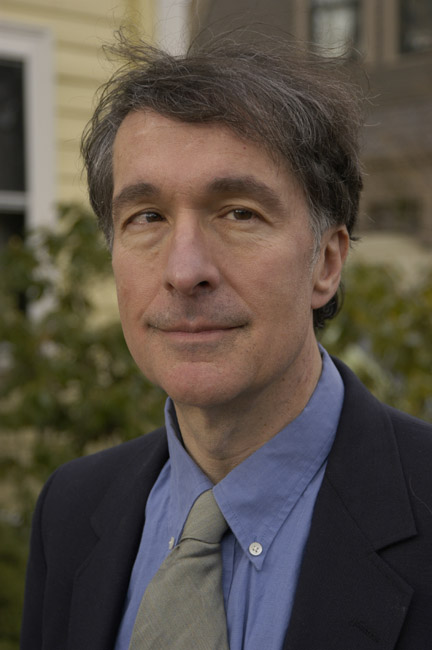 I attended the 2006 Educator's Conference today at Covenant College on Lookout Mountain. Someone said to me, maybe they built this up here so they could feel closer to God (actually they converted a hotel I believe..). I told him that based on some of the students I've met from there it seems that they feel that way. But otherwise the campus is very impressive and feels like a ski resort.
Dr. Howard Gardner was the big speaker and I was fairly impressed with his presentation since several had warned me he was dry. He didn't jazz it up at all, but his ideas on learning are pretty on target so I was very interested. He pimped (promoted) his book Changing Minds: The Art and Science of Changing Our Own and Other People's Minds, which sounds very business leadership oriented, but does not read as such. A big idea he promoted is summarized by the Harvard Business Review as:
Howard Gardner contends that the ability to synthesize information will be the most valued trait for leaders.
This comes from a forthcoming book about the "5 Minds of the Future" that he is still working on.
Other big ideas I keyed in on were related to his review of multiple intelligences. I've heard of this concept and feel that I vaguely understand it, but haven't read his books yet so was glad to get from the horse's mouth.
The intelligences he describes are:
Linguistic intelligence ("word smart"):
Logical-mathematical intelligence ("number/reasoning smart")
Spatial intelligence ("picture smart")
Bodily-Kinesthetic intelligence ("body smart")
Musical intelligence ("music smart")
Interpersonal intelligence ("people smart")
Intrapersonal intelligence ("self smart")
Naturalist intelligence ("nature smart") (thompsonarmstrong.com)
Another good handout can be found here.
The key points I heard were that these intelligences are essentially like computers in our head that are better at sifting through certain types of information than the others. We all have these intelligences, but most people are more proficient with a couple of these than they are in others.
In Changing Minds Gardner talks about 3 common sense dimensions that explain the phenomenon of changing one's mind. These are the entity (how you attempt to change a mind), the arena (the context of the group or individual you are trying to influence is in), and the levers or tools that actually work to change someone's mind. These are: resources and rewards, reason or logic, research, resonance, representational redescription, real workd events, and resistances (convenient how they all start with R..)
Gardner then went into a long diatribe about Margaret Thatcher and Ronald Reagan...
Finally he discussed his current topic of research which is about the nature of good work. Good is defined by he and his colleagues (Mihaly Csikszentmihalyi and William Damon) as 1) of expert quality, 2) is ethically responsible, and 3) feels right or is enjoyable and engaging to the worker. For this to take place in an organization there should be what he calls "Alignment," which is when all of the stakeholders have common goals. I was thinking about UTC, as a university and within departments, and I would question whether there is that much alignment and therefore not much good work being produced.
Finally, either during asides or in answering questions, I picked up on what I believe to be his solution for education today, in K-12 and higher ed, which seems to be mentors. For someone to really have an impact, there seems to be no combination of curriculum and technology, no new learning theory, no better way to teach than by examples of mentors exhibiting good work. To foster good work in our students, we need to be all about good work ourselves. I think this attitude is probably more prominent in K-12, but many college professors do not seem to feel this need.
So that's basically everything I know about Howard Gardner and MI. I hope it helps you..
February 17, 2006
Advanced Fuel Cell
I videotaped a press conference today in which Zach Wamp and other big wigs unveiled the SimCenter's latest work, the advanced fuel cell, which converts fuel sources to energy without combustion. This was a pretty cool thing to see from a geek perspective, but it was really interesting how much the word leadership was thrown out, particularly the concept of good leadership being the cpapability of getting the right people together to make things happen.
Not sure if the fuel cell is going to take off right away, but I think it is good to see an actual product being delivered by the SimCenter. Who know, maybe Alan Alda will bring his science-y show on PBS here to cover it, he's done a lot on alternative fuels in the past.
February 11, 2006
Schmiberal Arts
After class today I've been thinking a lot about learning theories and learning styles and issues related thereunto. One idea I have is related to the common complaint I here among students, How is this going to apply to me after I graduate, or What is useful about this subject required by my degree?
As a supporter of the concept of liberal arts education, I have usually responded with, We're not teaching you specifics so much as we are teaching you how to learn effectively in the future. Indeed, if we are going to be successful, we need to be lifelong learners. But then what about all those complaining students? If they disagree should they drop out of four-year institutions and get a certified in whatever program certifies people for their chosen profession? Maybe, but maybe not.
Why can't liberal arts be embedded within professional programs,
Continue reading "Schmiberal Arts"February 9, 2006
Mocs News story in The Echo
Mocs News is one of my proudest achievements at UTC, not that I do much more than facilitate, but its all of the students' hard work that makes it happen.
"Mocs News boosts broadcasting dreams"
By: Laura Bond
Issue date: 2/9/06 Section: News
According to one UTC student, future broadcasters receive valuable experience while working on Mocs News.
Emily Edwards, a Chattanooga senior and a Mocs News anchor, said Mocs News offers excellent experience for beginners.
"Broadcasting is my dream," she said. "Everyone has got to start somewhere, especially in this profession."
Continue reading "Mocs News story in The Echo"February 7, 2006
Article
So, here it is. A very good educational toy product that does not work with Windows Media Center 2004, but pretty well with just about any other DVD player.
InteracTV by Fisher-Price: Children�s television you can feel good about.
 The Fisher-Price InteracTV DVD-based Learning System is a very simple concept, with very lofty goals. It is essentially nothing more than an oversized universal remote control for your DVD player and a collection of specialized interactive DVDs similar to Scene It? But what it accomplishes is so much more. The product actually has the potential to take one of our worst vices as a parent�allowing our children to watch television, and make it a virtue.
February 4, 2006
Podcasting assignments?
I am curious about how podcasting is being used as an instructional tool. Perhaps I can do a paper on it. I know many universities are using the technology to push delivery of lectures and materials, but I am more curious about where it is being used as a portfolio of student presentations and so forth. I have seen several locally from Baylor High School and I know that there were talks between the COMM dept and the Hunter museum about creating a series of podcasts, but I am not sure how well they are being integrated into the curriculum.
At my suggestion (and others) a couple of students I know have started a weekly 30 minute podcast in which they review movies and dialog about filmmaking. It is featured on the PulseBlog and on the Chattanooga Film Blog. Check it out below.

January 27, 2006
History, Enterprise, and Ethics
In the summer of 2005 I participated in a debate as a part of EDD 710/720. The topic assigned was...
Ethical situations at work - conflicts of interest
Hurricane relief - volunteering
Digital ethics - fair use vs. copyright
"Fourth Wave" - Where is technology taking us? Education?
Education as a business.
Technology
In areas of technology I feel especially competent, not that I have a vast background in any certain technology areas, but in that I feel very comfortable when presented with challenges in this area and am usually successful in figuring out whatever is needed to accomplish a given task.
In my position as a technology specialist for UTC, I have been facilitating various groups with their technology needs. For students I am constantly doing over-the-shoulder help in the television studio. For faculty I've done everything from compressing video for self-guided, interactive CD-ROMs, to downlinking satellite feeds of important educational teleconferences. For Continuing Education I've overseen the operation of now 7 different videoconferencing classrooms, for which I've spec'd out several hundred thousand dollars of equipment, and successfully obtained funding for through grants. I enjoy using technology to help other realize their vision, whether that is a video, a web project, a TV show, a vehicle for instruction delivery, whatever...
Also, I designed the UTC Television Studio, which I'm fairly proud of.
This studio took years for the university to get and I feel like I've had a very instrumental role in its development, from design to securing initial and continued funding. I am extremely proud of the work being produced there, particularly by my students. Examples of their work and others can be seen on the programs page of our website.
January 23, 2006
Learning and Instruction
This is going to be my first essay about a competency, with the intent that I look back on this later and compare what I've learned with this entry.
Learning takes place when someone gets excited about something, they stop whatever else they are doing, and they focus on that one thing. They try to figure it out and when they succeed they come away from the experience pleased. We learn by doing things, whether that doing is observation, or actual hands-on activity, they brain must be actively engaged for learning to take place. Of course learning can take place in other ways than experiential, but this is certainly the way I like to learn and to teach.
"I could stand up here and talk about it, or you can learn it for yourselves."
I like to figure things out. Whether it is technology, a novel, a school of philosophy, or whatever, if I encounter something that piques my interest I can't rest until I figured it out, or exhausted my brain trying to. I tend to teach to this learning style, and I am always surprised when students don't want to put in the time to learn for themselves. I've never accepted regurgitation of lectures personally, so I try to avoid that in my classes as much as possible. If I am going to present on a topic, I want my students to have done some sort of exercise already that demonstrates their need for the information I have to share--or if they already have a mastery I don't need to waste their time. Luckily I teach some of the most interesting (IMHO) classes UTC has to offer, so I think the students are usually OK with this method. I call it teaching swimming by throwing them in the deep end, but I would always follow this up by demonstrating and discussing proper stroke technique.
I was telling a colleague yesterday, I don't believe students are actually learning unless they are learning about something they are interested in. I know this won't work for every subject that students may need to learn, but I also think instructors need to find ways to appeal to student's individual learning styles and interests. I believe this is the idea behind Howard Gardner's Multiple Intelligences books, so maybe I'll know more about this after his seminar at Covenant in February.
Learning does not take place in a vacuum. Teaching, without reference to current culture or without any hands-on experiences or meaningful discussion, does not lead to learning. Learning takes place when someone actively engages their mind to construct meaning around given information. My quick look back at cognitivism reminded me of how we make connections, linking new information to existing knowledge, or when presented with an entirely new concept we create new categories for that topic.
I don't particularly care what my students learn specifically. I am more interested in presenting areas that they are interested in, providing sitiuations where they can be engaged. I want to see that they come away with the bits and pieces of information that are useful to them, not just what is on the test. I need to see that they can process information and learn new concepts to accomplish specific tasks.
January 21, 2006
EDD740/750
Today in class we tackled the problem of writing an article for Parenting magazine, describing a toy that is particularly useful as a learning tool. I quite frankly would have dove right into this assignment, but all in all, I guess I did get more out of doing it as a group, though that gets very tedious.
Our approach was to divide and conquer, so I chipped in with Jim and Gilda on Learning Theories, which was helpful for me since it's been a LONG time since Psych 101. Found out that cognitive and constructivist theories prevail today, but many people fall back on behaviorism, or reinforcement and so on, in their instruction. My thought is that learning never takes place in a vacuum. The context of learning, the prior knowledge, and the student's motivation are all very important, perhaps even more so than the delivery method.
So now to pick a toy to review.. Any suggestions?
January 20, 2006
ILLP - Curriculum Design
Since this blog is the closest thing I've ever kept to a journal, except for trips overseas, and the diary I have one year as a kid, I'm going to be posting some random thoughts related to my coursework, particularly items related to my ILLP.
WHat's an ILLP you ask? It's an Individual Learning and Leadership Plan. Everyone in my program has to develop their. It basically is a portfolio of your current strengths and a chart for how you are going to develop yourself in areas of learning and leadership.
There are six competencies the program addresses, let's see if I know 'em: Learning, Leadership, Ethics (History and Enterprise), Research, Instruction, and Evaluation/Assessment. Technology is also a competency that is interwoven into the program. I am planning to write some essays about each topic, then revisit them throughout the program to see how my thoughts on each have changed.
Designed curriculum for the Filmmaking Workshop for teens. This project stemmed from my belief that there is little being done locally to encourage independent filmmaking in Chattanooga. Thus, to do a good deed, and to increase local submissions to my student's film festival(formerly Firefly, now known as Back Row), I pitched the idea of using the Hunter Museum's theater for a free workshop on filmmaking, for teens in the area, taught by myself, UTC students, and local filmmakers. Good resume experience for everybody, and maybe they'll throw in some free coffee or a piece of art for everyone involved. I'll post the curriculum as soon as I get it finished.
More to come!
July 24, 2005
Autobiography
My Life So Far - Chris Willis
In 1970, before I was born, my parents and sister left the United States to live in Southeastern Asia, on the peninsula of Malaysia. After settling in the city of Malacca they began worshipping together as a family and invited people they met to visit them and study the Bible (except for Muslims, with whom it was illegal to proselytize). My sister was 7 years old and went to a Malay school, and learned the language along with English, which is the national language of trade and business. I�ll never forget stories of her and the other children being gathered into the school from the playground when a tiger had entered the city out of the nearby jungle. Malaysia is very much a part of my life today; I was conceived, but not born, there. In 1973 my family came back to Tennessee for my birth, and at 6 weeks old I was taken back to Malaysia, where my family then settled near the capitol of Kuala Lumpur. In 1975 the Islamic government forced all Christian missionaries to leave. Most left when the orders were given, but my parents were the last to go, staying until the last day with their new family in the church they had established.
I don�t have any memories of actually living there as we left when I was two years old, but growing up with all of the objects my family had collected, the pictures, slides and super 8 movies Dad drug out from time to time, and the retelling of stories, this lore shaped my childhood. Also, we traveled there on mission trips about every 5 years when I was 8, 12, and 18, for about 6 weeks at a time; entering the country with tourist visas. During these trips I was able to connect stories with people and places, and I believe my parents nurtured within me an exploratory spirit. I love the country and the people, and have always felt pride in my mother and father who chose such a strange and remote place to work in.
After returning to the United States my father took a position preaching in a church in Pinellas Park, Florida, where I �officially� grew up. There I formed my first memories, in that house with all the furniture and pictures from Malaysia, the Chinese masks over my Dad�s desk, the carved elephant my Mom carried in her lap on a train returning from a trip to Thailand, and the giant glass jars from a wax factory (one of which I later broke). Having been born in December, in Florida I was able to start Kindergarten at 4 years old. Either I was precocious at home, or as my mother says, I was just ready to go at that early age. This caused me to always be a year younger than all my friends. During the eternal summers off and the afternoons I ran around the neighborhood barefoot, often with no shirt, playing by myself a lot or with two girls who lived up the street. At some point around the 4th grade I got glasses, which invariably affects any young kid. Also, my sister left for college, and being 8 years older than me, I felt like an only child growing up.
A noteworthy story from my childhood involves the 4th of July. I don�t remember what year it was, but after a picnic and day at the beach that ended in a thunderstorm and flat tire while I was riding home with my best friend Brian. His Dad and older brother Joe got out of the car and were walking up the road to find someone to help when Joe was hit and killed by a drunk driver. I remember being at the hospital and later at someone from the church�s house with sparklers when they told Brian his brother was dead. From then on Brian and his sister were spoiled, never disciplined, and today Brian, my best friend in my youth, is doing life in prison for an armed robbery where someone was killed. We had quit hanging out somewhere around 10. This experience always caused me to question the social responsibility of those who not only drink and drive, but people who would let somebody get into a car drunk to attempt driving. From early on I felt that those who enable dangerous behaviors are also to some extent responsible.
Religiously, I learned somehow during my youth to be ashamed of my family�s faith, and my father�s profession as a Church of Christ preacher. I tried to hide it from everybody, perhaps because I invariably argued about religion with anyone who found out. I�m not really sure why I felt this anxiety. I just laid it on myself. In 1986 my parents decided to move back to Tennessee, and my father took a job at the Eastdale Church of Christ in Chattanooga. I took this opportunity to get over my fear of people knowing about my religion and felt a great difference between acceptance of religion in Tennessee compared to where we lived in Florida.
One of the only truly integrated churches, Eastdale was an incredibly important place for me. I was very used to being around black people, having been bussed to formerly black schools in mostly black neighborhoods in Florida. I was amazed when we moved to Chattanooga to see almost all-black and all-white schools, and wondered how the public school system was getting away with such segregation. I also never realized before how divided a city could be, with the black parts of town and white�though I just probably never realized this was going on where I lived in Florida. I became interested in civil rights and race relations due to these experiences, which probably led me to study Sociology during my college career. However, none of this made much difference in my life at the time since I was enrolled in an almost all-white private Christian school for the first time in my life in January of 1987 at 13 years old.
I eventually formed friends at my new school, but it took quite a while. For a lanky 13 year old, with ugly glasses, bad clothes, and weird personality, I ranked very low in the social scale at a private school. Almost even more tragic, a few years later with a coincidence of getting contacts, hand me down clothes, and being in the 8th grade, I did a complete flip-flop, going from the lowest of the nerds to being a fairly well accepted member of the social elite. In High School I was in the �In� crowd, which by its nature had to pick on others. This was always difficult for me, and I did whatever I could to help bridge that gap. I remembering hugging a particularly large girl in our class in public and being dragged aside by one of the other �cool� guys who said something to the effect of, I don�t ever want to see you touching that girl again. Sadly I probably never did.
The cruelty of being young lessened in the last couple years of High School, but during that time I become known as a troublemaker among the faculty. I wasn�t an athlete like all of my friends, so when we all got caught doing something, usually very stupid and immature but not illegal or immoral, somehow it was always only me who took any serious punishment. It could be said that my leadership abilities started in pulling giant pranks at our school, from systematically disorganizing our the library, to a scavenger hunt of school materials that were collected in lockers until the items had to be stored off site, to an incident with a stolen school bus that we pushed nearly a mile from the school before we finally all got tired of the theft. I rebelled more and more, my logic being, Hey, I�m getting in trouble anyway, I might as well have fun. Later I was dating the only known drug user in our school, throwing drinking parties at my house whenever I was left home alone, and opposing my teachers in class which brought me very close to expulsion just before graduation. Yet, somehow I made it out alive with a diploma, and there were a few bright spots in my education that have been very important to me since.
In an 11th grade English class we were given an assignment, probably just as a time killer, to write a descriptive scene about a certain situation. While most of the class, at least the guys, tried to write asinine stories full of innuendo, I took it seriously for once, and my teacher read my work to the class�after which I rushed out, not wanting to take any heat or even praise for having done the work. Even though I�m certain she hated me, my teacher selected me for AP English the next year, helped me focus and tighten my writing skills, and eventually awarded me the yearly creative writing award which I still have in my desk today.
My first week of college was a big transition. Instead of moving off and leaving home, home moved off and left me. The church at Eastdale broke up during my senior year of High School, leaving me pretty disillusioned. All of the remaining white families decided to move to a white church, leaving the black families with an enormous building they couldn�t afford to keep using. I began questioning the relationships these groups had supposedly had. I felt like it was very unethical to sever all ties, as though everything this group had been through together meant nothing. If our core values are to love our neighbors, it shouldn�t matter if they are black, white or purple. Of course they had the right to leave, but it didn�t strike me as just. I also questioned the leaders of the church who were also all white. It all seemed counter to our supposed common values of equality and love.
Another church in town gave my father a short term job working with the white families who had come over from the disbanded Eastdale. During the first week of classes at UTC, my Dad accepted a position with the Morrison Church of Christ in middle Tennessee, and moved there. That week I moved into the UTC Christian Student Center. Moving into the Christian Student Center was not any part of my plans when getting ready to go to college. I was 17 years old and just planning to party with my friends, when my Dad suggested I stop by the CSC and ask about a room, where he�d known students from the Church of Christ that stayed there in the past, who paid no rent. Thinking it would never actually happen, I stopped by, asked about a room, somebody was moving out and I could move in immediately. This was the first of many doors that seemed to open before me, doors which proved very influential on the changes that would take place in the next few years of my life.
Students living at the CSC were given the title student directors and were expected to participate in the operation of center. I took it on myself to organize fun events, most of which were outdoor activities related to my own interests�hiking, camping, and rock climbing. This proved to be a big hit with the crowd at that time and I was surprised at how many people had never done any of these activities. We were also expected to lead students in Bible studies, devotionals, and other spiritual activities during which I kept a low profile--at least until after that first year.
During the summer after my freshmen year I went on a mission trip to Chinle, Arizona on the Navajo reservation. We worked with a church there that has struggled for years to keep its doors open, when most Navajo were not interested in their own traditions, much less converting to Christianity. While alone one night I was able to do a lot of thinking about my life and realized for the first time that my religion was not my own�that I had never listened to, or thought seriously about religion. Epiphany! I think until then I had a pretty warped sense of salvation, basically considering myself damned to hell because I never could measure up to the expectations I felt others had of me--certainly not those of my administrators in High School, nor my parents. But I determined that night to explore my own spirituality, to interact with God on a more real and reasonable level, and to study the scriptures I had taken for granted all my life.
Slowly I began to develop a new understanding of myself and my responsibilities to serve my fellow man. I was learning that I had a quality that seemed to invoke trust and found many people coming to me with problems or issues they were having, and I actually believe people wanted my advice. In my work at the CSC I began leading Bible studies and never shied away from tough passages, or ones that are particularly controversial in religious groups. I also organized service projects and steered our group into volunteering time with Inner City Outreach, a program that works with kids from the projects that teaches Bible and character. I went on a trip with my parents during the summer after my sophomore year to Malaysia and spoke and lead singing during worship services overseas. When I came back I helped start and served as a member on a new missions committee at our church. All of this involvement with a part-time job and full-time school load kept me very busy, but I thrived on the pressure and performed fairly well.
In school I had chosen, somewhat randomly, to pursue a BS in Environmental Sciences. My concentration was in Sociology, so sometime before graduation I looked into just doing a double major in that area and it was only a few more classes to do that. I could just as easily have studied Geology, English, or Communications; but I narrowed things down the best I could. I became somewhat dissatisfied with the doom and gloom prophecies of my Environmental Science professors and books toward the end, and enjoyed the theory and practicality of studying people from a sociological perspective. What can I say about all this scattered pursuit of knowledge except for what I told Dr. Petzko during our introductions, I love to learn.
After graduation I decided to go immediately into graduate school, pursuing a Master�s in English: Writing�an attempt to get back to my true love. This gave me terrific opportunities to hone my writing skills, with many thanks to Dr. Eileen Meagher who took me under her wing in the program. I was able to focus on hypertext on several papers, as an emerging form of literacy and wrote a paper that was published in the Academic Exchange Quarterly. My focus was using simple tools that are freely available on the internet for teachers of all ages to immerse their students in inter-connected, hyperlinked stories.
In 1997 I was able to go on a mission trip to India for 5 weeks with a good friend and his minister. The purpose of the trip was to visit churches in remote villages that aren�t often visited by foreign missionaries and to set up medical camps in the poorest places where vitamins and medicines were dispensed by local doctors. We also made arrangements for children with cleft pallets to have cosmetic surgery which was extremely affordable for us to arrange, but well out of their reach. These surgeries made tremendous impacts in these kids lives as some were disowned because of their appearance and they were considered untouchables. It was amazing to be in so many places where the children had never before seen a white man and I was stunned by the amount of respect and interest people had in us, just because we were American.
This trip was a pivotal point in my life. In many ways it reaffirmed beliefs I had about America�s need to share its wealth and technology with the rest of the world, but it also tested my religious beliefs greatly. While I felt and still feel very culturally relative, I was able to make firsthand judgments of how religion and culture determine a person�s outlook on life. While I respect Hinduism, Islam, and various interpretations of Christianity and other religions, I believe strongly that there are some absolute truths (though few), and the God I believe in wouldn�t have people to live so happily with America�s wealth while others try to live in the squalor and filth of the cities and villages I saw in India. I also learned the value of our Western water supply system as I spent three of the five weeks throwing up and worse, losing a total of 12 pounds in all.
After the trip I kept close correspondence with a friend I�d made in India who was a preacher and English teacher named Suri. Suri is lower caste and normally would have lived a life working in the fields. He struggled to afford to go to college to learn English and later went to a preacher training school. He is the most humble, loving man I have ever met. After my talking about Suri so much a class at my church asked if they could help him in any way and I arranged for them to send him money to help pay for him to preach in the village he�d grown up in. Since then we have also begun sending money to help several students he�s working with to go to college, something these kids would never have been able to do as they are also lower caste.
Another important person, actually by far the most important person in my life that I had met during college, was my wife Kerry. We met at the Christian Student Center. She is a serious woman who I enjoy making laugh. Kerry knows how to get things done, and enjoys working hard on all the crazy ideas I have and helps to make them a reality. She was very encouraging to me in college while I was teaching Junior High kids at church and helping start new projects at the CSC. Perhaps the greatest thing that we share is our unique outlook or point of view. We are both very spiritual in our faith, but we�re not afraid to admit our faults and talk about the world in frank terms. She is the only person I see things almost completely eye-to-eye with, can share anything with, and have learned more from her than anyone else I�ve ever met. She opens my eyes to new things everyday.
On October 10, 1997, Kerry and I were married. I had thought about marrying her every moment of the five weeks I was in India, particularly when I was sick, and I asked her a month or so after returning. My father performed the ceremony and we were married at our church with all our friends and family in October of that year. Instead of buying expensive rings or throwing a lot of money at our wedding, we saved everything we could for a trip to Australia, where we went on our honeymoon. To this day I love horrifying people by telling them I didn�t buy my wife a diamond ring, in fact, both are rings were the cheapest available at Wal-Mart. But our marriage is incredibly strong, cheap rings aside, more than anything because of our shared core values.
In our marriage we have upheld our beliefs that a Christian couple should work hard to serve others, to better our community, and to share the gospel. We have always strived to be examples to our friends, family, and fellow-church members of what Christians should be like and to do what Christians should be doing. We have tried to do this without becoming martyrs, without looking down our noses on others when we might think they should be doing more for church or community. It�s a delicate balance between service and leadership by example and pissing someone off. I�ve found this balance to be one of the biggest challenges of my life.
In 1998, we went on a 9-day medical mission trip to Nicaragua where we assisted doctors and nurses in a week-long medical camp and help distribute medicine, clothing and food items, and participate in outreach efforts. We did this the next two years as well. In 2000, after a windfall that left us with some money, Kerry suggested we use the money to pay for a trip to Malaysia, where she�d never been. When we landed she said, I guess I�m officially a Willis now. In Malaysia we were able to meet with people my parents had converted before I was born and who had known my family through the years. We went in as tourists, but I was able to speak to a couple of church groups, and we met with a large number of Christians. We also enjoyed a fluctuation in the exchange rate the made our American dollars go very far, giving us our first and only taste of luxury hotels.
Also during that year I began working more with the Inner City Outreach program. This is definitely the Robert Greenleaf, �servant-leader� phase of my life. Kerry and I volunteered to be bus captains. This volunteer job involved curriculum design and planning for the Pre-K through 1st grade kids we picked up in the Harriet Tubman project in East Chattanooga and then recruiting volunteers to help teach and work with the kids. Not having kids at the time, or an ounce of knowledge about teaching this age group, this was a grueling commitment for us�especially with our full-time jobs. I think we both grew a lot from it and I hope to return to the work in coming years.
I also worked with the Hispanic ministry for several years that was going on along with the Inner City program. I began driving a bus on Sundays to pick up Hispanics who lived downtown who needed a ride to church each week. During the long services I would usually volunteer in their nursery, but eventually I was asked to participate in their worship and I preached there several times. This sparked an interest in me to start studying Spanish again, and the last two summers I�ve taken classes at UTC to brush up my foreign language skills.
In 2002 I decided to plan a return trip to India and made arrangements to travel over my time off at UTC�s Christmas break. Kerry and I had been trying to get pregnant for a few months, so when I called back home from a dirty street in Andra Pradesh, India, Kerry told me she�d felt sick and had taken the home test which showed positive. A doctor�s visit later confirmed it, and I was able to share the great news with my beloved friends and brethren in India on New Year�s 2003. They celebrate the New Year by welcoming in the year with great fanfare and wishing for great things. This was a great year for me, though it involved cleaning up vomit in various parts of the house, learning the wrath of a pregnant woman, and learning to be a humble servant who listens to his wife without trying to solve her problems.
Jackson was born on August 14th, 2003 and has changed my life so much. He sits here beside me as I type now and I see so much of myself in him. He loves books. He speaks better than most kids his age, in my humble opinion, and he is funny and silly and curious and sometimes cantankerous. Before he was born I started a blog (http://www.chattablogs.com) with the express purpose of documenting changes in my life that have taken place as a result of being a parent. I was worried I would lose some of my idealism or that I would become complacent with the status quo I see all around me�at work, at church, in the community. Would my sense of social responsibility and belief in having an active faith disappear? Well, I haven�t changed as much in my values as I thought I might, but journaling about the progress has been insightful.
In my work I�ve been able to develop as a leader and as a teacher. As a Technology Specialist I am able to dabble in various new and exciting communication technologies, I write grants for state-or-the-art computer and television equipment for our TV studio, and work one on one with students, faculty, staff, and outside clients. Over the last 5 years we�ve spent over half a million dollars renovating our space and outfitting the space with TV equipment. This is great fun and I usually try to spend some time each week tinkering, trying to make things were better or to streamline our workflow. I also feel that it is important for leaders to stay abreast of technology and to learn to expect change, not fight it. I try to do this by keeping my hands dirty in the all of the projects that I work on along-side of my students and employees.
As an adjunct instructor I�ve taught COMM 345 and 445, Video I and Video II for the past five years. Every year I�m more impressed with my students and have more and more shining stars�the ones that make all the extra work worth the payoff. Last year several students took my idea of creating a film festival in Chattanooga on as a project and earned credit organizing the first annual Firefly Film Festival. This event was a crowning achievement in my work. We had submissions from all over the country and a modest crowd of about 150 showed up to watch short films, videos and documentaries. This year we are trying to do bigger and better things, bringing in a guest speaker that we hope will draw a larger crowd.
I�ve always supported the concept of hands-on learning, particularly in areas of technology. This takes much more time, more one-on-one contact, but I�m learning more about how to use students to teach other students and to assign group work more effectively. I�ve learned that students like learning and being creative, but usually only in specific areas they are already interested in. So I drop subtle hints about my wishes and then try to steer them into accomplishing what I think they are capable of. Now I�m trying to let go even more and drop hints about what I would like to see, and then just watch what they do with it. I love helping other students and our clients achieve the vision for a project they see in their head. I feel this is my greatest talent in my professional career.
I enjoy my work tremendously, but I feel like I�m at a point where I want to do something new. I need to. I have watched with interest as this Ed.D. program has developed but I also looked into pursuing a Ph.D. in Communications from UT Knoxville, which may have been a much better choice if I want to get on faculty here at UTC. However, I feel very strongly that this program is much better suited to my interests, and also much more adaptable. The program at UT sounded very traditional and probably wouldn�t have challenged in the areas I am interested in.
I�m not exactly sure where I want to be in the next 5 years. I want to prepare myself for several options and to try to accomplish some projects I have in mind during this time. I have in mind doing a documentary about Hispanics in Chattanooga�Why do they come here, where are they from, what are they doing? How is living and working in America changing their lives? I am very curious about this population because I�ve seen so many that live in downright slums and I know how hard they work in jobs that most others wouldn�t want.
Another project, and one I feel I could work into this program, is to develop an educational children�s television show. I would like to study the current patterns in children�s television and success rates of shows in America vs. those in other countries and to determine what program styles yield greatest success in teaching literacy. I believe Chattanooga is at the heart of a wealth of regional knowledge and content that could be incorporated into such a show. I would like to use local learning destinations such as the Tennessee Aquarium, the Creative Discovery Museum, Hunter Art Museum, the Chattanooga Regional History Museum, Rock City and Ruby Falls, Chickamauga battlefield and other local parks, and then expanding out into nearby regional locations such as the Marshall Flight Center in Birmingham, AL. The show would be based on earth science, history, mathematics, art and music, but would all be drawn together in language and literacy. I have several contacts interested in the idea and I believe it would be an easy sell in this community, but I would only want to do it if it were going to be effective in reaching its goals of teaching literacy and helping area teachers connect with kids. So, if I were able to do a lot of the research into those areas within my coursework would hopefully give me time to build a case for such a program, possibly shoot a pilot, and perhaps graduate with a new career waiting for me in producing my show. I just need a name�
Thinking about my life in terms of ethical leadership I feel like I�ve done good things, led good projects, but my motivation was not always from a logical or honest place within me. I have felt guilted into serving others. I have guilted others into service. Both situations have led to results that are sometimes positive and sometimes negative. I realized this when I had really laid it on thick to my best friend about this mission work in Nicaragua. After a lot of pressure from me, he went on the trip and nearly had a breakdown. I realized then that if someone did not want to be involved with a project, they really shouldn�t be�for the project�s sake and for their own. Much like the statement I connected with so much from Ayn Rand in our readings where she says to help another man �if such is your own desire based on your own selfish pleasure in the value of his person and his struggle.� (Quoted in Ciulla, p.52) I now try to consider motivation carefully before I dive into something, and before I encourage anyone else to do something they might make them feel uncomfortable. You have to have a desire. I still believe everyone should be willing to try new things and then decide what they like or dislike, but I am much more careful about what I push someone into trying and whom I push. I do want to create a desire within people around me and my students to help others, to be creative, and to use reason their pursuit of truth or God.
I feel like I have grown in recent years in my concept of ethical leadership. I entered college with a concept of everything being gray areas, a �no absolutes� type of thinking. I reacted against that and left college with very specific opinions of what is right and wrong, based largely on my narrow interpretation of scripture at the time. Today I feel more centered, in that I recognize the shades of gray that exist on any issue, but I have never felt indecisive because of ambiguity�just more cautious. My ethical platform is of course defined by my faith, but not without reason, tolerance of other�s ideas, compassion, or social responsibility. I sincerely believe that people must make decisions based on logic and reason, especially in religious matters. There are obvious dangers in using religion as a power structure where manipulation of people�s fears can be used to create conformity, political pressure, or just a status quo. I believe those who choose to follow Christ should fight this trend by setting an example of service and by applying Biblical truths to their own lives�using logic and reason in their interpretation of scripture.
I am constantly arguing about logic and reason being important among my Christian peers, who sometimes accuse me indirectly of not having enough faith, or of relying on myself too much and not on God. My argument and conviction is that God gave us mental faculties and along with everything else, to use them. Religion based on a blind faith seems to be just an extension of someone�s previously held beliefs. To be an ethical leader I want to set an example of reason and logic being closely related to faith. I couldn�t have faith in God if it didn�t make any sense to me.
In evaluating my competencies in the areas we are covering in the Ed.D. I feel most comfortable with Technology. With Karen Adsit as my mentor I feel I will be able to fleche out my knowledge in the areas of media and communication with a broader knowledge of copyright and fair use issues, as well as the quickly changing area of ethics in digital media. I am of course very interested in Learning as a subject, and I valued Jim Tucker�s comments about the importance of emphasizing learning over education or even school reform. I have a lot to learn about instruction, especially not having taken the first undergraduate education course, but I do have my own hands-on approach to teaching technology that works well when given the appropriate resources and students have time to pursue a project they are interested in.
The areas of research and assessment are very interesting to me. I have a limited background in research. I developed a survey on a ten percent random sample of the UTC student body for a sociology project. The goal was to evaluate environmental awareness of average college students. I would like to do other research, particularly into technology education practices. I am interested in assessment of television production curriculum in High schools and colleges. Also, I would like to learn about other universities� development of television studio and broadcasting courses, how are the facilities organized and funded, and how do they interact with the community.
I feel I have a lot of work to do in the area of ethics and leadership. I�ve been in situations with ethical dilemmas where I�ve made leadership decisions, but looking back those must have come from a gut reaction, not from a particular ethical platform that I had logically come to. I want that, I want to be able to make decisions with greater reflection and evaluation, but also more quickly, and I feel the study of ethical dilemmas this semester has been helpful in opening my eyes to the commonalities between seemingly different situations. When it comes down to it, most dilemmas are best solved by compromise and finding the correct trilemma alternative is of great importance. I want to develop as a leader professionally and as I am seeking some sort of career change, I would like to find some area of public interest that appeals to me where I can learn and grow while leading others in some work that affects the common good of this community. That may be with our local public television or in public schools or in any number of the education-based public/private institutions in this city. Long-term I would like to travel abroad, perhaps teaching English at a university in Malaysia or India, but that will most likely be another twenty or so years out, so I am content to stay in this small town for now.
Looking back on my life its surprising how little I�ve changed in certain areas and how much I have in others. I still love to read and can�t put something down until I�ve finished it. I get ideas stuck in my head to create a new program, to edit a video a certain way, to teach my class with a new focus�things which make me lie awake at night. I feel like I attack problems very logically, thinking through most alternatives before choosing a course of action. I�ve of course gotten a little more conservative since the birth of my son, but not frighteningly so. I still have my ideals, but not exactly the direction in which to go pursuing them. I want to change the world. I believe I can, even if only in small, local ways. I just need to figure out how, and where, and how best to prepare myself. Long-term I�d of course like to retire early, go overseas somewhere and work with people in another culture. I find that so interesting and thrilling. But what I do over the next twenty years until I get there will largely be determined by my son, and as always by the opportunities that present themselves to me.
June 22, 2005
Stars on Ours
Somewhere along the way in education, somebody got the idea to put all the kid's in kindergartens names on the wall, and to assign them stars based on merit. I can easily see the value of this incentive and think that a token economy of stars is fun for the kids, but I question instilling this value of rewards-based performance. You see, in my doctoral program, there is a contingent of students who still want stars. Then there are others, like myself, who could care less about the stars (I am just in it for the participation and hopefully personal growth, though I realize some grow through reaching goals, and stars are a goal, of sorts).
Anywho, the faculty are selling us stars and participation, like the Dr. Seuss story about the Sneeches where they don't really care what you want to earn or have, they just want to see you run around (and I guess, to learn something).
Who made up this star idea? I want to say, No, no, bad teacher! Kids need to want to do good, because it is GOOD intrinsically, not for rewards..
Thoughts?
UPDATE: Finish reading Punished by Rewards by Alfie Kohn.
Ayn Rand and Libertarians..
Below are some posts I made on our class discussion board. I won't post anything anybody else put up, but someone started a thread about Ayn Rand's Ethical Egoism ideas, which fits in nicely with a book I just finished by John Stossell. Here goes:
Post 1 - "Someone in my group had really great and empassioned comments about 'levelling the playing field' and alluded to systemic obstructions that prevent people from advancing themselves. Most of this was in the context of growing up in the projects. Several of us believed that the government has bungled in trying to help people by providing government welfare--a program with great intentions that in the long run creates dependence on those monthly checks, and prevents people form ever getting out of the system.
My concept of a level playing field is where no one gets checks from the government (including farmers who don't grow crops) and people, like Ayn suggests, must duke it out for themselves. Any government intervention only exacerbates the problem of dependence and should be avoided.
Having that said, I think government should encourage volunteerism. Big government can't help specific problems anywhere near as well as individuals in and around local communities can. Who is Uncle Sam to say what is needed in Chattanooga's projects? Shouldn't Chattanoogans have a stronger say in the matter?
Government (federal and perhaps state) can help more people by butting out altogether, but fostering a community spirit in which locals come together to serve each other. Faith-based organizations should be more involved. As I understand it, Christians should be serving their fellow man and helping the poor, as well as Muslims and Jews and most other faiths(including humanism, but maybe not Buddhists?). Why do we want to let the government try to fulfill our mission?
That was my thinking last night, but then I started thinking today about India, where I saw extreme poverty on such a massive scale, where their government could obviously help its people better than it has. Leprosy is still a major disease, whereas everywhere else in the world it has been eradicated. That's where Rand's ethic falls apart. When no one has anything to share, when there are no means to produce, it leaves a hellish, body-strewn landscape where begging is a sought after profession.
Ethical Egoism is an extreme view and I think not to be followed completely, but it seems like a great set of lenses to look at big approaches to solving a problem, and considering, Are we doing more harm than good?"
post 2 - (oh yeah, my prof said he liked that last question) "I take offense at being classified as belonging to any political party (he called me a libertarian). I HATE politics and believe their current state is keeping our nation in a quagmire. I believe STRONGLY in the power of individuals, that people make a difference.
School Reform--good teachers. Getting out of the projects--role models. Senseless war--activism. Poverty--selling everything you own. You decide what is important to you and YOU go out and do something about it. Not George Bush, not John Kerry, not Nader or Badnarik, but you. Political parties suck the resources, zeal, and willingness to act from huge chunks of our population.
Government is a necessary evil (which makes me somewhat libertarian to say I know) but just like we say don't let anybody else do your dirty work, I say don't let them do your good deeds either."
June 15, 2005
A good leader..
A good leader is really an assistant. When you empower people to make decisions and do their jobs, and facilitate them with the tools they need, how is that anything but good leadership..?
June 9, 2005
The Art of Leadership (preview)
Here is a preview of a project my students are finishing for Leadership Chattanooga.
mms://athena.ceca.utc.edu/video/leadership/dance2.wmv
http://athena.ceca.utc.edu/video/leadership/dance2.mov