May 27, 2009
Empirical evidence that supports videogames..
PTA Parent, Wednesday, May 27, 2009
C. Shawn Green and Daphne Bavelier at the University of Rochester have shown that action video game playing increases the capacity of the visual attention system to stay focused, despite distractions. According to the researchers, "at difficulty levels where non-video game players have long depleted their attentional resources, video game players possess sufficient resources to perform the target task..."
December 4, 2008
This is your brain on Google
Top News - Scientists: Is technology rewiring our brains?
What does a teenage brain on Google look like? Do all those hours spent online rewire the circuitry? Could these kids even relate better to emoticons than to real people? These sound like concerns from worried parents. But they're coming from certain brain scientists.
November 25, 2008
Everything is changing... 4 tech trends that will change the way we learn and think
Top News - Four trends that could change everything
With this broad, unprecedented perspective, we at last have the opportunity to affect our planet and ourselves in ways never before possible. With luck and intelligence, we'll use this opportunity to do more good than harm.
November 21, 2008
XO Laptops are actually helping African children
So these guys at Laptop magazine decided to get hands-on with the One Laptop Per Child XO laptop and found that there is actually a lot of potential for the program.LAPTOP Magazine Tests "One Laptop Per Child" Program In Africa
The Mali program, however, is not all rainbows and butterflies, according to Stern. "Computer charging compatibility and electricity problems have led to the frequent crashing of notebooks. Additionally, in a society where students await direction from teachers and are reluctant to explore independently the learning process does not progress as quickly as anticipated." Due to the limited ability to train teachers in all computer functions the XOs potential has not yet been fully realized.
November 10, 2008
More on free wifi from eSchool News.
Technologies - Dell to offer 'white space' connectivity in laptops
White spaces continue a "revolution" in unlicensed wireless access that started when the FCC unlicensed the 2.4GHz spectrum in 1995, leading to the development of Wi-Fi networking and wireless devices such as cordless phones...
Why I use a cybertext and not a textbook for my course..
First, the cybertext, Television Production by Dr. Ron Whittaker, is a great resource. But, more important to me, I appreciate his concept that knowledge isn't owned but shared. Finally, I really respect the way he wishes to be repaid:
A Final Word - Free CyberCollege Interactive TV Course
You may recall that this free cyberbook has one string attached.
If you use this material in developing your talent to produce effective television programming, you need to "pay" for the material by at least once producing something to improve conditions in our world.
If you need some ideas -- consider this.
If you don't go into the field professionally, here is your "price." A textbook of this type would cost at least $60 (actually, much more, with all the color illustrations). Consider your time worth $20 an hour and devote at least three hours in doing something positive and totally selfless for some person or agency.
That's it.
If you do either of these, you've paid for the material and your conscience will be clear.
Here's wishing you great success in your chosen field.
November 9, 2008
Higher Ed budget cuts impact IT decisions.
More reason to consider open-source options for campus IT resources. But you still need people to integrate/patch or otherwise operate an open-source system.
Campus IT Budgets Down, Open Source Looking Up
Open source software is looking more appealing to campuses, with about a fourth reporting a "high likelihood" that they will migrate to an open source LMS within the next five years.
Creativity and Play on TEDTalks
TED | TEDBlog: The powerful link between creativity and play: Tim Brown on TED.com
I really like this guy's presentation, especially since he has great examples, but also this insight about why kids play more with boxes than the toys that come in them.
Boxes offer an infinite number of choices.
Why do kids/college students/adults sometimes hate learning? My guess is somewhere along the way they stopped following their own interested in learning and felt forced to focus on just a few things (like standardized test material maybe?) It's sad, because learning can be the most fun human endeavor.
I really love TEDTalks and like to indulge myself on Fridays by listening to one or more while I work. This one was a special Sunday treat though.
October 6, 2008
High School Moses - How to fairly use videos online!
Great clip about how to fairly use videos from online with great examples..
Wired Campus: American U. Researchers Publish Guidelines for Fair Use in Web Videos - Chronicle.com
As more students and professors experiment with making short videos to post to YouTube or other video-sharing Web sites, many run up against concerns against potential copyright violations--especially if they want to use a clip from a Hollywood movie or other copyrighted work.New guidelines released this week by researchers at American University's Center for Social Media hope to help nonlawyers navigate the confusing world of U.S. copyright law and its "fair use" provision. They're part of a guide called the "Code of Best Practices in Fair Use for Online Video."
Update: More info from the study here.
The study points to a wide variety of practices--satire, parody, negative and positive commentary, discussion-triggers, illustration, diaries, archiving and of course, pastiche or collage (remixes and mashups)--all of which could be legal in some circumstances.
July 19, 2008
UTC should start doing these things
Daily Home - ACCESS lets students take courses not offered at their schools
Additionally, students are taking Advanced Placement courses for college credit through ACCESS from teachers certified to teach AP courses.
In other TN Higher Ed news:
WREG-TV Memphis - Tenn. tech schools shorten schedules to save gas
Some Tennessee community colleges and tech schools are moving to a 4-day school week to help commuting students facing a financial roadblock in rising gasoline prices.Four Tennessee Technology Centers and three community colleges are adopting the new class schedules after hearing from students that high gas prices could force them to drop out.
That sounds pretty good to me..
The Chronicle talks about this case causing a tipping point for Distance Learning to finally take off:
"It's getting to the point of either gas or class," says Robbie K. Melton, associate vice chancellor for the Tennessee Board of Regents, where this summer the number of students taking online courses spiked 29 percent, in part because of the high cost of buying gas to drive to campus.
July 11, 2008
Connectivism - A New Way to Think About Learning
An interesting article from Canadian George Siemens, dealing with how technology supports "off-loading " human knowledge.
Growing Up Digital: How the Web Changes Work, Education, and the Ways People Learn. United States Distance Learning Association. Jan05_01
Technology is altering (rewiring) our brains. The tools we use define and shape our thinking.
Many of the processes previously handled by learning theories (especially in cognitive information processing) can now be off-loaded to, or supported by, technology.
Know-how and know-what is being supplemented with know-where (the understanding of where to find knowledge needed).
A central tenet of most learning theories is that learning occurs inside a person.
Additional concerns arise from the rapid increase in information. In today’s environment, action is often needed without personal learning – that is, we need to act by drawing information outside of our primary knowledge. The ability to synthesize and recognize connections and patterns is a valuable skill.
We can no longer personally experience and acquire learning that we need to act. We derive our competence from forming connections.
Butterfly Effect - “sensitive dependence on initial conditions” profoundly impacts what we learn and how we act based on our learning."Connectivism is the integration of principles explored by chaos, network, and complexity and self-organization theories. Learning is a process that occurs within nebulous environments of shifting core elements – not entirely under the control of the individual. Learning (defined as actionable knowledge) can reside outside of ourselves (within an organization or a database), is focused on connecting specialized information sets, and the connections that enable us to learn more are more important than our current state of knowing.
Connectivism is driven by the understanding that decisions are based on rapidly altering foundations. New information is continually being acquired. The ability to draw distinctions between important and unimportant information is vital. The ability to recognize when new information alters the landscape based on decisions made yesterday is also critical.
Conclusion:
The pipe is more important than the content within the pipe. Our ability to learn what we need for tomorrow is more important than what we know today.
Even better, from Siemen's blog:
Pedagogy First? Whatever. In dealing with faculty and instructional designers, a series of almost default phrases are vocalized once technology is mentioned: "We need to start with pedagogy"..."It's pedagogy first".
Or, whenever I'm in a meeting and someone says "pedagogy first", the apparently genetic instinct to nod viciously is enacted by everyone around the table. "Yes, that is right. We need to have priorities here. Let's tame technology and focus instead on what we already know and are comfortable with. Let’s ensure that technology does not get away from the tried and true method of containing innovation and new approaches.”
Let's abandon the somewhat silly notion of pedagogy first and recognize
that the choice of technology is driven by many contextual factors and
therefore context is what we are evaluating and considering when we
first start talking about possible technology to use. Then, after we
have selected technology, we can start talking about pedagogy. Pedagogy
is just not a practical starting point for deciding the technology we
should use.
July 5, 2008
Digital-Age teachers as co-learners: A new method of instruction or just a bunch of hot air?
I have to say I very much support the International Society for Technology in Education's new definition for the role of teachers.The Future of Instruction: Teacher as 'Co-Learner' : June 2008 : THE Journal
"Now and in the future, effective teachers of digital-age learners will be challenged to move away from models of teaching and learning as isolated endeavors. As they model work and learning that reflects inventive thinking and creativity, teachers must become comfortable as co-learners with their students and with colleagues around the world. Today it is less about staying ahead and more about moving ahead as members of dynamic learning communities. The Digital Age teaching professional must demonstrate a vision of technology infusion and develop the technology skills of others. These are the hallmarks of the new education leader."
But what will actual educators think?
June 27, 2008
Are you watching or not?
Many professors who teach online complain that they have no way of seeing whether their far-away students are following the lectures
This new software helps analyze whether or not students are watching, understanding, and engaged in web streaming courses, which is something we are tackling at UTC with my 797 project.
June 25, 2008
Kurzweil on the cheap
Having just been on a tour of the Office for Students with Disabilities at UTC this week, I was glad to know what this guy was talking about below. This thing is pretty neat, though I wonder how it reacts when webpages are changed..
Awesome Highlighter (online resource) | Free Resources from the Net for (Special) Education
I’m a big fan of Kurzweil 3000, and one feature of the program that I especially appreciate is the way text can be highlighted and then extracted into a new file. This can be an extremely valuable study aid. Another helpful study aid in Kurzweil 3000 is the option of easily adding sticky notes to pages of text. Altogether Kurzweil 3000 contains the best set of tools I know of for helping learners deal with a wide range of challenges that can create barriers to learning.
June 16, 2008
Virtual Field Trips via videoconference
This article talks about a group of California students learning about ecology by videoconferencing with the marine biologists 100 miles away. Technology and Gas Prices Send Students Of Virtual Field Trips
When seventh graders in Stockton took a field trip this week to see elephant seals, they didn't even step outside their school. Instead, with the help of a projector and a video camera, the students teleconferenced with a state park guide on the California coast.
Cool thing is, I'm totally doing this with the Governor's School for Prospective Teachers this week when we videoconference with Mexico. The students here will ask questions in Spanish about how school works there and what subjects they enjoy, then their students will answer in English.
June 7, 2008
Insert Youtube videos directly into your presentation..
..with Google Docs, but definitely not with Powerpoint. Here is a presentation I made for the Tech OVerview EDUC 199 class:
Basic Editing: Inserting videos
May 28, 2008
Slaughterhouse iMovie
Teachers & Technology: English with an Edge : May 2008 : THE Journal
In my Vonnegut class, we study contemporary satire. The final assignment is for students in groups of two or three to create a three- to five-minute satiric film. They must focus specifically on at least one aspect of modern American society and comment in such a way that it causes their audience to think deeply about the subject and make them laugh or at least chuckle. I use Mac computers and iMovie.
May 21, 2008
Tech-enabled conferences for web 2.0 savvy participants
Unplugging Conferences (Techlearning blog)
we actually create tools that have the power to re-create us, and I believe that is the case with the read/write Web.
May 14, 2008
The next big thing..
This has been coming for a while but I think it will be huge:
WiMax could be successor to Wi-Fi | www.azstarnet.com ®
WiMax technology could be as big a change as the mobile phone revolution.
May 12, 2008
Professors shooting videos for students
Film School: To Spice Up Course Work, Professors Make Their Own Videos - Chronicle.com
May 5, 2008
Video assesses learning
Good article on using video in the classroom, particularly for assessment.
Techlearning > > Caught on Video > April 22, 2008
Constantly using video (a medium that allows for self-viewing and self-reflection) in the classroom will have a consistent, underlying message: Learning is important enough to be captured, shared, and archived. Video begs for reviewing and rewinding much more than a letter grade could ever hope for. Learning captured by video suggests a continuum in which a letter grade suggests completion.Posted by cmwillis at 10:57 PM |
March 22, 2008
Google Tools for Educators
# The web application found within Google for Educators allow teachers and students to: collaborate with their colleagues;
# monitor and participate in discussions;
# publish videos;
# create PowerPoint presentation and web sites;
# manage photos; and
# monitor online data.Posted by cmwillis at 5:39 PM |
March 5, 2008
Web 2.0 designed for education?
Great article on the impact of web 2.0 (everything is interactive) on instructional design.
Is Web 2.0 'Designed for Education?'
Higher education for centuries has worked within a closed world where educators could design physical spaces and learning sequences (the curriculum) based on predictable circumstances. An educational designer could work within a much more restricted set of variables than what we see now.Posted by cmwillis at 9:18 AM |
February 29, 2008
Clickers are so 2007..
Educational Technology
According to this guy iClickers are the new dusty old overhead projectors. Actually, I think he believes they make classrooms TOO interactive. Why engage them at all I say? Just mail out the degrees..
January 13, 2008
Never use an iPhone to check your email...
 ...if you don't plan to buy an iPhone. These things are just too cool to be caught seen owning, if you know what I mean. However, GMail on this thing was wonderful.
Apple - iPhone
December 13, 2007
Copyright Alliance to help befuddled college professors.
A professor wants to show Monty Python and the Holy Grail to her class on British humor, and she wants to check with the film studio to get permission. A nonprofit group called the Copyright Alliance, whose members include associations for the motion-picture and recording industries, announced today that it would like to help broker such requests.Posted by cmwillis at 3:19 PM |
Facebook: The new BlackBoard?
Course-Listing Tools Hit Facebook - Chronicle.com
Courses, that lets students use Facebook to track down classmates, share notes, start discussion groups, and keep track of their coursework.Posted by cmwillis at 3:15 PM |
December 11, 2007
Awesome new web application linked to sweatshops..
Jott, an awesome new web app lets you call an 800 number and receive your text transcribed as emails, text messages, or entries on your calendar or todo list. Very handy for me, since I still have neither a PDA or an iPhone. But, since I was initially amazed by the success, I later found out that the fancy new way of transcribing is people. JOTT.COM IS PEOPLE!!
Scheduling: Add Items to Gcal with a Phone Call using Jott to Google Calendar
I like Jott, but is anyone else slightly creeped out that they use actual people to do part of the transcription? Whenever I leave myself a message I can't help but think of the poor guy in India who sits around all day proof-reading whatever weird stuff people are Jotting.
So, they're making any money off of web-ads I suppose, since the service is free, but I wonder what those people in India make per diem? Ethical issue: Does my use of this service help or hurt these people? I lean toward help, since some entrepreneur came up with the idea and used the difference in wages to make it happen. But can't these people make a little more?
Chaz suggested I call up and list all the things I don't like about India. That's just mean.
December 10, 2007
Foreign Language classes via videoconference..
Even more interesting I think is what UTC is doing with The Bright School where we connect to a school and Mexico City and kids talk back and forth.
Fairbanks Daily News-Miner » Archive » French students embrace technology
The two spoke to one another over the video link just as any other student and teacher would in any other classroom in the district.The distance didn’t matter.
November 25, 2007
My Screencasts - Video tips
Check out more at my screencast channel here: http://www.screencast-o-matic.com/channels/ci1VjPnd
October 6, 2007
Your Outboard Brain
Interesting article about "wired" thinking.
Your Outboard Brain Knows All
We're running out of memory. I don't mean computer memory. That stuff's half-price at Costco these days. No, I'm talking about human memory, stored by the gray matter inside our heads.Posted by cmwillis at 10:39 AM |
October 5, 2007
Google Docs *Now with Presentations
I used Google Docs to create a Powerpoint-like presentation, though, this is the most limited I've felt using Google Docs so far. I couldn't even export a jpg to share, or publish online without sending invites. Not sure how new this is, but has been long-needed in my Google arsenal.
Google Docs Help Center
October 4, 2007
Education Mashups
Great article on what we could be doing online..
EDUCAUSE REVIEW | July/August 2007, Volume 42, Number 4
the mixing of any number of digital media sourcesPosted by cmwillis at 9:16 AM |
September 12, 2007
September 10, 2007
Why use technology in learning?
Good article on basic answers for how tech influences and enhances learning. My biggest argument would be, look how the world changed after the Gutenburg Press.
Techlearning > > Eight More Reasons for Technology in Education > September 1, 2007
August 22, 2007
Tech Nerd - Online Learning
So, I'm finally doing something I've dreamt of, which sadly reveals my true nature. We're streaming courses to students all over the world (Canada) for students in UTC's online Engineering Management program. We're using a combination of Windows Media Encoder, Blackboard, Mimio, and other free and cheap apps and products to do what other schools are doing for thousands and even hundreds of thousands of $$. Basically you hear the professor and see whatever they are presenting on the computer or on the Whiteboard. However, in the class running tonight for Dr. Alp you can also see the teacher and students on a webcam. If anyone wants to see a sample let me know..
Other than that, I'm also taking a class that is entirely online from Dr. Adsit, but there isn't any fancy video streaming and probably not any need for it, though the class is a History of Instructional Technology.
August 1, 2007
Web 2.0 naysaying
It's not that I completely disagree, but naysaying technology and prophesying its doom seems kind of silly. Did anyone call the hourse and buggy boom a bust when we switched to amtumobiles? Changes are just coming faster, cycles completing themselves quicker, but that doesn't mean the ideas aren't legitimate or were flawed.Bubble 2.0 Coming Soon - Columns by PC Magazine
Every single person working in the media today who experienced the dot-com bubble in 1999 to 2000 believes that we are going through the exact same process and can expect the exact same results—a bust.
Thoughts on Web 2.0?
July 8, 2007
IPTV communication course
Interesting article about coursework centering around braodcasting television over the Internet.
A Degree in Internet TV - TVover.net
broadcast students at Ravensbourne will have a unique opportunity to gain hands on experience with Internet TV channel development and managementPosted by cmwillis at 9:23 PM |
June 26, 2007
Blackboard dominates online learning.. verdict still out on effectiveness of online learning
Short article on the status of online learning with criticism and praise for various platforms. Where is Moodle in all this?
E-learning: Boom or bust? | Innovation | Canadian Business Online
In the U.S. there are powerhouses like Blackboard whose revenues approach US$200 million annuallyPosted by cmwillis at 1:18 PM |
June 25, 2007
Battle Academy's Tech
So my sources tell me that Battle Academy is full of these things:
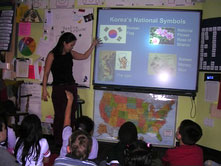
I believe Prometheon incorporates SmartBoard and iClicker technologies which is cool, plus Battle has the NASA grants--and Jackson is totally digging space right now. And, I LOVE the idea of telling people my son goes to Battle Academy, like he's training for some kind of arena fighting sport.
Thoughts on Battle Academy?
June 22, 2007
Ethics Overseas?
Was just talking today about a friend with major ethics about digital rights and downloading who moved to China and found out about massive pirating abroad. This article points to the positives of web 2.0 in such a climate and how control of online content is more manageable with a web 2.0 mindset.
Web 2.0 madness grips China | CNET News.com
"Online gaming is a huge success. If you tired to sell a PlayStation 2, all the games would be pirated. With online gaming, you control things on the server side," said Ted Dean, managing director of BDA, a consulting firm specializing in Asia. "A pop star can make more money on a ring tone that China Mobile sells for 2RMB (about 26 cents) than a top 40 single because the CD is going to be copied."Posted by cmwillis at 9:07 PM |
June 20, 2007
Who care about blogging?
Some interesting thoughts about blogging here:
Knowledge Management Systems @ U Texas » Blog Archive » Thoughts on Blogging
Cites this article: Why Apple Doesn’t Blog, in which the author writes: “Blog entries are like emails that cc: to the entire world.”
My thoughts: Who cares? If people want to read my blog, that's up to them. I in no way condone citing it as a source of reference for scholarly research or even conjecture, but, taken for what it's worth, it may be useful to someone. This serves a very useful purpose for me, and the occasional online collaboration thrown in is great, but it's not that important to me.
Comments? No? OK. Good.
June 18, 2007
EDD 07 Conference - How Global is Local These Days?
Well, this conference appeared to come off with nary a hitch, but I did put quite a bit of work into the overall production of the event. I think the content of the program was very stimulating and the discussions and Q&A; went well. I had quite a few compliments about the media that was included and the iClicker portions of the program seemed favorably received as well.
Also, the best compliment I got was from Becca for making all of the technology work and making it seem effortless. Thanks!
June 15, 2007
Gaming Addiction
Doctors are recommending that the AMA define and prescribe treatment for gaming addiction.
AMA chimes in on gaming/violence connection, gaming addiction
In terms of "gaming addiction," the report suggests that it is likely to be a subset of Internet addiction, as it most frequently occurs in players of MMORPGs. In both of these addictions, the current definition is currently informal—the described symptoms actually most closely resemble pathological gambling, rather than an addiction. In either case, the report notes, "there is currently insufficient research to definitively conclude that video game overuse is an addiction."Posted by cmwillis at 11:12 PM |
June 8, 2007
Doug Englebart
YouTube - The Invisible Computer Revolution
story of Doug Engelbart, inventor of the mouse, word processing, email and much more of the interfaces we use today. http://www.invisiblerevolution.netPosted by cmwillis at 4:40 PM |
June 7, 2007
Going to try this soon... LogMeIn for Mac
Wonder how it will handle the 1920x1280 resolution of the studio display at work?
LogMeIn - Remote Access and Desktop Control Software for your PC
LogMeIn enables you to connect to your Mac computers from anywhere in the world; from any other Internet-enabled Mac, Windows PC or hand-held device.Posted by cmwillis at 11:55 AM |
Going to try this soon... LogMeIn for Mac
Wonder how it will handle the 1920x1280 resolution of the studio display at work?
LogMeIn - Remote Access and Desktop Control Software for your PC
LogMeIn enables you to connect to your Mac computers from anywhere in the world; from any other Internet-enabled Mac, Windows PC or hand-held device.Posted by cmwillis at 11:55 AM |
June 6, 2007
MIT Enterprise Forum
I am facilitating the downlink of the MIT Enterprise Forum for the Riverbend Technology Institute. Tonight's broadcast is about:
A.B.L.E. Tech:
Achieving Better Life Experiences
for People With Injury, Disability, and Aging
Challenges Through
21st Century Technologies
More info here.
BTW, one of the speakers is Hugh Herr. So I'm wondering is this the climber Hugh Herr that lost his feet and lower legs due to an ice storm? Anyone? This site indicates that yes it is.
About 35 local technology and accessibility enthusiasts are here for the viewing.
UPDATE: Excellent discussion of tech helps for disabled people. Question of ethics is, Who can afford them? Not even many Americans have access to this stuff, not to mention the other 5 billion people in the world.
Also, I waited on the phone for 20 minutes to phone in a question and didn't get too. Kind of took away from the end of the conference.
Synchronous vs. Asynchronous Instruction Online
I am currently facilitating a videoconference between UTK, UTC, and UTSI where faculty and administrators are discussing which way to go with an online engineering program this Fall. It seems that several people were planning this from various locations and were all using the term "online" but people assumed common meanings for the term. For some this meant streaming video modules (asynchronous) while others assumed this was interactive videoconferencing (synchronous). My suggestion, be more specific!
It seems that the best solution is to combine the two approaches. Synchronous videoconferences can be streamed live to non-interactive users at their home (or work) PCs and also recorded for later replay. The question is, Does content created for synchronous delivery hold up when viewed later on? Does the pedagogy need to change or not? Reminds me of students who ask me if they can audiotape my lectures (to which I say sure-but I don't lecture). I could never go back and listen to all that, but I guess some people want to and can.
Teachers going nuts, but who can blame them?
Kids with video-enabled cellphones are busting teachers losing their tempers (mostly male ones in this video). But honestly, can you blame teachers for losing it with these millenials--or as I hope they are remembered, The Laziest Genreration?MyFox Kansas City | Kids Bait Teachers with Technology
technology is putting some teachers in an unflattering light.
If video killed the radio star, videogames killed books...
This article discusses the appropriate uses of videogames in learning applications.Experts: Use games to teach
it's time for video games to be demystified -- and then embraced.
This school integrated game design into their curriculum, which includes, programming and graphic design, but also writing storylines and teaching plot structure. I say let's not throw out the baby with the bathwater, but integrating games into the curriculum seems like a no-brainer given kids affinity for them. However, how do we do that and also encourage reading books?
June 1, 2007
My Screencast Channel
Final Cut Color TweakHere's another screencast showing you how to tweak color in Final Cut.
You can also check out my Video Tips channel at Screencast-O-Matic.com.
May 31, 2007
Screencast of Orb
Here is a screencast I made to test out the setup at Screencast-O-Matic.com which was also a good opportunity to demonstrate the greatness of Orb.
Screencast-O-Matic: Orb.com Walkthrough
This screencasting tool is incredibly easy to use and works with any browser on any platform, so long as you have JAVA. The only downside I see is that you cannot reposition the window during a pause, which would be incredibly useful for demos of programs with a large layout like Photoshop or Final Cut. Going to try it out on a Mac next to demo Final Cut. I did this last year using a camcorder pointed at the LCD screen.
UPDATE: Trying to embed the screencast.
Hover over the video and click the play button to pause.
Screencast of Orb
Here is a screencast I made to test out the setup at Screencast-O-Matic.com which was also a good opportunity to demonstrate the greatness of Orb.
Screencast-O-Matic: Orb.com Walkthrough
This screencasting tool is incredibly easy to use and works with any browser on any platform, so long as you have JAVA. The only downside I see is that you cannot reposition the window during a pause, which would be incredibly useful for demos of programs with a large layout like Photoshop or Final Cut. Going to try it out on a Mac next to demo Final Cut. I did this last year using a camcorder pointed at the LCD screen.
UPDATE: Trying to embed the screencast.
Hover over the video and click the play button to pause.
Coursecasting
This is a good description for what I've been wanting to bring to UTC for a year or so now. Seems like an accessibility boon for students to be able to review lectures and course discussions online immediately after class.
U Washington Deploys IP-Based 'Coursecasting'
Since October 2005, students have been able to access recordings via the Internet, and the university has logged about 110,000 lecture downloads through March 2007.
Oprah's Game of the Month Club
I've got to say, let's do this. Better odds of getting kids to read if you don't discount their other passions.
The Chronicle: Wired Campus Blog: Like a Book Group, Except With Video Games
Like a Book Group, Except With Video Games
Gates and Jobs get together for a pow-wow
Good reflections on the origins of Apple and MS and the rivalry that created so many apps and innovations that we have today.
Steve Jobs and Bill Gates: Historic discussion live from D 2007 - Engadget
May 26, 2007
Collaborative Blogging
I like the idea of collaborative blogging for myself, my current and former students, and guest authors. Now that UTC is implementing user comments with MT, I think we can do some neat things in the areas of television, video, tech and learning. Be watching utc.edu/video for new content soon.
The article that inspired me:
Top 5 Reasons Why You Should Become a Co-op Blogger | Wise Bread
May 25, 2007
iClicker - Fun tech that UTC already owns...
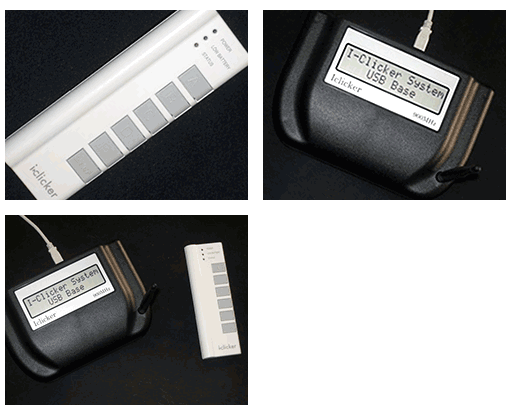 I got to play with and help demonstrate this technology last night:
iClicker, an easy-to-use radio frequency classroom response system that facilitates teaching rather than impeding it.
What I liked about this was the ease of setup. My boss just plugged this in and it instantly worked with my existing powerpoint and provided instant feedback of student's answers. I can think of a ton of awesome classroom uses where the technology would help to reinforce learning and engage students during review sessions. Then there are all the non-learning but fun uses, like, make your own Scene-It games and so on.
Pretty neat.
May 9, 2007
Search in black - save a tree.. eventually.
Blackle - Energy Saving Search
Google, which has a white background and gets about “200 million queries a day” could reduce global energy use by 750 Megawatt-hours a year by simply changing the color of its homepage to black.
Web 2.0 Digital Ethnography Guru
In an earlier post I embedded an incredibly poignant video about Web 2.0 and finally I have more information about its creator. Wesch is doing a webinar in June and I will be sure to tune in.
The Chronicle: Wired Campus Blog: An Anthropologist Explores Video Blogging
Michael L. Wesch, an assistant professor of cultural anthropology at Kansas State University, was writing a paper about social networking and other interactive tools, which are collectively referred to as Web 2.0, when he decided to make use of the technology to spread his message.
Be sure to watch this online interview with the prof. http://chronicle.com/media/video/v53/i36/youtube/
May 5, 2007
Would You Install Pirated Software at Work?
Good discussion in the comments.
Slashdot | Would You Install Pirated Software at Work?
I have been told to install multiple copies of MS Office, despite offering to install OpenOffice, and other OpenSource Office products.Posted by cmwillis at 8:56 AM |
Learning Disabilities Tech
This blog, while not eloquent, advocates tech helps for LD students.Cool Cat Teacher Blog: How wikis, podcasts, and laptops help students with learning disabilities
Why did the laptop improve his grades?I sat down with my son and asked him what the difference was. He basically told me it was a couple of things:
* He doesn't have to struggle with a lot of notebooks.
* His notes are no longer full of errors and mistakes and he can read his notes.
* When he is writing he can focus on what he is writing and not get mad at himself because he can't read it and it is full of mistakes.
* He can focus on studying and getting his work done because the things that "drive him crazy about himself" are under control.Posted by cmwillis at 8:39 AM |
Need Less Input - Laptops for Students programs dropped in NY High Schools
Seeing No Progress, Some Schools Drop Laptops - New York Times
“After seven years, there was literally no evidence it had any impact on student achievement — none,” said Mark Lawson, the school board president here in Liverpool, one of the first districts in New York State to experiment with putting technology directly into students’ hands. “The teachers were telling us when there’s a one-to-one relationship between the student and the laptop, the box gets in the way. It’s a distraction to the educational process.”
This seems like an obvious outcome now, but I remember thinking how awesome this would be when I first heard it years ago. Could it have worked? What was needed? I wonder if the instruction changed to match the new technology in the student's hands?
Wondering about the program I had seen in Atlanta I google laptops for students in ATL and found this article: http://www.ajc.com/metro/content/metro/cobb/stories/2007/04/20/0420metlaptop.html
Aparently many school board members were fired and are under investigation for the business practices used in their program.
Maybe it's just a bad idea all around..
April 30, 2007
Careful what you post..
Fair-use doctrine is great, until someone puts an eye out.
http://chronicle.com/wiredcampus/article/2030/adventures-in-fair-use-doctrine
Internet2
We've been using Internet2 for about 4 years, via our connection to UTK and for a short while on our own connection. This highspeed data backbone is reserved for research and medicine, but is being opened to K-12 education for the first time.The Internet's Second Coming : April 2007 : THE Journal
The K20 Initiative reveals Internet2's capability to support videoconferencing, bringing once-exclusive educational programs into K-12 schools.Posted by cmwillis at 10:54 PM |
April 27, 2007
Short Films Documentary
Below is a short documentary about the short films that were created in my COMM 445 - Video II class this Spring. Coti and Jill also tell a little about the process of making a short and provide tips for aspiring filmmakers.
Stay tuned for a slightly more comical look at filmmaking by Lazy Bear Productions in How To Make Your Movie: Part Deux. I have a small cameo in which I play a nervous professor on camera for the first time.
NASA Videoconference
 "Did you know the shuttle transporter crawler gets 35 feet to the gallon?"
Facilitated a videoconference today for the Riverbend Technology Institute with 2 classes from Brown Academy and the NASA Digital Learning Network. This school has a magnet curriculum and has become a NASA Explorer school (more here).
This interactive field trip involved a studio at NASA with a Chromakey backdrop from which teir instructor presented a variety of multimedia and hands-on demonstrations (liquid nitrogen and the balloon trick!). This guy was awesome and he officially is doing my dream job (probably a little late for me to get on with NASA). On our end we had two classrooms connected in Fletcher Hall, and students were able to ask questions, perform tasks as examples, and even see the other classroom here on campus when they asked questions.
Prep for this involved teacher's preparing their students for the experience with lessons, setup and test of the videoconference (nearly had issues even after successful tests, but cool-headed troubleshooting prevailed), and making contact with the folks at NASA.
NASA provides these experiences for free, but they only ask for students and teachers to fill out a feedback form online in order to better their program an to report back on what they are accomplishing. (Good assessment!)
I'm going out to buy a telescope tonight. Woo-hoo!
August 24, 2006
Ellumination
Facilitated tech for and observed a webinar today featuring Dr. Roblyer on a panel of experts in curriculum and instruction design for virtual schools. The meeting was conducted with a web-based java app that I was skeptical about at first, but pretty impressed with after seeing it live.
About 40 particpants joined in this webinar by clicking on links sent by email. The link pulls up a session in elluminate, which is basically a chat room with everything but the kitshen sink thrown into it. It offers live audio (one person at a time to avoid confusion), video, slides, polling, hand-raising, chat (as backup for audio problems), and active weblinks in the slides. They also did followup with all the participants via a survey in Zoomerang.
There is probably more I am missing and I hope to get a demo of this somehow because I want to see what all the moderator was looking at, since they were able to do the online polling, presentation of that data, and on-the-fly Q&A.;
This may just be enough to get me excited about online and distance learning again..
August 17, 2006
UTC Athletics steps into the digital age
After multiple meetings with Rick Hart, UTC's new Athletics Director, I see a new vision for the program here that involves innovative uses of technology.
First, their football program has stolen my summer intern (with my permission and training) to use video more heavily in their training. Michael shoots practice footage every afternoon and edits and delivers DVDs with highlights of various drills for analysis and presentations to the players in the classroom that same evening. This practice will be used more heavily in other athletics programs as well.
Second, the Athletics program will be taking advantage of the web to deliver content to viewers on campus and around the world.
"Fans will be able to choose which team's audio feed they would like to listen to during the games, which also will be archived and can be downloaded onto a portable device, like an i-Pod." The Stamford Advocate
I will be helping to develop a workflow for live production and streaming of games, packaging highlights reels of past and present UTC sports, and delivering in-game entertainment to the jumbotron at Finley stadium and eventually in the McKenzie Arena.
Will keep updating here as we continue this partnership, but as I said to Hart in our first meeting, it's great to finally see someone with a vision in his position.
More here: Small-Conference Football Hits the Computer Screen
June 30, 2006
AIDS movie
Worked with these girls from Upward Bound to help them produce a short film about AIDS entitled The Domino Effect: How I got AIDS. Pretty impressive, they came up with the idea, wrote the script, directed and acted, and made editing decisions. Leslie Smith with Upward Bound does an awesome job with these kids and that program seems to have a big impact.
Chattanoogan.com wrote up a good article here.
June 27, 2006
Spectrum University
Worked in the studio with a group of 24 teens with autism and other developmental delays yesterday. Spectrum University kicked off the last week of their summer camp by producing a movie trailer entitle: Spectrum University-Mission Totally Possible.
It was very interesting preparing the curriculum for this activity. The first problem and the biggest was the number of students, counselors, and press crammed into our facility. 24 kids, 15 counselors, 6 studio employees, 1 camp director, and a couple cameramen from local television. I set up three learning centers and used the three groups of eight previously decided upon which helped, though I should have spread around the work a little more. Kids acted in front of the chromakey: climbing up the side of a building, swimming underwater to plant or defuse a "bomb", and skydiving. They shot more dramtic scenes in our control room including my favorite line, "Which wire? WHICH WIRE?" Or, "I'm going to hurt your camp counselor." Also they did some exterior shots and recorded voiceovers in our edit suite.
Was a hectic couple hours, but I think the kids got a pretty good perspective of how a film gets put together and they will love the final product. Dealing with their disabilities was much easier than I had expected, though I had planned on treating these kids just like anyone else (inclusion?) which went pretty well. Rachel Salomon-Sadowitz, the camp director, does an incredible job motivating these kids, and the counselors all seemed pretty proactive in working with their assigned students. We only had a couple of situations where kids didn't want to participate or took a lot of encouragement, but as my editor Ryan pointed out, "There are college kids who wouldn't have handled the situation this well."
I WOULD LOVE to post the final product up here, but that will not be possible. However, with permission of the program, I can probably show anyone interested if you want to come by the TV Studio. It's going to be awesome!
June 11, 2006
Ongoing projects
Language Learning videoconferences with Mexico - These monthly conferences take place with local elementary school children from The Bright School and with children in a suburb of Mexico City. The kids speak back and forth in each other's language and are able to ask questions about each other's culture. Read all about it in this article in the Chattanooga Times Free Press.
MIT Enterprise Forum - a satellite downlink brought to UTC by the Riverbend Technology Institute and yours truly. "'Talk to an Angel: Crucial Connections to Early Stage Capital' is a look at how entrepreneurs and angels can find each other for funding opportunities, and work together after the deal is done." More info here.
Girls Inc. - helping students learn basics of the communications industry, particularly in helping them create a public service announcement for Breast Cancer awareness.
COMM 400 Documentary class - provided technology and storytelling advice and served as a judge for awards given at their final presentation.
Back Row Film Series and Workshops - coordinated and planned curriculum for three free filmmaking workshops for teens concentrating on screenwriting, shooting, and editing independent films. Also on planning committee for the Back Row Film Series.
Chattanooga Film Commission - invited by local filmmaker Jarrod Whaley and Missy Crutchfield to serve on the local projects committee of the city's new film commission. This committee's purpose is to support and encourage local filmmaking.
Youth Documentary Project - sponsored by the Association for Visual Artists, this project partners local filmmakers with teens at afternoon rec centers to study and create short documentaries.
The Enterprise Center - Created promotional video materials for the Maglev train DVD, edited from existing and computer simulated footage of magnetic levitation train footage to educate Chattanoogans about the potential of a high speed magentic levitation train from Chattanooga to Atlanta.
Camp Spectrum - organizing a one-day workshop for teens with autism to learn various aspects of television and video production.
April 4, 2006
Curriculum Design Activities - Filmmaking Workshop
So, for whatever reasons this spring semester I commited my student workers and myself to putting on a series of free filmmaking workshops for teens that took place at the Hunter Museum. Was a pretty big success in my book, since we got kids from very diverse backgrounds and schools including UTC, GPS, Baylor, McCallie, Red Bank, and Howard (thank you Ms. Lyon!)
The purpose for me was to try to do everything possible to promote local film submission for the Back Row Film Series. The other reason I guess was to make use of the amazing resources of two of my current student workers who are into filmmaking in a big way, as well as to get other local filmmakers to come out and share their expertise. All of this took place with degrees of success ranging from better than I could have expected to OK, let's just get this over with. All-in-all I think everyone involved had a good time and enjoyed the events.
I basically coordinated the whole thing with assistance from the curators of education at the museum. The idea was to do three workshops, the first on pre-production (writing scripts), the second on production (shooting), and the third on (postproduction). I leaned heavily on my students, Ryan and Kashad, for the first one, since I haven't written the first screenplay. We did cover som other materials that day as well, but for the most part followed the curriculum described here. The next workshop I had more expertise in and planned the workshop accordingly. Tried to cram too much into 2.5 hours, but all in all it was effective. That day's plan can be seen here. Finally we closed with postproduction which was planned during most kids spring breaks and was poorly attended. That curriculum is still in note form but will appear as an article on the Chattanooga Film Blog shortly.
We used a bit of material from the Film Foundation who have two terrific curriculums for teach film appreciation and filmmaking to kids call The Story of Movies and Creativity on Film. These are very rich resources that I would like to incorporate more fully if I ever do this again.
This was a very interesting project because I have some good information and experience to share, but putting it into the form of a 3-day workshop series that would be useful and fun for students who signed up was difficult. Also, collaboratively building the curriculum with the other filmmakers was tough, since all most filmmakers want to do is sit around and trash popular directors and so forth, but we made it, and I think I learned a lot from the experience.
Check out my student's amazing work and a cameo by Mr. Willis at Lazy Bear Productions and Killing Elvis.
March 24, 2006
Filmmaking Curriculum - Production
So our second workshop at the Hunter Museum on February 18th focused on the production phase of making your film. Quite honestly, the day wasn�t as action-packed as the first workshop on screenwriting, but there were some highlights. One was a presentation of Lazy Bear Productions� �How to Make Your Movie: Episode 1 � Twelve Simple Steps.� Check it out on Google Video here. Another was Jim Burer�s presentation of �Krusty,� which can be seen on his site, www.angusgroove.com.
Other than the above-mentioned highlights we did take time to point out some basic DV filmmaking tips and tricks, starting with the very basics.
1. Use a tripod! It�s much easier to look amateur than professional and usually the main difference is shaky handheld video. When should you go handheld? Only when the action or pacing of a scene calls for it. However, unless you�re shooting a spaghetti western, don�t move the camera, use the zoom, or change the shot mid-scene.
I like to encourage students in my classes to think of shooting video the exact same way we shoot pictures from a photography standpoint. Set up the shots, compose all of the elements, roll the tape, call for action, then try it again from a different angle. It�s a lot of trouble, but taking the time to carefully compose each shot will make all the difference in your final product.
2. Shoot closeups. The closeup shot is essentially the key to connecting with your audience in filmmaking. Lasting images are usually those that were carefully composed (like a good photo) and effectively isolate the subject from its surroundings. Closeups are important visually in this way but are also useful as cutaways in the editing process. For instance, if you shot a long conversation of two friends arguing and decide to cut the scene shorter but you only have a wide shot of the scene, cutaways of hands wringing or on one character�s eyes, or just about anything in the scene, this can be inserted into the scene and allows you to start back further into the conversation without an annoying jumpcut.
How close it too close? A lot of times scenes are shot extremely close to make them feel more intense. While this effect works, it can be horribly overused, particulary in fight sequences--Batman Begins, Point Break, Braveheart (wide scenes are epic, but when the fighting starts you can�t tell what�s going on.)
3. Use good lighting. When shooting outdoors in the sun you can usually get away with natural lighting. Mid-day sunlight is actually much too harsh for most DV camcorders, but by scheduling shoots earlier or later in the day this can be effectively handles. However, when shooting outdoors at night or anytime indoors you WILL NEED lighting. Here are some cheap ways to getting better lighting when shooting indoors.
Turn on the lights. All of them. If you have a halogen torchiere lamp that can be set up in the room out of the shot go for it. Also, cheap halogen work lights can be reflected off of a white wall or ceiling to brighten the scene. Also, take off the lamp shade of any lamps that are not in the shot. Finally, try swapping out the bulbs in lamps with the brightest wattage bulbs you can use in them. Again, it�s a lot of trouble, but worth every bit of it for a better final product.
Also, you�ll likely need to perform a manual white balance with your camera. Usually there is a control for this in the camera�s menu, so check your manual about how to do this. Orange-tinted interior shots are another great way to look amateur, so try to avoid them by doing a white balance.
We talked a little further about directing actors and coming up with props and scenery, but most of this you can figure out for yourself. There are several great websites below with tips on how to make fake blood, sugar glass, etc., for very little cost, so check those out or send me references if you know of others or have favorite tips you'd like to share.
Chris Willis
Further Resources
The Complete Eejit's Guide to Film-Making
DV for Beginners
Extreme Indie
The Digital Filmmaker
Cyber Film School
February 25, 2006
Filmmaking Curriculum - Preproduction/Screenwriting
Screenwriting Resources
As a resource for those taking our filmmaking workshop, and for whoever else stumbles onto the CFB searching for filmmaking tips, I�ve compiled the following information as a resource for beginning screenwriters. I�d like to thank my former intern Ryan DiGiorgi of LazyBear Productions for gathering most of this research, and to a lesser extent my current intern, Kashad Moore (j/k Kashad).
The purpose of the workshops is to promote story-telling with film/digital video, to encourage local submissions for the Back Row Film Festival, and to generally encourage young filmmakers.
The first workshop covers preproduction, specifically, writing your script. Why is writing so important, isn�t film a visual medium? Well, yes, but, that is only the finished product. The first step is getting the idea out of your head and onto paper. Everything you see on the screen starts with the script. And the script starts with a single idea.
Where do good ideas for stories come from? Check out some scripts from films you�ve seen:
http://www.script-o-rama.com/, http://www.screenplays-online.de/
These Hollywood films required months, even years of preproduction, script development, and planning.
But where do story ideas come from? Random conversations with friends, waking up in the middle of the night (a vision from God), locations that evoke a feeling, where else? A good story idea can come from anywhere, but the question is, where is this story going?
Every story has already basically been told in some form. Man vs. Man, Man vs. Nature, Man vs. Self. Any new idea, no matter how original, can be compared to an existing work. This isn�t necessarily a bad thing. It can be helpful to look at previous work to get your ideas in motion.
How do these story ideas then get turned into films? Not just by talking about them! They had to be written down first--then submitted to film companies, completely re-written, then made into Hollywood films.
A lot of the movies you see started with a �what if� statement? From a conversation, someone came up with, What if _____ happened to _______?
What if an alien visitor was left behind on Earth and discovered by a child?
What if werewolves fought vampires?
What if a psychopath designed traps where people had to hurt themselves or others to save their own life?
What if we made a movie about a young rapper trying to make it?
What if toys came to life?
What if a student skipped school and had hilarious hijinx in Chicago?
What if four brothers vowed to avenge their mothers death?
What if two cowboys fell in love?
What if two professional killers were married to each other and didn�t know the truth about each other?
The �Chris Willis� method, as I like to call it is very similiar. Basically I have sat around and heard a thousand converations where someone said, �Wouldn�t it be cool if ______ happened in a movie?� Same concept.
All screenplays have common elements that need to be addressed, but the place to start is with the subject. What is your story about? (Field) Figure this out first, then move on to plot, characters, and endings.
What happens? �The story is NOT an action scene, it�s not a guy falling down the stairs, it�s not �wouldn�t it be funny if we dressed up like ninjas� unless that sentence ends with �and then something interesting happens�� (DiGiorgi, 2006).
What else makes a story? Structure. Hollywood agents for writers have very particular criteria they are looking for. One thing in particular is that submitted stories have a �Three Act Structure.�
ACT 1
Setup
Who is the main character and what does he want?
Why?
What does he intend to do to get it?
ACT 2
Struggle
The hero�s plan goes into action
There are problems
He tries several different methods, meeting new obstacles and learning new things at each turn
Just when he�s sure he has everything figured out, his worst fear comes true. He�s ready to give up.
EVERY good movie has this scene, try to find it.
But WAIT. There might be hope.
One last plan
ACT 3
Payoff
CLIMAX: The hero�s last plan is put into action.
The plan pays off and he has the power to get what he wants.
But was it really what he NEEDS?
He takes everything he learned in Act 2 and applies it to his final decision to accept what he wants or reject it.
Resolution
How did everything turn out for everyone?
The Punctuation Method (The Screenwriter Within)
ACT 1 ends with a �?�
The premise is setup, what will happen?
ACT 2 ends with a �!�
Holy crap, I did not think that would happen!
ACT 3 ends with a �.�
Well, I guess it all worked out.
If you don�t know your ending, make up three. The real ending is probably a mixture of these:
The happiest possible ending
The saddest possible ending
The most absurd ending
-The Screenwriter Within
Another important point for scripts submitted to film companies is using the proper screen writing format. Eejit�s Guide has a very good explanation of how to write for independent films.
Is the format really that important? Depends on what you�re doing. The main things is to get your ideas out of your head and onto paper. People can�t read your mind.
Storyboarding is another useful tool in preproduction. Check Eejit�s Guide for help with this as well.
So get to work. And if you'd like to post your ideas or get other feedback from area writers, contact me at Chris-Willis@utc.edu.
For more info see:
Books on screenwriting:
King, Viki. How to Write a Movie in 21 Days.
Gilles, D. B. The Screenwriter Within.
Field, Syd. Screenplay : The Foundations of Screenwriting.
Field, Syd. The Screenwriters Workbook.
Useful websites:
http://www.indiewire.com/
http://www.exposure.co.uk/eejit/
http://www.screenwriting.info/
http://www.dvshop.ca/dvcafe/writing/beginners.html
http://www.bbc.co.uk/worldservice/arts/features/howtowrite/screenplay.shtml
http://worldfilm.about.com/c/ht/00/07/How_Write_Screenplay_For0962933827.htm
February 7, 2006
Article
So, here it is. A very good educational toy product that does not work with Windows Media Center 2004, but pretty well with just about any other DVD player.
InteracTV by Fisher-Price: Children�s television you can feel good about.
 The Fisher-Price InteracTV DVD-based Learning System is a very simple concept, with very lofty goals. It is essentially nothing more than an oversized universal remote control for your DVD player and a collection of specialized interactive DVDs similar to Scene It? But what it accomplishes is so much more. The product actually has the potential to take one of our worst vices as a parent�allowing our children to watch television, and make it a virtue.
The innovative product uses existing technology, DVD players found in most homes, and programs that your child is already familiar with. These include: Dora the Explorer, SpongeBob, Scooby-Doo, and many more. As the program progresses, the characters ask your child a series of questions. This level of interactivity has been going on in children�s television for years, but now there is a distinct difference. Your child can answer back.
The packaging of the product indicates that the system allows children �to interact with their favorite characters and shows in a fun and educational way.� The curriculum includes about 100 learning questions that are included during each show. This supports the claim that this toy is focused on the child�s cognitive development skills. The box lists a variety of learning objectives that can be achieved as the child uses the toy. Perhaps even more important than these is the way this product can change the experience of television viewing for your child for years to come.
Jackson loves television.
My two and half year old son loves watching TV. He would watch TV all day long, every day! Early on in his television viewing we were amazed at how quickly he learned the names of characters on TV. He often knew names for programs that he had not even seen. Despite our best efforts to ban certain programs we didn�t like, Jackson was learning about them from storybooks, advertisements on other children�s T-shirts and sneakers, and talk amongst children at his daycare.
What is the harm in watching television? I did it. So did my wife. And we both seem relatively normal. We both even went to college and have respectable jobs. Television didn�t ruin our lives. Yet you hear so much negativity about children�s television viewing these days. News programs and magazine articles suggest all types of negative outcomes for children from watching too much TV. You might think allowing your child to watch television was on a par with encouraging your child to smoke cigarettes or drop out of school. But what does the research really say?
Children�s TV Viewing: How much is too much?
In my graduate program I am doing my research on children�s television. In a review of literature on children�s television I found that children�s viewing habits were shown to have effects on subsequent learning patterns. A great deal of research points out that even too much viewing of educational programs such as Sesame Street can have negative effects . This is usually said to be caused by displacing other important learning activities such as reading and social interaction. Another concern that has been heavily researched in recent years is the relationship of children�s television viewing and childhood obesity. Because of these concerns, the American Academy of Pediatrics has called for reduced levels of television viewing in children ages 2 and up, and urges parents of children under 2 to not allow any viewing at all (http://www.aap.org/family/smarttv.htm).
I was concerned about the possible negative effects that watching too much television could have on my child. The literature I reviewed led me to the summary that any amount over two hours each day may be too much television. With that general rule of thumb in mind, my wife and I have decided to do �No TV� nights, in which we plan activities that would otherwise have been replaced by sitting in front of the television. Of course these don�t completely counteract �Movie Nights� where we purposely all watch television together, but at the end of the week we believe our average viewing time is lowered to about 2 hours per day or less.
What kind of viewing is taking place?
Other research into children�s television has shown that it is equally important that we pay attention to how our children are watching television. Does your child slump back on the couch and barely blink or do she jump and down when something funny happens? Does he clam up when Dora the Explorer or Steve from Blue�s Clues asks a question, or is he calling out the answers? Does your child seem to be interacting and engaged, or catatonic? These behaviors may indicate whether a child is an active or a passive viewer of television.
This is where Fisher-Price�s InteracTV system shines�in creating a more interactive learning experience out of an activity otherwise referred to as being a couch potato. The system encourages a more interaction with the content of the programs and compels the child to think critically, rather than just viewing the content hypnotically. This new way of viewing television can develop into patterns of engaged viewing that last a lifetime.
Engaged viewing is when your child is plugged in and engaged while watching a program. When a child is actively engaged in watching a TV program, he uses the same cognitive skills as are used when reading a book. In cognitive learning theory, knowledge is thought to be created when a child is actively involved. Jean Piaget, renowned psychologist, emphasized that children aged 2 to 7 need new concrete experiences upon which to build learning cognitive structures�the building blocks of knowledge (http://www.funderstanding.com/piaget.cfm).
The Fisher-Price InteracTV system causes a child to be more engaged while viewing. They do this by periodically pausing the action during which the characters ask questions. Your child must then press the appropriate button on the InteracTV controller before the program will continue. If wrong buttons are pressed the question is either repeated or advice is given on getting it right. This series of questions is repeated each time the game is played, but they are randomized and the answers are never in the same order on the screen. In this way, the experience is never the same for the child.
What do children learn while watching television?
When children watch television they learn quite a bit more than just what is presented on the screen. They learn patterns of viewing behaviors that will last for many years to come. If the pattern that is learned is that of a �couch potato,� it is very likely that the child will not be interested in challenges and critical thinking opportunities that appear in other media as well.
In a study of the effects of children�s viewing of learning-based programs such as Blue�s Clues it was found that viewing such a program can affect how a child watches other shows (Crawley et al., 2002). For instance, if children begin watching television that is entertainment-based, they will more likely watch other shows passively. This is true even of educational shows which present material in a straightforward manner, but do not ask the child to participate in meaningful ways. If the child is not encouraged to interact with the material by their parents, they will likely zone out, and not construct new knowledge with the presented material.
On the other hand, if children watch shows that are learning-based first, they will be more likely to be engaged, interactive viewers of many different types of programs�and of other types of media as well (van den Broek, 2001). This is particularly encouraging for Fisher-Price and other toy manufacturers, as well as television production companies, because they would like to use children�s television to help build reading and literacy skills, rather than taking away from them. Rather than allowing television to displace activities such as reading and play that promote learning (Wan, 2000), TV can actually be a source for all of the above.
InteracTV has the potential to take this to a whole new level, largely due to its most important selling point�it�s fun! The product is a game, and it is a game that kids will want to play. Yes, children can learn by playing with it. They can learn math, vocabulary, and observation skills as the packaging suggests. But most importantly they are learning to be active, engaged viewers. This is a learning behavior that will be important for them in years to come as they encounter other forms of media. Will they be mesmerized by the screens of videogames and dulled to sleep by textbooks? Or will they interact with television programs and dig deep into books to find the answers their brains are wired toward figuring out? I believe that InteracTV has the capability to expand a child�s capacity for critical thinking, for developing a curious mind, and for making the most of their entertainment-time�teaching them that learning can be and is fun.
Final Analysis
There are just a few drawbacks to this product that a parent must consider. It does heavily encourage TV viewing. If your child is already having difficulty tearing him or herself away from the tube, you may want to consider buying a few more books and investing in a pair of earplugs as you guide them through TV withdrawals. But, if you can incorporate InteracTV into a healthy TV diet of no more than 2 hours per day, this product definitely has the potential to fulfill a variety of learning outcomes.
A quick check of user reviews online will tell you that several people have had trouble with the setup of the DVD remote controller. My tests worked fine with all of the suggested methods of teaching the remote to work with my DVD player. I never could get it to work with my Windows Media Center PC however, even though it uses an infrared remote control and has all of the same buttons as my DVD player�s remote.
The price and flexibility of this product�s being able to work with the majority of DVD players on the market make it a very effective and relatively low-cost educational toy. It is both age appropriate and safe, though it should never be used as a sitter for your child, which is generally the problem with children�s television viewing. If you are in the market for something that will cause your child to tune in to the learning possibilities offered by educational television, rather than vegging out while watching any form of TV, I highly recommend this product.
References
Crawley, A., Daniel R. Anderson, Angela Santomero, Alice Wilder, Marsha
Williams, Marie K. Evans, Jennings Bryant. (2002). Do children learn to watch television? The impact of extensive experience with Blue�s Clues on pre-school children�s television viewing behavior. Journal of Communication. June 2002. 264-280.
Piaget. Retrieved Feb. 01, 2006, from Funderstanding Web site: http://www.funderstanding.com/piaget.cfm.
Smart Guide to Kid's TV. American Academy of Pediatrics. Retrieved Nov. 20, 2005, from http://www.aap.org/family/smarttv.htm.
van den Broek, P. (2001). The role of television viewing in the development of reading comprehension. Office of Educational Research and Improvement, U.S. Department of Education. Retrieved November 17, 2005, from www.ciera.org/library/archive/2001-01/04Oct99-58-MSarchive.html.
Wan, G. (2000). �Barney and Friends�: An evaluation of the literacy learning environment created by the TV series for children. (ERIC Document Reproduction No. ED 438 900).
February 4, 2006
Podcasting assignments?
I am curious about how podcasting is being used as an instructional tool. Perhaps I can do a paper on it. I know many universities are using the technology to push delivery of lectures and materials, but I am more curious about where it is being used as a portfolio of student presentations and so forth. I have seen several locally from Baylor High School and I know that there were talks between the COMM dept and the Hunter museum about creating a series of podcasts, but I am not sure how well they are being integrated into the curriculum.
At my suggestion (and others) a couple of students I know have started a weekly 30 minute podcast in which they review movies and dialog about filmmaking. It is featured on the PulseBlog and on the Chattanooga Film Blog. Check it out below.

January 27, 2006
Technology
In areas of technology I feel especially competent, not that I have a vast background in any certain technology areas, but in that I feel very comfortable when presented with challenges in this area and am usually successful in figuring out whatever is needed to accomplish a given task.
In my position as a technology specialist for UTC, I have been facilitating various groups with their technology needs. For students I am constantly doing over-the-shoulder help in the television studio. For faculty I've done everything from compressing video for self-guided, interactive CD-ROMs, to downlinking satellite feeds of important educational teleconferences. For Continuing Education I've overseen the operation of now 7 different videoconferencing classrooms, for which I've spec'd out several hundred thousand dollars of equipment, and successfully obtained funding for through grants. I enjoy using technology to help other realize their vision, whether that is a video, a web project, a TV show, a vehicle for instruction delivery, whatever...
Also, I designed the UTC Television Studio, which I'm fairly proud of.
This studio took years for the university to get and I feel like I've had a very instrumental role in its development, from design to securing initial and continued funding. I am extremely proud of the work being produced there, particularly by my students. Examples of their work and others can be seen on the programs page of our website.
June 9, 2005
The Art of Leadership (preview)
Here is a preview of a project my students are finishing for Leadership Chattanooga.
mms://athena.ceca.utc.edu/video/leadership/dance2.wmv
http://athena.ceca.utc.edu/video/leadership/dance2.mov