July 29, 2009
Film Incentives killing CA
Studio Daily Blog » Confronting “Ran-Away� Production in California
But even the biggest budget films can make decisions to leave California based on relatively small amounts of money saved. Lemisch noted that she’s seen productions with a $45 million budget that go to Louisiana to get back $5 million. “They had to spend $2.5 additional to go there,� she said. “But they were still up $2.5 million and so they went.�Glad to see these incentives are working for some states, but CA economy may be tanking because of it..
June 21, 2009
Netflix in Vista Media Center means no more movies in the mail necessary.
Netflix Watch Instantly comes to Vista Media Center, not Extenders
So, this is the final step in translating my entertainment needs to being completely online. With on-demand access to a huge portion of the Netflix library, I could watch movies, TV shows, cartoons, and more for a mere $8.99/month. We were on the $4.99 plan, but only got 2 hours of instant viewing for that price. The streaming quality is great though not HD-quality. However, compared to analog channels on my HDTVs, it looks incredible. Really makes me glad I pulled audio and video from my PC in the living room to the bedroom as well (and IR remote control via Jensen ir100a).
March 18, 2009
Tech Specs for Slumdog Millionaire
A customized camera support and recording package had to be built to meet the unique form factor demands of the Slumdog shoot. They enlisted Pille Film, of Wiesbaden Germany, to create a custom solution which included a gyro stabilizer for the base of the SI-2K Mini. Instead of using the traditional film-style camera body, they elected to use Apple Mac book Pro notebook, running Windows XP, for the recorders, and built them into ruggedized backpacks, to be worn inconspicuously. Stefan Ciupek, the show’s technical supervisor and additional camera operator, coordinated the design and modifications of the camera system with Wolfgang Damm of Pille, whose team worked around the clock to get the 2K Mini rigs built.
Pille assembled four units for the production, and by testing them in a sauna, determined that the laptops would have to be packed in dry ice so they wouldn’t fail in India’s intense heat. Once shooting began, the dry ice had to be reloaded hourly; the production required up to 45 pounds of dry ice daily.
"I've done some odd things, but this was the oddest," Mantle says.
November 14, 2008
Lame Apple, lame...
Apple - Education - Insomnia Film Festival
Due to unexpected challenges we are postponing the 2008 Insomnia Film Festival. We understand the inconvenience and disappointment this change of schedule brings to those of you who have been preparing to participate.
March 17, 2008
Film Tips..
Here are some tips for would-be film-makers (my class). Enjoy!
Also, be sure to watchHow To Make Your Movie! if you didn't see it last semester.
Somebody did my idea..
..for a documentary about a documentary. YouTube - Documentary on Making a Documentary
Documentary on Making a Documentary
Unless, I add another layer, and MAKE A DOCUMENTARY ABOUT THESE GUYS!!!
February 22, 2008
900 foot Bono
Tennessee Aquarium - IMAX - U2 3D Saw this last night and have to say.. my mind is blown. Pretty amazing 3D, not too much Bono in your face.. like having a front row seat basically. Probably not as enjoyable for non-U2 fans, but for filmmaking types--still watchable.
January 13, 2008
Celebrity Lookalikes..
Is it just me or is Josh Brolin a poor man's Kurt Russell?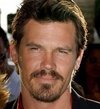
No Country for Old Men (2007)
June 9, 2007
Give these kids a dollar..
Go to Spout.com/FoureyedMonsters and these young filmmakers might just break even for their years of effort.
YouTube - Four Eyed Monsters - Entire 71 minute Film - (1 week only)
Four Eyed Monsters - Entire 71 minute Film - (1 week only)
Showed their podcasts (which are great, described by some as watching a terrific trainwreck) to my class this Spring. Glad they are finally scrounging up some distribution.
September 13, 2006
Driving in ATL
This experiment in Atlanta tested the near city-wide 55mph spee limit. Plus it was done for campusmoviefest.com which I would love to bring to UTC.
March 24, 2006
Filmmaking Curriculum - Production
So our second workshop at the Hunter Museum on February 18th focused on the production phase of making your film. Quite honestly, the day wasn’t as action-packed as the first workshop on screenwriting, but there were some highlights. One was a presentation of Lazy Bear Productions’ “How to Make Your Movie: Episode 1 – Twelve Simple Steps.” Check it out on Google Video here. Another was Jim Burer’s presentation of “Krusty,” which can be seen on his site, www.angusgroove.com.
Other than the above-mentioned highlights we did take time to point out some basic DV filmmaking tips and tricks, starting with the very basics.
1. Use a tripod! It’s much easier to look amateur than professional and usually the main difference is shaky handheld video. When should you go handheld? Only when the action or pacing of a scene calls for it. However, unless you’re shooting a spaghetti western, don’t move the camera, use the zoom, or change the shot mid-scene.
I like to encourage students in my classes to think of shooting video the exact same way we shoot pictures from a photography standpoint. Set up the shots, compose all of the elements, roll the tape, call for action, then try it again from a different angle. It’s a lot of trouble, but taking the time to carefully compose each shot will make all the difference in your final product.
2. Shoot closeups. The closeup shot is essentially the key to connecting with your audience in filmmaking. Lasting images are usually those that were carefully composed (like a good photo) and effectively isolate the subject from its surroundings. Closeups are important visually in this way but are also useful as cutaways in the editing process. For instance, if you shot a long conversation of two friends arguing and decide to cut the scene shorter but you only have a wide shot of the scene, cutaways of hands wringing or on one character’s eyes, or just about anything in the scene, this can be inserted into the scene and allows you to start back further into the conversation without an annoying jumpcut.
How close it too close? A lot of times scenes are shot extremely close to make them feel more intense. While this effect works, it can be horribly overused, particulary in fight sequences--Batman Begins, Point Break, Braveheart (wide scenes are epic, but when the fighting starts you can’t tell what’s going on.)
3. Use good lighting. When shooting outdoors in the sun you can usually get away with natural lighting. Mid-day sunlight is actually much too harsh for most DV camcorders, but by scheduling shoots earlier or later in the day this can be effectively handles. However, when shooting outdoors at night or anytime indoors you WILL NEED lighting. Here are some cheap ways to getting better lighting when shooting indoors.
Turn on the lights. All of them. If you have a halogen torchiere lamp that can be set up in the room out of the shot go for it. Also, cheap halogen work lights can be reflected off of a white wall or ceiling to brighten the scene. Also, take off the lamp shade of any lamps that are not in the shot. Finally, try swapping out the bulbs in lamps with the brightest wattage bulbs you can use in them. Again, it’s a lot of trouble, but worth every bit of it for a better final product.
Also, you’ll likely need to perform a manual white balance with your camera. Usually there is a control for this in the camera’s menu, so check your manual about how to do this. Orange-tinted interior shots are another great way to look amateur, so try to avoid them by doing a white balance.
We talked a little further about directing actors and coming up with props and scenery, but most of this you can figure out for yourself. There are several great websites below with tips on how to make fake blood, sugar glass, etc., for very little cost, so check those out or send me references if you know of others or have favorite tips you'd like to share.
Chris Willis
Further Resources
The Complete Eejit's Guide to Film-Making
DV for Beginners
Extreme Indie
The Digital Filmmaker
Cyber Film School