December 13, 2007
Facebook: The new BlackBoard?
Course-Listing Tools Hit Facebook - Chronicle.com
Courses, that lets students use Facebook to track down classmates, share notes, start discussion groups, and keep track of their coursework.
April 27, 2007
Short Films Documentary
Below is a short documentary about the short films that were created in my COMM 445 - Video II class this Spring. Coti and Jill also tell a little about the process of making a short and provide tips for aspiring filmmakers.
Stay tuned for a slightly more comical look at filmmaking by Lazy Bear Productions in How To Make Your Movie: Part Deux. I have a small cameo in which I play a nervous professor on camera for the first time.
NASA Videoconference
 "Did you know the shuttle transporter crawler gets 35 feet to the gallon?"
Facilitated a videoconference today for the Riverbend Technology Institute with 2 classes from Brown Academy and the NASA Digital Learning Network. This school has a magnet curriculum and has become a NASA Explorer school (more here).
This interactive field trip involved a studio at NASA with a Chromakey backdrop from which teir instructor presented a variety of multimedia and hands-on demonstrations (liquid nitrogen and the balloon trick!). This guy was awesome and he officially is doing my dream job (probably a little late for me to get on with NASA). On our end we had two classrooms connected in Fletcher Hall, and students were able to ask questions, perform tasks as examples, and even see the other classroom here on campus when they asked questions.
Prep for this involved teacher's preparing their students for the experience with lessons, setup and test of the videoconference (nearly had issues even after successful tests, but cool-headed troubleshooting prevailed), and making contact with the folks at NASA.
NASA provides these experiences for free, but they only ask for students and teachers to fill out a feedback form online in order to better their program an to report back on what they are accomplishing. (Good assessment!)
I'm going out to buy a telescope tonight. Woo-hoo!
April 04, 2007
Online ILLP
Below is my first attempt at a matrix to pull together my learning experiences over the last couple years.
| Past Experiences & Projects | Current Experiences & Projects | Future Experiences & Projects | |
| Learning | |||
| Assessment | |||
| Research | |||
| Technology | |||
| History/Enterprise/Ethics | |||
| Instruction | |||
| Leadership |
September 17, 2006
Revised ILLP
In order to get better on track in my life and in my program of study, I am listing everythig I can think of that I need to address in my ILLP objectives and accomplishments. Below are the 7 areas of competencies addressed in the EDD with my personal achievements, deficiencies, and objectives to be reached in each area. Also, at the end I've listed a few projects/innovations I am working on and would like to include in this process.
Learning -
As I said to Dr. Petzko when I first met her at the informational meetings (tryouts) for the program, "I love to learn." I feel compelled to figure things out, to find projects just beyond my reach and learn what I need to accomplish them. It has been very interesting for me to go back now and learn more about cognitive development and the many ways of knowing, thinking, doing. Learning more about Learning has helped me understand more about myself, how I learn and what motivates me, and has opened my eyes to the myriad ways in which other people learn.
During this year or so of being in the EDD program I have learned about my leadership abilities and have determined several areas in which I need to grow mentioned below. Also I have gained insight into my personality and communication styles and I am learning to be more group-oriented. Along with working in a cohort and in smaller groups I am learning when leadership is useful and when it isn't. A big part of what I'm learning here is when to speak out and when to shut up.
Past/Current/Future Experiences: My past experiences in learning include my two undergraduate degrees in Sociology and Environmental Science, my Master's in English: Writing, and this program of course. However, much of what I feel I've learned over the years is in much smaller chunks: software packages, HTML, Flash, etc. Another area I feel proficient in is troubleshooting advanced systems, such as our Distance Learning classrooms, but also other audio/visual and computer installations on campus. Finally, as I mentioned before, I am learning a great deal from the leadership roles I am involved with mentioned below.
Assessment -
This is an area in which I have less experience than others, but I feel I am learning a great deal about just by being back in school, as well as from Dr. Bernard's course this summer on Educational Assessment.
Experiences: I have written and received funding for a wide variety of grants which have all required assessment and feedback. Usually guidelines for this type of reporting are provided and the assessments are very simple and straightforward--How many students were served by this grant? How effective was it in meeting its stated objectives.
In Dr. Miller's Program Evaluation course we tore apart an evaluation plan for the UTC Educational Opportunity Center and re-wrote their evaluation plan which I shared with the director of that program after the assignment. Also, Jim Hicks and myself are planning a program evaluation of the student media programs at UTC to be completed this Fall and reported out on in January 07.
Program Evaluation of student media at UTC: I developed a plan and instruments to use in evaluating the Student Media program at UTC. Jim Hicks and I will be completing this jointly as part of our development and ILLP portfolios.
Research -
This is another area in which I need to grow more knowledgeable. I have to say that my ultimate goal is not to be a researcher, but I certainly want to be able to critically analyze results of exisiting and ongoing research and to conduct research and report my findings in a scholarly fashion.
Experiences: As an undergraduate student I performed a survey of attitudes toward environmental issues among students at UTC. I collected data from a 5% random sample of students and reported correlations by different demographic variables.
I have advised various faculty on uses of video and other technology in research performed at UTC. The most interesting one I can recall is a study conducted by Dr. Ross from UTC Psychology who put together a test about courtroom biases in cases involving alleged molestation charges. The variables were whether a child testified in the courtroom, live via closed circuit television, or did not testify. These scenarios were shot from the point of view of jurors and at the end the subject cast his or her judgement. I do not recall the findings but I will try to pull them up..
During Dr. Davis and Dr. Bernard's Research course I developed a research plan which I am still somewhat intent on following for my dissertation, though major revisions are needed.
Technology -
I am more confident in this competency than any of the others. I think I am wired to understand and to want to understand technology. I also feel that I am adept and brdiging the gap between the true techies and the end-users. This has been invaluable in comforting and facilitating faculty with various technology resources on this campus.
Experiences: From the department of Distance Learning under UTC Continuing Education I have learned a great deal about using two-way interactive videoconferencing as well as many asynchronous means of facilitating learning at a distance.
My experience from directing the activities of the UTC TV Studio have helped in this competency as well. From designing this facility from the ground up and plenty of tinkering and reengineering there over the years, I know the place like the back of my hand. I have also grown proficient in writing scripts, shooting, editing, and basically all facets of television production. A demo reel of my work at the studio is forthcoming.
I have several letters from clients over the years that help to document my expertise with various technology applications.
History/Enterprise/Ethics -
Other than having been in and around educational institutions almost all my life, I have note reflected on this area until my first series of courses in the EDD program taught by Dr. Petzko and Dr. Bartoo on Leadership and Ethics. I am more aware now of ethical dilemmas that exist everywhere in life, particularly conflicts of interest that occur in the workplace.
I also have a keen interest in "digital ethics," copyright laws vs. fair use, and intellectual property rights. I feel that we are in a state of transition with new digital media rights and many laws may be changing in coming years. Certainly it is harder than ever to make clear-cut decisions about what can and can't be done with digital resources.
I also have an interest in what is permissible and pertinent in the curriculum of college courses, particularly in the area of academic freedom. Our nation being more divided than ever between liberals and conservatives, I think the college classroom and allegations of professors trying to influence students will be more and more common. My question is, Are our faculty here to teach in their subject areas or to open student's minds to a variety of ideas and concepts from all areas? To what extent do we still follow the trdadtional liberal arts model of a college campus?
Experiences: EDD 710/720 Educational Leadership and Ethics
Deficiencies: I feel that I do not have a broad understanding of the history of educational enterprise and would like to take some type of foundational courses as electives to this end. Also, because one possible career path I might take is forming a non-profit organization, I would like to take some Public Admin courses focused on Non-profits, particularly POLS 534, leadership preparation for non-profits.
Instruction -
I have been teaching as an adjunct professor for the UTC Communication department since 1999. This experience has given me tremendous opportunites for growth in various areas of competency, but has largely allowed me to hone my skills as an instructor. I would consider myself more a a facilitator and adhere to a fairly constructivist view of learning, however I realize there are many instrucational and curricular models that are useful to me as an instructor.
When it comes down to it, I feel that learning is best facilitated when students NEED the information or competencies from a course, and when they are actually DOING something with the information or processes they are learning about. I LOVE what I teach and only wish I had more time to work with the students one-on-one.
Experiences: Adjunct faculty at UTC and serving as a faculty advisor for various programs and student groups or projects including the Student Film Club and Mocs News.
Serving as a mentor for High School students interested in television, video, or film.
Bible classes - I have been teaching various classes at my church for the past 15 years.
Leadership -
This is an area in which I feel blindly confident, in that I often find myself in leadership positions, either due to a vacuum that needed filled, or I just can't say no when called upon. I have a style of leadership that often works well, but needs tremendous improvement. I am a servant leader to a fault, meaning, I sometimes need to force myself to step back and delegate, rather than just doing everything myself, or feeling bad about assigning difficult and sometimes uninteresting tasks to subordinates. However, I do like to motivate others by empowering them to make decisions and be creative wherever possible and tyring to support whatever ideas are generated by others and incorporating them even if I would rather do it my way. I'm learning that my way isn't always that much better than anyone else's.
Experiences: My resume lists a bit of my leadership, but here are a few items that are not mentioned:
Chattanooga Film Commission - Local projects committee, focused on helping local filmmakers produce projects and to introduce people to filmmaking.
Faculty advising - for Mocs News and various independent study projects.
Missions Committee - determine areas of need in church mission work and have visited various countries to make informed recommendations about works underway.
UTC Television master plan: I am working on a plan to improve and expand the services provided by the UTC Television Studio which includes a fairly radical leadership and and organizational design. This may include an evaluation of the existing organization and assessment of campus needs. More to come.
Deficiencies: I need to develop in the area of management and supervision and would like to take Dr. Allen's BMGT 584 course as an elective and possibly another course in this area.
August 29, 2006
Model-Netics
I attended a presentation today by the director of HR for UTC on Model-Netics. What is Model-Netics you ask?
Model-Netics is a comprehensive management training and development program.
Basically involves the use of 151 paradigms for business and encourages organizations to use a common language about change and effectiveness.
I thought this tied in really well with the Performance Assessment course Dr. Bernard taught this summer and I will plan to take the 20 week course next Fall as soon as I have finished my core courses. Though not a credit course, it definitely fill a leadership gap I need to fill as part of my ILLP.
August 24, 2006
The Master Plan
UTC TV: Center for Television, Web, Documentary and Digital Film Production
UTC Digital Productions - web. film. television.
The UTC ________ will exemplify UTC's presence as an engaged metropolitan university.
The staff of the Center in collaboration with students, faculty and external partners, will work to educate and enrich the lives of students as well as serving the needs of the greater Chattanooga community by producing high-impact programming, archiving and distributing campus content, providing embedded learning opportunities for students, and serving the production needs of the this university and its partners.
Staff:
Director ($50K) - oversees operations of all campus media projects. Hiring decisions made along with board of representatives from University Relations, Continuing Education, Athletics, The Lupton Library, and The Information Technology Division. Position funded by Chancellor's Office. Management of all center operational budgets. Grant-wriitng for special projects.
Television Studio Coordinator/Producer - ($35K) Scheduling of Television Studio activities and shooter/editor for all campus promotional videos, from commercials to recruitment CD-ROMS. Coordinates programming on UTC Television on Comcast Cable Channel 3 and on-campus programming to video kiosks and dorms. Provides video production support and consultation for entire campus, particularly students and staff in the Communication Department. Teaches 1 course per semester and oversees daily student news productions. Position funded by University Relations (67%) and Communication Dept (33%). Oversees 1 graduate assistant (videogapher) @ 30 hours per week, and 1 student worker @ 20 hours per week.
Podcasting Coordinator ($35K) - Scheduling recordings of archival footage of campus events and speakers for live webcast and podcasting from UTC.edu and GoMocs.com. Responsible for encoding and maintaining RSS feeds and reporting on subscribership. Also works with Distance Learning to develop and implement online courses. Position funded by Lupton Library(33%), Continuing Education (33%), and Athletics (33%). Oversees 2 student workers @ 20 hours per week.
Also potential for grant-funded position for developing online resources for students with disabilities working with the OSD.
Chief Engineer ($35K) - Design, installation, maintenance, upgrade, and training for all Center activities to include: Television Studio and podcasting cameras and related equipment, television master control and podcasting servers, a centralized control room, Athletic venue installations and video operations and videoconferencing classrooms. Provides training to students, faculty and staff in operation of various facilities. Position funded by Continuing Education (33%), Athletics (33%), and Information Technology (33%).
UR CE COMM Athltcs Lupton ITD
Dir
Studio Cdr 23,450 11,550
Podcast Cdr 11,550 11,550 11,550
Chief Engr 11,550 11,550 11,550
Dept Totals: 23,450 11,500 11,500
23,450 23,450 11,500
Departmental yearly budgets:
Studio budget $30K recover 50%
Podcasting/Archival $15K
CE equipment (paid for from DL funds) $10K
Tech fees pick up operational costs for student-focused programs.
Community-focus - PSAs and films
Ellumination
Facilitated tech for and observed a webinar today featuring Dr. Roblyer on a panel of experts in curriculum and instruction design for virtual schools. The meeting was conducted with a web-based java app that I was skeptical about at first, but pretty impressed with after seeing it live.
About 40 particpants joined in this webinar by clicking on links sent by email. The link pulls up a session in elluminate, which is basically a chat room with everything but the kitshen sink thrown into it. It offers live audio (one person at a time to avoid confusion), video, slides, polling, hand-raising, chat (as backup for audio problems), and active weblinks in the slides. They also did followup with all the participants via a survey in Zoomerang.
There is probably more I am missing and I hope to get a demo of this somehow because I want to see what all the moderator was looking at, since they were able to do the online polling, presentation of that data, and on-the-fly Q&A.;
This may just be enough to get me excited about online and distance learning again..
August 17, 2006
UTC Athletics steps into the digital age
After multiple meetings with Rick Hart, UTC's new Athletics Director, I see a new vision for the program here that involves innovative uses of technology.
First, their football program has stolen my summer intern (with my permission and training) to use video more heavily in their training. Michael shoots practice footage every afternoon and edits and delivers DVDs with highlights of various drills for analysis and presentations to the players in the classroom that same evening. This practice will be used more heavily in other athletics programs as well.
Second, the Athletics program will be taking advantage of the web to deliver content to viewers on campus and around the world.
"Fans will be able to choose which team's audio feed they would like to listen to during the games, which also will be archived and can be downloaded onto a portable device, like an i-Pod." The Stamford Advocate
I will be helping to develop a workflow for live production and streaming of games, packaging highlights reels of past and present UTC sports, and delivering in-game entertainment to the jumbotron at Finley stadium and eventually in the McKenzie Arena.
Will keep updating here as we continue this partnership, but as I said to Hart in our first meeting, it's great to finally see someone with a vision in his position.
More here: Small-Conference Football Hits the Computer Screen
June 30, 2006
AIDS movie
Worked with these girls from Upward Bound to help them produce a short film about AIDS entitled The Domino Effect: How I got AIDS. Pretty impressive, they came up with the idea, wrote the script, directed and acted, and made editing decisions. Leslie Smith with Upward Bound does an awesome job with these kids and that program seems to have a big impact.
Chattanoogan.com wrote up a good article here.
June 27, 2006
Spectrum University
Worked in the studio with a group of 24 teens with autism and other developmental delays yesterday. Spectrum University kicked off the last week of their summer camp by producing a movie trailer entitle: Spectrum University-Mission Totally Possible.
It was very interesting preparing the curriculum for this activity. The first problem and the biggest was the number of students, counselors, and press crammed into our facility. 24 kids, 15 counselors, 6 studio employees, 1 camp director, and a couple cameramen from local television. I set up three learning centers and used the three groups of eight previously decided upon which helped, though I should have spread around the work a little more. Kids acted in front of the chromakey: climbing up the side of a building, swimming underwater to plant or defuse a "bomb", and skydiving. They shot more dramtic scenes in our control room including my favorite line, "Which wire? WHICH WIRE?" Or, "I'm going to hurt your camp counselor." Also they did some exterior shots and recorded voiceovers in our edit suite.
Was a hectic couple hours, but I think the kids got a pretty good perspective of how a film gets put together and they will love the final product. Dealing with their disabilities was much easier than I had expected, though I had planned on treating these kids just like anyone else (inclusion?) which went pretty well. Rachel Salomon-Sadowitz, the camp director, does an incredible job motivating these kids, and the counselors all seemed pretty proactive in working with their assigned students. We only had a couple of situations where kids didn't want to participate or took a lot of encouragement, but as my editor Ryan pointed out, "There are college kids who wouldn't have handled the situation this well."
I WOULD LOVE to post the final product up here, but that will not be possible. However, with permission of the program, I can probably show anyone interested if you want to come by the TV Studio. It's going to be awesome!
June 11, 2006
Ongoing projects
Language Learning videoconferences with Mexico - These monthly conferences take place with local elementary school children from The Bright School and with children in a suburb of Mexico City. The kids speak back and forth in each other's language and are able to ask questions about each other's culture. Read all about it in this article in the Chattanooga Times Free Press.
MIT Enterprise Forum - a satellite downlink brought to UTC by the Riverbend Technology Institute and yours truly. "'Talk to an Angel: Crucial Connections to Early Stage Capital' is a look at how entrepreneurs and angels can find each other for funding opportunities, and work together after the deal is done." More info here.
Girls Inc. - helping students learn basics of the communications industry, particularly in helping them create a public service announcement for Breast Cancer awareness.
COMM 400 Documentary class - provided technology and storytelling advice and served as a judge for awards given at their final presentation.
Back Row Film Series and Workshops - coordinated and planned curriculum for three free filmmaking workshops for teens concentrating on screenwriting, shooting, and editing independent films. Also on planning committee for the Back Row Film Series.
Chattanooga Film Commission - invited by local filmmaker Jarrod Whaley and Missy Crutchfield to serve on the local projects committee of the city's new film commission. This committee's purpose is to support and encourage local filmmaking.
Youth Documentary Project - sponsored by the Association for Visual Artists, this project partners local filmmakers with teens at afternoon rec centers to study and create short documentaries.
The Enterprise Center - Created promotional video materials for the Maglev train DVD, edited from existing and computer simulated footage of magnetic levitation train footage to educate Chattanoogans about the potential of a high speed magentic levitation train from Chattanooga to Atlanta.
Camp Spectrum - organizing a one-day workshop for teens with autism to learn various aspects of television and video production.
March 29, 2006
Good stuff on ethics
Met Dr. Robert W. Fuller today who gave a couple of speeches on the issues related to rankism or using your rank to exploit those under you. Here is a snippet from the press release on the event:
Robert W. Fuller, the author of Somebodies and Nobodies: Overcoming the Abuse of Rank, will be speaking in the Auditorium of the University Center. He will discuss his thesis that, throughout history, and especially today, what he has denoted as "rankism" has been a pervasive factor in the disenfranchisement of people and the frustration that leads to underachievement, non-productivity, prejudice, discrimination, and all other manner of social malaise.
Fuller had a really poignant illustration from his childhood about a little girl in his Kindergarten who was singled out by the teacher for basically being "white trash" (he's from up north, so whatever they call that up there). Later in his life he realized that situation was an early indication of our society's division between "somebodies and nobodies."
An interesting point he made was that the victims of the Katrina disaster though black, were more correctly victims of being nobodies--they wielded no power. This occurs when you realize you can actually break your promises to someone, and there is no reason for you not to let them down. I thought that was apt.
March 14, 2006
Git R Dun..?
Found this article while surfing for an online clock to measure the amount of time I spend surfing each day (if anyone knows of a good one, send me the link). This got me to keep a log of when I begin and end tasks during the workday, to hopefully figure out how much time I'm wasting and how to be more productive. For instance, right now its noon and I'm blogging furing my lunch break. Ahem..
Was thinking about this because its spring break, and I've been looking forward to a quiet office with no kids around to get some work done. Yet every morning I come in and have no motivation at all to do these tedious, no real deadline tasks that have been piling up for months. I've been blaming students and others with more pressing needs, but maybe those really aren't the problem.
I still have a huge list of work to do, so, here goes. If I'm not too ashamed I'll post my day's activities.
Not sure this fits in to my ILLP that well, but whatever..
March 09, 2006
Lunch
Had lunch with Missy Crutchfield from the Arts and Education office with the city and Brian Gray from Comcast about doing a live TV show from UTC's studio. The focus would be on, you guessed it, Arts and Education in Chattanooga. Sounds like a go for April.
You could say a television program has a curriculum, in the sense that each show has a theme, units of study, discussion of the topic, feedback from the audience, and sometimes assessment (ratings, though we don't get any on public access).
Was also interesting to find out that both of the other persons have interest in a locally produced children's television show.
March 03, 2006
Learning Styles
According to this survey I have the following dominant patterns in my learning style:
Intuitive over Sensing: "Intuitive learners often prefer discovering possibilities and relationships."
Visual over verbal: "Visual learners remember best what they see--pictures, diagrams, flow charts, time lines, films, and demonstrations." (Not sure that I agree with this entirely, you SEE words don't you?)
Global over Sequential: "Global learners tend to learn in large jumps, absorbing material almost randomly without seeing connections, and then suddenly 'getting it.'" This is totally me.
I am also fairly balanced between active and reflective learning: "Active learners tend to retain and understand information best by doing something active with it--discussing or applying it or explaining it to others. Reflective learners prefer to think about it quietly first."
I don't put too much stock in these things, but, for whatever its worth. How did you do?
PS - I think doing these things are helpful for those who can't imagine any of way of learning/knowing than their own style.
March 02, 2006
Curriculum Planning for Girls, Inc.
 I guess I am involved with curriculum planning all the time, though even more often I guess it relates to instruction. However, this summer, Girls Inc. of Chattanooga and UTC are hosting summer camps in Journalism and Broadcasting and I have been in on the curriculum planning for those meetings as they will be using our TV studio and I am the resident TV guru.
February 27, 2006
ILLP items
Stuff i keep forgetting to blog about:
Working with UTC faculty to develop a curriculum for Girl's Inc. camps taking place on campus this summer. During this camp girls will learn about journalism and television news production. This will include how to write, shoot, and edit news packages; working as various crewmembers during the studio production; and working with local news anchors on delivery and presentation. Will post more as this develops.
February 23, 2006
2006 Educator's Conference
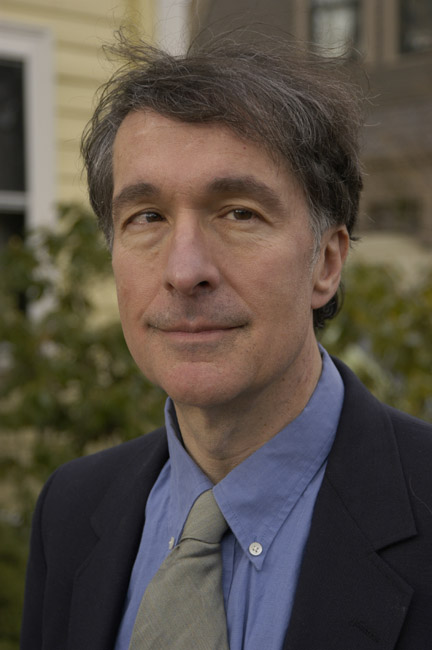 I attended the 2006 Educator's Conference today at Covenant College on Lookout Mountain. Someone said to me, maybe they built this up here so they could feel closer to God (actually they converted a hotel I believe..). I told him that based on some of the students I've met from there it seems that they feel that way. But otherwise the campus is very impressive and feels like a ski resort.
Dr. Howard Gardner was the big speaker and I was fairly impressed with his presentation since several had warned me he was dry. He didn't jazz it up at all, but his ideas on learning are pretty on target so I was very interested. He pimped (promoted) his book Changing Minds: The Art and Science of Changing Our Own and Other People's Minds, which sounds very business leadership oriented, but does not read as such. A big idea he promoted is summarized by the Harvard Business Review as:
Howard Gardner contends that the ability to synthesize information will be the most valued trait for leaders.
This comes from a forthcoming book about the "5 Minds of the Future" that he is still working on.
Other big ideas I keyed in on were related to his review of multiple intelligences. I've heard of this concept and feel that I vaguely understand it, but haven't read his books yet so was glad to get from the horse's mouth.
The intelligences he describes are:
Linguistic intelligence ("word smart"):
Logical-mathematical intelligence ("number/reasoning smart")
Spatial intelligence ("picture smart")
Bodily-Kinesthetic intelligence ("body smart")
Musical intelligence ("music smart")
Interpersonal intelligence ("people smart")
Intrapersonal intelligence ("self smart")
Naturalist intelligence ("nature smart") (thompsonarmstrong.com)
Another good handout can be found here.
The key points I heard were that these intelligences are essentially like computers in our head that are better at sifting through certain types of information than the others. We all have these intelligences, but most people are more proficient with a couple of these than they are in others.
In Changing Minds Gardner talks about 3 common sense dimensions that explain the phenomenon of changing one's mind. These are the entity (how you attempt to change a mind), the arena (the context of the group or individual you are trying to influence is in), and the levers or tools that actually work to change someone's mind. These are: resources and rewards, reason or logic, research, resonance, representational redescription, real workd events, and resistances (convenient how they all start with R..)
Gardner then went into a long diatribe about Margaret Thatcher and Ronald Reagan...
Finally he discussed his current topic of research which is about the nature of good work. Good is defined by he and his colleagues (Mihaly Csikszentmihalyi and William Damon) as 1) of expert quality, 2) is ethically responsible, and 3) feels right or is enjoyable and engaging to the worker. For this to take place in an organization there should be what he calls "Alignment," which is when all of the stakeholders have common goals. I was thinking about UTC, as a university and within departments, and I would question whether there is that much alignment and therefore not much good work being produced.
Finally, either during asides or in answering questions, I picked up on what I believe to be his solution for education today, in K-12 and higher ed, which seems to be mentors. For someone to really have an impact, there seems to be no combination of curriculum and technology, no new learning theory, no better way to teach than by examples of mentors exhibiting good work. To foster good work in our students, we need to be all about good work ourselves. I think this attitude is probably more prominent in K-12, but many college professors do not seem to feel this need.
So that's basically everything I know about Howard Gardner and MI. I hope it helps you..
February 17, 2006
Advanced Fuel Cell
I videotaped a press conference today in which Zach Wamp and other big wigs unveiled the SimCenter's latest work, the advanced fuel cell, which converts fuel sources to energy without combustion. This was a pretty cool thing to see from a geek perspective, but it was really interesting how much the word leadership was thrown out, particularly the concept of good leadership being the cpapability of getting the right people together to make things happen.
Not sure if the fuel cell is going to take off right away, but I think it is good to see an actual product being delivered by the SimCenter. Who know, maybe Alan Alda will bring his science-y show on PBS here to cover it, he's done a lot on alternative fuels in the past.
February 09, 2006
Mocs News story in The Echo
Mocs News is one of my proudest achievements at UTC, not that I do much more than facilitate, but its all of the students' hard work that makes it happen.
"Mocs News boosts broadcasting dreams"
By: Laura Bond
Issue date: 2/9/06 Section: News
According to one UTC student, future broadcasters receive valuable experience while working on Mocs News.
Emily Edwards, a Chattanooga senior and a Mocs News anchor, said Mocs News offers excellent experience for beginners.
"Broadcasting is my dream," she said. "Everyone has got to start somewhere, especially in this profession."
"Broadcasting is my dream," she said. "Everyone has got to start somewhere, especially in this profession."
Being an anchor on Mocs News has helped Edwards become comfortable on camera.
She said: "The anchor position allows you to put yourself out there in front of the camera and get used to being on television. You can watch the episode following the show and constructively criticize yourself in order to improve."
At her job as an anchor, Edwards is responsible for writing the entire newscast as well as hosting the newscast with another student.
According to Chris Willis, the faculty advisor for Mocs News, there are about 16 students working for Mocs News, either receiving payment or school credit for their work.
Some students also volunteer their time. Edwards joined the team in January and volunteers at the station for about six hours a week.
According to Willis, the Mocs News program started three years ago by several UTC students.
A typical newscast covers campus events, entertainment and sports.
Students go through an audition process before given the opportunity to be on the air.
Willis said, "The students who want to be on-air try out for the positions by reading an example script off of the teleprompter.
"Then the news directors and I make the decisions," he said.
Willis said they try to provide everyone with on-air experience if they desire it.
Edwards said being in front of the camera was difficult at first.
"At first I was nervous, especially during tryouts, but I got over it by the next show," she said.
"Once you realize you are getting into what you want to do for the rest of your life, it calms your nerves and you want to show everyone what you are capable of doing," she continued.
Anybody, whether they have experience in broadcast, is encouraged to join the team.
"Students with broadcasting courses or work experience are terrific, but we can train anybody," Willis said.
"Students might perform better in [communication] classes having had Mocs News experience under their belts," he added.
Edwards said, "Mocs News offer[s] so many opportunities off-and-on camera, and there is always someone you can shadow or [who] is willing to help you out."
In addition to the regular newscast, there is a new sports show.
According to Willis, the student-produced show, called "R U Serious?" is similar to network sports shows like "Cold Pizza" or "Best Damn Sports Show."
The show covers local, national and international sports.
Both Edwards and Willis recommend students watch the news programs to receive information about UTC.
"Mocs News comes from a student point of view, so I think students would be interested [in] hearing the news from their own point of view," Willis said.
Edwards said, "In reading over scripts, I myself have found out about campus-related information that I would never [have] known unless I had been watching Mocs News."
Mocs News airs on Comcast cable channel 3. Join the Mocs News team by visiting Chris Willis, Phillip Brown or Shaadi Marand on Monday, Wednesday or Friday at noon in the Metropolitan Building.
January 27, 2006
History, Enterprise, and Ethics
In the summer of 2005 I participated in a debate as a part of EDD 710/720. The topic assigned was...
Ethical situations at work - conflicts of interest
Hurricane relief - volunteering
Digital ethics - fair use vs. copyright
"Fourth Wave" - Where is technology taking us? Education?
Education as a business.
Technology
In areas of technology I feel especially competent, not that I have a vast background in any certain technology areas, but in that I feel very comfortable when presented with challenges in this area and am usually successful in figuring out whatever is needed to accomplish a given task.
In my position as a technology specialist for UTC, I have been facilitating various groups with their technology needs. For students I am constantly doing over-the-shoulder help in the television studio. For faculty I've done everything from compressing video for self-guided, interactive CD-ROMs, to downlinking satellite feeds of important educational teleconferences. For Continuing Education I've overseen the operation of now 7 different videoconferencing classrooms, for which I've spec'd out several hundred thousand dollars of equipment, and successfully obtained funding for through grants. I enjoy using technology to help other realize their vision, whether that is a video, a web project, a TV show, a vehicle for instruction delivery, whatever...
Also, I designed the UTC Television Studio, which I'm fairly proud of.
This studio took years for the university to get and I feel like I've had a very instrumental role in its development, from design to securing initial and continued funding. I am extremely proud of the work being produced there, particularly by my students. Examples of their work and others can be seen on the programs page of our website.
January 23, 2006
Learning and Instruction
This is going to be my first essay about a competency, with the intent that I look back on this later and compare what I've learned with this entry.
Learning takes place when someone gets excited about something, they stop whatever else they are doing, and they focus on that one thing. They try to figure it out and when they succeed they come away from the experience pleased. We learn by doing things, whether that doing is observation, or actual hands-on activity, they brain must be actively engaged for learning to take place. Of course learning can take place in other ways than experiential, but this is certainly the way I like to learn and to teach.
"I could stand up here and talk about it, or you can learn it for yourselves."
I like to figure things out. Whether it is technology, a novel, a school of philosophy, or whatever, if I encounter something that piques my interest I can't rest until I figured it out, or exhausted my brain trying to. I tend to teach to this learning style, and I am always surprised when students don't want to put in the time to learn for themselves. I've never accepted regurgitation of lectures personally, so I try to avoid that in my classes as much as possible. If I am going to present on a topic, I want my students to have done some sort of exercise already that demonstrates their need for the information I have to share--or if they already have a mastery I don't need to waste their time. Luckily I teach some of the most interesting (IMHO) classes UTC has to offer, so I think the students are usually OK with this method. I call it teaching swimming by throwing them in the deep end, but I would always follow this up by demonstrating and discussing proper stroke technique.
I was telling a colleague yesterday, I don't believe students are actually learning unless they are learning about something they are interested in. I know this won't work for every subject that students may need to learn, but I also think instructors need to find ways to appeal to student's individual learning styles and interests. I believe this is the idea behind Howard Gardner's Multiple Intelligences books, so maybe I'll know more about this after his seminar at Covenant in February.
Learning does not take place in a vacuum. Teaching, without reference to current culture or without any hands-on experiences or meaningful discussion, does not lead to learning. Learning takes place when someone actively engages their mind to construct meaning around given information. My quick look back at cognitivism reminded me of how we make connections, linking new information to existing knowledge, or when presented with an entirely new concept we create new categories for that topic.
I don't particularly care what my students learn specifically. I am more interested in presenting areas that they are interested in, providing sitiuations where they can be engaged. I want to see that they come away with the bits and pieces of information that are useful to them, not just what is on the test. I need to see that they can process information and learn new concepts to accomplish specific tasks.
January 20, 2006
ILLP - Curriculum Design
Since this blog is the closest thing I've ever kept to a journal, except for trips overseas, and the diary I have one year as a kid, I'm going to be posting some random thoughts related to my coursework, particularly items related to my ILLP.
WHat's an ILLP you ask? It's an Individual Learning and Leadership Plan. Everyone in my program has to develop their. It basically is a portfolio of your current strengths and a chart for how you are going to develop yourself in areas of learning and leadership.
There are six competencies the program addresses, let's see if I know 'em: Learning, Leadership, Ethics (History and Enterprise), Research, Instruction, and Evaluation/Assessment. Technology is also a competency that is interwoven into the program. I am planning to write some essays about each topic, then revisit them throughout the program to see how my thoughts on each have changed.
Designed curriculum for the Filmmaking Workshop for teens. This project stemmed from my belief that there is little being done locally to encourage independent filmmaking in Chattanooga. Thus, to do a good deed, and to increase local submissions to my student's film festival(formerly Firefly, now known as Back Row), I pitched the idea of using the Hunter Museum's theater for a free workshop on filmmaking, for teens in the area, taught by myself, UTC students, and local filmmakers. Good resume experience for everybody, and maybe they'll throw in some free coffee or a piece of art for everyone involved. I'll post the curriculum as soon as I get it finished.
More to come!